Gutter Installation & Gutter Guards in Vancouver, WA | Gutter Empire

Categories
Blog Gutter Installation

5 Questions to Ask Before Hiring a Gutter Company in Washington


Washington’s weather can be unpredictable, but one thing is certain: It rains, and it rains a lot. From constant drizzle in Seattle to heavy downpours along the coast, homeowners depend on well-installed rain gutters to protect their roofs, siding, and foundations. However, when it comes time to replace or upgrade them, choosing the right contractor is not as simple as searching online for gutter installers near you.

Hiring the wrong company can lead to leaks, sagging gutters, and costly water damage. The right one, though, will install a system that quietly does its job for decades.

To help you make an informed decision, here are five questions every Washington homeowner should ask before hiring a gutter installation company.

1. Are You Licensed, Bonded, and Insured in Washington?

Before anyone touches your home, the company should be fully registered with Washington’s Department of Labor & Industries. That includes having a license, general liability insurance, and a valid bond. These small details protect you if something goes wrong.

A legitimate company will gladly provide you with its license number. From there, you can look it up through L&I’s online database to see if they’ve had any issues in the past. It’s quick, and it could save you a ton of trouble later.

If a company dodges the question or gives you a vague answer, consider it a red flag. Good gutter installation companies understand the importance of trust, and that begins with transparency.

If a company dodges the question or gives you a vague answer, consider it a red flag. Good gutter installation companies understand the importance of trust, and that begins with transparency.

2. What Materials and Sizes Do You Recommend?

In other parts of the country, installers might default to the same setup for every job. However, Washington is different. Between the rainfall, the moss, and the pine needles, your gutters must work overtime. That means the material and size should match the reality of your roof and the local weather conditions.

Most homes in this area use aluminum because it’s lightweight, doesn’t rust, and holds up well over time. However, not all aluminum is created equal: thickness, coating, and finish are important factors. Some contractors attempt to cut corners by using thinner, less expensive coils. Ask about the gauge and brand so you know what’s being installed.

Also, check if they offer seamless gutter installation. These systems are made on-site from a single roll of material, which means fewer seams and fewer potential leaks. It’s a cleaner, more efficient option that holds up better in wet climates like ours.

And don’t forget to ask about sizing. Larger 6-inch gutters may be the smarter choice if your roof is steep or you live in an area that experiences severe storms.

3. How Will the Gutters Be Installed?

This is where things either go very right or very wrong. A gutter system might look simple, but a lot of thought goes into doing it correctly. The slope must be just right, not too flat, not too steep. Downspouts should be positioned to avoid directing water near entryways or foundations. Hangers should be strong enough and spaced properly to keep the whole system from sagging under pressure.

Ask the company to walk you through their process:

  • Do they use hidden hangers or spike-and-ferrule systems?
  • How often do they place them?
  • What kind of screws or fasteners are used?

Seamless gutter installation is also worth considering again. If a team forms gutters on-site to the exact length of your roofline, you’re less likely to deal with leaks later.

And make sure to find out who’s doing the work. Will it be their trained crew, or are they outsourcing the job to someone else? Skilled installation is what makes or breaks performance, regardless of the quality of the materials.

4. What Kind of Warranty and Maintenance Support Do You Offer?

Even the best gutters won’t last forever without some upkeep. That’s why you want to choose a company that stands by its work and is willing to help you maintain it over time.

Start with the warranty. Most quality gutter installation companies offer at least a five-year warranty on workmanship and longer for materials. But what exactly is covered? Are repairs free during the warranty period? Will they send someone out quickly if there’s a problem?

Then there’s maintenance. In Washington, especially under heavy tree cover, gutter cleaning is a must. Moss, leaves, and fir needles can clog up even the best systems. Ask if they offer ongoing service plans or if they recommend a regular schedule for maintaining cleanliness.

If you’re already dealing with clogs, backups, or sagging, look into gutter repair services near you. A good company will inspect what’s there and offer realistic solutions, not just try to sell you a full replacement.

5. How Clear and Detailed Is Your Quote?

This is where homeowners often get burned. A company throws out a quick number, promises “everything’s included,” and then disappears until the day of install, or worse, asks for a huge deposit before any work even starts.

A true professional will provide a line-by-line estimate. You’ll see what you’re paying for:

  • Type of gutter
  • Number of downspouts
  • Labor costs
  • Removal of old materials
  • Anything extra, like gutter guards or extensions

The cost of gutter installation may vary depending on the home’s layout, materials, and complexity. However, the process shouldn’t be mysterious. If a company can’t explain its quote or keeps changing numbers mid-conversation, that’s a warning sign.

Also, be cautious of unusually low bids. Sometimes, that means cheap materials or rushed labor. Sometimes, it means they’ll charge more later. Either way, it’s not worth the risk.

Getting a few quotes is smart. Just make sure you’re comparing apples to apples. Materials, experience, warranty, and follow-up service should all be considered when making your final decision.

Choose a Team That Understands Washington’s Weather

In a place like Washington, gutters are a vital part of your home’s defense system. Constant rainfall, shifting seasons, and dense tree cover all combine to present unique challenges. Therefore, it only makes sense to hire a team that lives here, works here, and knows exactly what those challenges look like on a day-to-day basis.

At Gutter Empire Washington, we’ve installed thousands of custom rain gutters across Washington. We know how to size for real rainfall, protect against moss and pine needle buildup, and design systems that last.

Let us help you build a leak-free, low-maintenance gutter system that works, rain or shine. Call us at (971) 777-9899 for a free estimate.

Resources
2025 Gutter Guard Homeowner Survey
Effectiveness of Gutter Guard Systems
L&I’s online database 
Categories
Blog Gutter Installation

The Pros and Cons of Aluminum Gutters for WA Homes

Gutters might not be the flashiest feature of your home, but in Washington, they’re your first line of defense against the weather. Days of drizzle followed by sudden downpours are common in Washington, especially from October through April. That kind of pattern doesn’t just demand a good drainage system. It requires one that holds up year after year.

While they aren’t the only choice, aluminum gutters are a popular option throughout Washington due to their durability, cost-effectiveness, and ability to effectively handle rain. However, before all of that, it’s always a good idea to understand what you’re getting yourself into and where aluminum gutters may fail to perform.

The Benefits of Choosing Aluminum Gutters

Aluminum isn’t just popular because it’s cheaper. It’s well-suited to the unique challenges of Washington’s weather. From corrosion resistance to color options, this section explains why many homeowners choose to install aluminum gutters in the first place.

Lightweight Materials = Easier Installation and Longevity

One of aluminum’s best qualities is its light weight.

  • Easier handling means fewer installation mistakes. That’s key when you need a precise slope to keep water flowing.
  • It also puts less strain on fascia boards over time. Gutters don’t sag as easily when they’re lightweight.
  • On multi-story homes, lightweight materials facilitate faster and safer installation for crews working on ladders.

In short, the lightness of aluminum is a convenience and a long-term advantage for structural integrity.

Cost That Makes Sense for Most Homeowners

Not every home needs premium copper gutters. Additionally, not every homeowner wants to pay for them.

  • Aluminum falls in the mid-range for gutter installation cost. It’s more affordable than copper or steel but holds up better than vinyl.
  • Most Washington homeowners can expect to pay $10–$12 per linear foot for seamless aluminum, depending on the layout of their home.
  • For an average-sized home, the full job typically falls somewhere between $1,500 and $2,400, striking a balance between durability and price.

That makes aluminum an accessible choice for full-house systems or replacements, especially if your old gutters have started to leak at the seams.

No Rust, Even in Constant Rain

This might be the number one reason aluminum gutters excel in Washington.

Aluminum doesn’t rust. Unlike galvanized steel, it withstands constant moisture without forming reddish flakes or pinholes.

That’s important here, where roofs stay wet for months and gutters rarely get a chance to fully dry out.

Even during rainy winters, aluminum retains its finish and function with minimal upkeep.

For Western Washington, especially, where mold, moss, and moisture are always present, aluminum’s natural resistance is a practical advantage.

Aesthetic Flexibility With Custom Colors

Gutters aren’t just functional. They’re also one of the most visible trim elements on your home.

Aluminum comes in a wide range of factory-finished colors. Most are baked-on enamel coatings that resist chipping and fading.

Whether you want something that blends in (like dark bronze) or pops against light siding, there’s a color match available.

And if you change your mind later, aluminum can be repainted with the right prep work. From craftsman bungalows in Tacoma to modern homes in Bellevue, aluminum adapts to just about any architectural style.

Where Aluminum Falls Short

No material is flawless. While aluminum offers many advantages, it has its faults, primarily, its strength and lack of longevity.

Understanding what the limitations are will help you adjust accordingly when choosing this type of material for your gutters.

Vulnerable to Dents From Impact

Aluminum is strong enough to handle the weight of rainwater, but it can dent more easily than heavier metals like steel.

If you lean a ladder against it, or a tree branch drops in a storm, dents are likely. These dings usually don’t stop the system from working, but they do affect curb appeal. For homes with overhanging trees, some homeowners opt for reinforced hangers or more frequent inspections.

In short, aluminum is sturdy, but not invincible. You’ll want to be mindful of the areas most exposed to wear and tear.

Shorter Lifespan Than Copper

Aluminum lasts a long time, but not forever.

Expect about 20–30 years of performance from a properly installed aluminum system. That’s plenty for most homeowners, especially if you plan to replace the roof in that window anyway. Still, it doesn’t match copper’s 50+ year lifespan or its patina that many people love.

Aluminum wins on cost and weight, but copper still leads in sheer longevity. If you’re building a forever home or doing a historic restoration, it may be worth considering.

Why Seamless Aluminum Gutters Work Best in Rain-Heavy Climates

In Washington, seams are where problems begin. That’s why seamless gutter installation is especially smart here. Seamless gutters are made from a single, continuous piece of aluminum, custom-cut to fit your home’s exact dimensions. That means fewer joints where leaks can form and fewer areas where debris accumulates.

They’re less prone to clogging, cracking, or separating over time, which makes a big difference when it rains five days in a row. Beyond durability, seamless systems also look cleaner. There’s no choppiness, no gaps, and no visible connectors interrupting the lines of your roof.

If you want to take it a step further, upgrading to 6-inch gutters with 3×4 downspouts provides even more capacity. That can be great for homes with steep roof pitches or large surface areas that shed water fast.

Make Your Gutters Work Smarter, Not Just Harder

Washington homes need more than just gutters. They need smart, well-fitted systems that withstand the rain. Aluminum gutters offer one of the best all-around solutions for that. They resist rust, match most home styles, and cost far less than premium options like copper.

Of course, there are trade-offs. Aluminum can dent, and it won’t last forever. Still, when installed professionally, especially as a seamless system, it delivers solid value and long-term protection that’s hard to beat.

At Gutter Empire Washington, we install aluminum gutters with precision, from slope to sealing to full seamless runs. If your home needs an upgrade that handles Washington’s weather, we’re ready to help. Call us at (971) 777-9899 to speak to an expert, or book online for a free estimate.


Key Takeaways

  1. Aluminum gutters balance cost and performance. They’re lightweight, rust-resistant, and affordable — typically costing $10–$12 per linear foot for seamless systems in Washington, or about $1,500–$2,400 for most homes .
  2. Rust resistance makes aluminum ideal for Washington’s wet climate. Unlike steel, aluminum won’t corrode or form rust flakes, even under constant rain and moss exposure — a major advantage for Pacific Northwest homes .
  3. Customization options enhance curb appeal. Aluminum gutters come in baked-on enamel finishes in dozens of colors, and they can be repainted to match changing home styles.
  4. Vulnerability to dents is the biggest drawback. Ladders, branches, or heavy debris can leave visible dings, though reinforced hangers or frequent inspections reduce risk.
  5. Seamless aluminum gutters outperform sectional systems. Fewer seams mean fewer leaks and clogs — especially critical in Washington, where prolonged rain demands uninterrupted flow.
  6. Longevity averages 20–30 years with proper care. Though not as long-lasting as copper, aluminum provides excellent value and durability when installed and maintained by professionals.
Categories
Blog Gutter Repair Gutter Replacement

The 3 Most Overlooked Signs You Need Gutter Repair in Washington

When you live in Washington, rain is part of the routine. From steady drizzles in the fall to heavy downpours in the winter, water is always testing your home’s defenses.

Most people know their roof is the first line of protection, but gutters are just as critical. They move water safely away from your siding and foundation. Many homeowners overlook the subtle signs that something is amiss until the damage has already become extensive.

Let’s break down the three most overlooked warning signs that mean it’s time for gutter repair before you’re forced into costly replacements.

The 3 Most Overlooked Signs You Need Gutter Repair in Washington

Not every gutter issue shows up as a dramatic overflow. In fact, the quiet signs are usually the most dangerous. Here’s what to watch for.

1. Water Pooling at the Perimeter (The Silent Foundation Threat)

One of the clearest yet often ignored warnings is water collecting right next to the house. After a steady rain, step outside and look around the foundation. Do you notice puddles that don’t drain away or soil that looks washed out? That is a red flag.

Pooling means the gutters or downspouts aren’t doing their job. In Washington, where rain falls so frequently, that repeated soaking quickly adds up. Water seeps into the soil, pressing against foundation walls. Over time, this can lead to cracks, basement leaks, or mold growth in the lower levels of the house.

What makes this subtle is that the damage happens underground, out of sight. By the time homeowners notice a musty smell in the basement, the repair bills have multiplied. That’s why spotting puddles early is critical.

Look for the following:

  • Mulch or gravel is displaced near downspouts.
  • Erosion lines in the soil after storms.
  • Damp basement walls or floors.

Extending downspouts at least five feet from the foundation is a smart first step. But if the issue persists, you’ll need roof gutter repair or adjustments to the slope of your system. Consider this a low-cost prevention measure compared to the high cost of structural fixes later.

2. Peeling Paint and Soft Fascia Along the Roofline

Another easy-to-miss warning is peeling paint or soft spots around the edges of your roofline. Many homeowners blame paint age or sunlight, but in a rainy climate like Washington, it usually signals gutter trouble.

When gutters overflow or develop small leaks, water runs down the fascia boards and siding. Instead of drying out, those areas stay damp for weeks at a time. As a result, paint begins to blister, wood softens, and hidden mold starts to grow behind the surface.

It may appear to be a cosmetic issue, but it’s actually the first stage of structural damage. Peeling paint indicates that moisture is consistently hitting the same spots, and soft fascia suggests that rot is already in progress.

Check for the following warning signs:

  • Dark streaks or stains just under the gutters.
  • Nails or screws on the ground, often from the fascia pulling loose.
  • Soft or spongy trim when gently pressed with a screwdriver.

The good news is that fascia board repair can often solve the problem before it spreads. Resealing seams, reattaching loose sections, or replacing a short run of damaged fascia is far cheaper than a full siding job. Addressing these small leaks now can save you from the need for complete gutter replacement later.

3. Subtle Sagging and Moss Build-Up Slowing Flow

Sagging gutters are sometimes written off as “not a big deal.” But in Washington, where moss thrives on shaded, damp roofs, sagging is more than an eyesore. It’s a warning that gutters are not holding water, but rather allowing it to accumulate.

Moss and evergreen needles create heavy clogs that put constant strain on hangers. Over time, this weight causes gutters to sag away from the fascia. Once water sits in those low spots, it accelerates rusting, seam failure, and eventual collapse.

In many cases, homeowners only notice a problem when water starts spilling over the sides. However, the sag is the real clue because it indicates that the system is already losing its effectiveness.

Signs to keep an eye on:

  • Gutters that no longer look perfectly straight.
  • Water lines or “tide marks” inside the gutter trough.
  • Standing water hours after a storm has passed.

In this climate, waiting until gutters collapse is the most expensive option. A timely call for gutter repair near you, whether that’s tightening hangers, clearing moss, or adjusting the pitch, prevents the chain reaction that can lead to total system failure.

Why Small Fixes Save You More Than Full Replacement

One of the biggest misconceptions is that gutters only need attention when they’re overflowing dramatically. The truth is that minor fixes often make the biggest difference. Resealing end caps, rehanging sections, or extending downspouts can be done quickly and affordably.

Ignore those steps, and you’re looking at far more than gutters. Water damage can spread to fascia, soffits, siding, and even basements. At that stage, you’re paying for more than just gutter replacement. You’re paying for carpentry, painting, and possibly mold remediation.

Quick DIY Checks Before You Call

Not every issue needs a ladder and a toolbox. A few quick checks can tell you if your gutters are headed for trouble.

Step outside during a steady rain. If water pours over the edge or leaks from seams, that’s a warning. Look at your downspouts, too; they should send water at least five feet from the base of your home.

Press gently on the fascia beneath the gutter. Soft spots mean water damage. Finally, scan the roofline for moss. Moss slows the flow and signals clogs ahead.

These quick inspections only take a few minutes but provide valuable insights. If you notice any of these red flags, scheduling roof gutter repair promptly will save you the stress of larger projects down the road.

Act Before the Rain Wins

In Washington, the rain never really takes a season off. That steady moisture is exactly why small gutter problems grow quickly. Maybe you’ve seen water pooling near the steps, a strip of paint peeling under the eaves, or a sag starting along the fascia. Those details might look minor, but they’re early warnings. Acting now with gutter repair is far cheaper than waiting for mold, rot, or foundation cracks.

At Gutter Empire WA, we handle everything that involves gutters. Let’s stop the damage before the next storm. Contact us today by calling (971) 777-9899 or book a free estimate here.


Key Takeaways

  1. Pooling water near the foundation is a silent threat. Standing water around the base of your home often indicates that your gutters or downspouts aren’t diverting water properly, which can lead to cracks, leaks, and basement mold.
  2. Peeling paint and soft fascia boards signal hidden leaks. Overflowing or leaking gutters cause moisture damage that rots wood trim and weakens attachment points, often going unnoticed until repairs become costly.
  3. Sagging gutters and moss buildup reduce flow. In Washington’s damp climate, moss and evergreen needles create clogs that strain hangers and cause gutters to sag, trapping water that accelerates rust and seam failure.
  4. Small fixes prevent full replacements. Resealing seams, rehanging sections, and extending downspouts are low-cost solutions that prevent expensive siding, foundation, or mold repairs later.
  5. Regular inspections protect your home. Quick DIY checks during rainstorms—such as looking for leaks, soft spots in the fascia, or sagging lines—help homeowners identify issues early and know when to call a professional gutter repair service.

Last updated: October 2025

Categories
Blog Gutter Cleaning

How to Clean Gutters Safely Without a Ladder

No one really looks forward to gutter cleaning, but it’s a necessary task to keep your house in good shape. Living in Washington makes this even more important. It rains most of the year, and clogged gutters can lead to leaks, mold, or even foundation problems.

The tricky part is that most people grab a ladder, climb up, and hope for the best. That’s where things can go wrong. Ladders are slippery in wet weather, and falls are one of the most common household accidents.

Each year in the U.S., more than 500,000 people are treated for ladder-related injuries, and about 300 people die from falls. Beyond the personal cost, these accidents result in an estimated $24 billion annually in medical bills, lost work, and legal expenses.

You don’t actually need a ladder. With the right tools and a little know-how, you can clean gutters without a ladder and keep your home protected.

Why Safe Gutter Cleaning Is Non-Negotiable (Especially in the Pacific Northwest)

Gutters have one primary function: to divert water away from your house. They direct rain so it doesn’t run down the siding, pool around the foundation, or leak back under shingles. When they’re clogged, that system fails.

In Washington, this happens fast. Between the rain, pine needles, moss, and leaves, gutters fill up quickly. Add in the fact that it rains more than 150 days a year here, and you’ve got the perfect recipe for overflow.

The problem is that climbing up to clear all that debris is dangerous. Roofs stay slick, ladders shift, and one wrong step can cause a serious fall.

Therefore, finding safer ways to clean gutters from the ground makes a great deal of sense. It’s about protecting your home without putting yourself at risk.

Essential Tools for Ground-Level Gutter Cleaning

The good news is that there are plenty of gutter cleaning tools designed for people who want to stay firmly on the ground.

Here are the main options:

  • Telescoping hose attachments for flushing out debris.
  • Wet/dry vacuum kits with long, curved nozzles.
  • Leaf blower extensions for clearing dry leaves.
  • Grabbers, tongs, and the classic gutter scoop adapted for poles.
  • Pressure washer attachments for tougher clogs.

Ground-Level Gutter Cleaning Methods

Different debris calls for different tools. Here’s a closer look at how each method works.

Telescoping Hose Attachments

These wands attach to your garden hose and hook over the gutter. They spray water along the channel, flushing leaves and dirt toward the downspout. This type of rain gutter cleaner is easy to use and works well for lighter clogs. Please note that it can be a bit messy, as everything tends to wash down.

Wet/Dry Vacuum Kits

Vacuum attachments use extensions and curved nozzles to literally suck debris out. They’re especially good for wet leaves and pine needles, which can be hard to move with water pressure alone. Most brands sell kits that fit most shop vacs, so you don’t always need to buy new equipment.

Leaf Blower Attachments

If your gutters are mostly filled with dry leaves, a leaf blower kit is a quick and effective solution. Extensions add reach, so you can walk around the house and blow out debris in minutes. Just keep in mind it won’t help much if the gutters are full of sludge.

Grabbers, Tongs, and Scoops

Sometimes, a more hands-on approach is more effective. You can use gutter grabbers to pinch clumps of leaves from the ground. It’s slower, but very precise. And while the classic gutter scoop is usually used from a ladder, pole adapters make it possible to use one without leaving the ground.

Pressure Washer Extensions (Use Caution)

Pressure washers can blast out stubborn clogs, but they’re not for everyone. Too much force can strip paint, loosen gutters, or damage shingles. If you choose this route, keep the pressure low and proceed with caution.

Step-by-Step Gutter Cleaning Routine

Although the right tool is important, how you use it makes the difference. Think of the following routine as a game plan you can follow:

  1. Safety Gear: Start with basics, including gloves, safety glasses, and a long-sleeved shirt. They keep you from getting scratched up or splashed.
  2. Prep Work: Wait for a dry break in the weather. Clear the yard space below so you can move around freely.
  3. Tool Assembly: Arrange the extension poles, snap them together, and take a test run before attempting to lift the load overhead.
  4. The Process: Start at the downspout and work your way out, clearing branches and debris as you go. Then, flush the area with water.
  5. Final Check: Each time you staff into a gutter section, run water through it and ensure everything drains properly.

When to Call a Professional Gutter Cleaning Service

There are times when cleaning gutters from the ground works fine, and then there are jobs that push past the limits of DIY. Part of staying safe is knowing when to hand it off.

Call in a professional if your house has multiple stories that tools can’t reach, or if gutters are packed with standing water, weeds, or even small plants. Damage is another red flag: Sagging runs, rust, or loose brackets usually mean repairs are needed.

Pest issues, such as wasps or rodents, are also a reason to stay away. And honestly, if you feel uneasy or just don’t want to risk it, that’s valid, too. At Gutter Empire WA, we use pro-grade gear and training to clean gutters safely and thoroughly.

Stay Grounded, Stay Protected

You don’t need a ladder to keep your gutters in shape. With the right setup, you can stay grounded and still achieve solid results. Modern gutter cleaning tools cover almost every situation. Telescoping hose attachments flush out debris, vacuums pull up wet leaves, blowers sweep out dry clumps, and pole-mounted grabbers or a gutter scoop handle the stubborn stuff.

That said, there’s a point where DIY must stop. Clearing a single-story home is one thing. Tackling sagging gutters on a three-story house is another. Routine cleaning helps prevent leaks, mold, and costly repairs, but only if it’s done safely.

At Gutter Empire WA, safety is always the priority. When the job is too tall, too messy, or simply more than you want to handle, we’ll take care of it. Contact us today to receive a complimentary quote. You can also get a free estimate.


Key Takeaways

  • Ladder-free gutter cleaning is safer and smarter. Each year in the U.S., over 500,000 people are treated for ladder-related injuries, making ground-level cleaning tools a safer alternative (source: CDC†).
  • Washington’s climate accelerates gutter clogs. With rain falling more than 150 days per year, gutters in Washington quickly fill with pine needles, moss, and debris, creating overflow risks (source: WRCC).
  • Specialized tools make cleaning from the ground easy. Options include telescoping hose attachments, wet/dry vacuum kits, leaf blower extensions, gutter grabbers, and pressure washer add-ons.
  • A routine cleaning process matters. Always use gloves and goggles. Start at the downspout, clear debris, flush with water, and double-check the drainage.
  • Know when to call professionals. Multi-story homes, severe clogs, structural damage, or pest infestations often require the services of a trained gutter cleaning professional to ensure safety and effectiveness.

Last updated: October 2025

Categories
Blog Gutter Installation

Why Gutter Size Matters More in Washington’s Climate

It rains a lot in Washington. That’s not exactly news. However, what isn’t so obvious, until your basement floods or your siding warps, is that not all gutters are built to handle the kind of weather we get here, especially lately.

This blog is for anyone who assumes gutter sizes are universal. They’re not, and in Washington’s climate, getting the size wrong can lead to water spilling over the edge, as well as structural damage, flooded foundations, and expensive repairs down the line.

Let’s look at why sizing matters, how different systems perform, and what to consider before your next gutter project.

Washington Rain Isn’t Like Other Rain

There’s something different about the rain here. The Pacific Northwest is no stranger to long, steady drizzles. However, the real issue is the sudden, powerful bursts from weather systems known as atmospheric rivers.

These are long bands of moisture that dump large volumes of water over short periods, especially in late fall and winter. In just one hour, a roof in western Washington might need to shed several hundred gallons of water. Therefore, if your gutters aren’t sized for that kind of flow, the system backs up fast.

Even Seattle’s rainfall patterns are shifting. According to recent studies, rainfall intensity is increasing across the region. What worked for your roof ten years ago may no longer be sufficient.

Gutter Sizing Is Engineering

When we talk about gutter sizes, we’re not just talking about aesthetics. Gutter capacity is based on a simple equation:

Roof area × Rainfall intensity = Required gutter volume

Roof pitch plays a major role. Steeper roofs move water faster. Multi-gable roofs send water from multiple planes into the same gutter channel, increasing the load. When you add in valleys that concentrate runoff, you’ve got a recipe for overflow, unless the gutters and downspouts are properly sized.

Contractors familiar with the region utilize data from NOAA’s Atlas 14 to accurately size gutters for Washington’s specific rainfall conditions. That means designing systems that look good on a sunny day and perform when it’s pouring.

What Gutter Size Actually Means

There’s a big difference between a 5-inch and a 6-inch gutter. In terms of water volume, that one inch increases capacity by more than 35%.

Standard 5-Inch Gutters

These are common in older homes and basic installs. They are usually paired with 2”×3” downspouts and can manage moderate rainfall. However, they struggle with steep or large roofs.

Oversized 6-Inch Gutters

These are designed for higher rainfall regions and larger homes. They are often installed with 3”×4” downspouts. They reduce the risk of overflow during storms and are better for valleys and multi-story homes with large eaves.

Commercial Gutters (7 to 8-Inch)

Commercial gutters are meant for large roof areas such as multifamily housing, commercial buildings, and warehouses. They are typically box-style or high-capacity K-style and are matched with 4”×5” or larger downspouts. They are also designed to quickly and efficiently move high volumes of water away.

Commercial gutters are sized according to the specific needs. When rooflines stretch long or multiple structures are connected, larger systems ensure everything flows smoothly without failure.

Downspouts: The Overlooked Workhorse

You could have a well-sized, clean, and sloped just-right gutter, but if the downspouts can’t keep up, water still backs up and spills out.

Here’s a quick reference for downspout capacity:

  • 2”×3” downspouts handle about 600 sq ft of roof area in a 1-inch-per-hour storm
  • 3”×4” downspouts double that, up to 1,200 sq ft
  • 4”×5” downspouts can exceed 2,000 sq ft, depending on placement and pitch

In real-world terms, if you’ve got a 2,000 sq ft roof and two small downspouts, you’re probably cutting it close. If your roof is complex or steep, you’re almost certainly under capacity.

Heavy-duty gutters and downspouts are engineered for performance. Consider larger outlets, stronger brackets, and steeper vertical drops that keep water flowing even when debris accumulates.

Why Seamless Gutters Just Work Better Here

Most gutter leaks don’t start on the surface. They start at the seams. Over time, those joints warp, loosen, or corrode, especially in climates like ours, which experience significant temperature swings and high moisture levels.

Seamless gutters installation eliminates most of those weak points. Each section is custom-cut to match your roofline. That means no mid-run seams, no messy caulking, and far fewer maintenance headaches.

In Washington, where gutters take a beating year-round, seamless systems hold up longer. When you add in leaf guards or internal hangers, you’ve got a setup that resists both rust and clogs.

Don’t Ignore Code and Compliance

In many cities across Washington, local code requires gutters to direct water away from the structure and into approved drainage zones.

Seattle’s stormwater code, for instance, encourages systems that protect nearby waterways and reduce erosion. In high-density neighborhoods, you might even need to pair gutters with rain gardens or catch basins.

Gutter installation companies that operate locally are familiar with these regulations. They’ll size your system correctly and also ensure it’s pitched and placed in a way that won’t put you at risk of trouble with the city. For businesses, that means fewer fines. For homeowners, it means better resale value.

When Small Gutters Cause Big Problems

You might not notice overflow right away because it doesn’t always announce itself with a dramatic waterfall. Sometimes it shows up as subtle erosion near your foundation, peeling paint, or patches of black mold in your crawlspace.

Over time, the signs get harder to ignore:

  • Splashback stains on siding
  • Soft soil or pooling water near the base of your home
  • Cracks in your driveway or concrete walkway
  • A persistent musty smell indoors

Most of these are traced back to runoff that wasn’t managed properly. And often, the root cause is undersized gutters or too few downspouts.

Make the Upgrade Your Home (or Building) Deserves

In Washington, you can’t afford to treat gutters like an afterthought. The weather won’t give you a break, and neither will time. The longer you go with an undersized or outdated system, the higher the risk becomes.

We custom-fit solutions built for Washington’s actual climate, not just the manufacturer’s brochure. Whether you need larger gutter sizes for your home or full-scale commercial gutters with heavy-duty downspouts for a retail building, we ensure the system fits the storm.

At Gutter Empire, we custom-size and install seamless gutters built for Washington’s toughest storms. If you need to speak with an expert, please call us at (971) 777-9899.


Key Takeaways

  • Washington rainfall is becoming more intense due to atmospheric rivers and climate change, demanding larger and more efficient gutter systems.
  • Gutter sizing is an engineering calculation based on the roof area, pitch, and rainfall intensity, rather than solely on aesthetics.
  • Oversized gutters (6 inches or larger) paired with 3-inch or larger downspouts reduce overflow risk, especially on steep or complex roofs.
  • Seamless gutters outperform sectional systems by eliminating weak points where leaks typically occur, thereby extending the system’s lifespan in Washington’s wet climate.
  • Undersized gutters cause hidden damage — from foundation erosion and fascia rot to mold growth and musty indoor air.

Footnotes / Citations

  1. NOAA – Atmospheric rivers and their impact on the West Coast: https://www.nesdis.noaa.gov/news/noaa-satellites-track-powerful-atmospheric-rivers-impacting-the-west-coast
  2. Axios – Seattle rainfall intensity increasing with climate change: https://www.axios.com/local/seattle/2025/04/02/seattle-rainfall-grows-more-intense-with-climate-change

Last updated: October 2025

Categories
Blog Gutter Cleaning Gutter Repair

Fall Gutter Preparation in Washington: Get Ready Before Freezing Temps Hit

It’s that time of the year when the air is crisp and the leaves are turning brilliant shades of red and gold. Fall in Washington is a beautiful season, but it should also serve as a critical warning bell for homeowners. Winter is coming, and those picturesque leaves are about to become your gutter system’s worst enemy. Ignoring them now could lead to a winter of discontent filled with ice dams, roof leaks, and damaged fascia.

Your home gutter system is a core defensive feature against Washington’s relentless winter weather. If the system is clogged or damaged, it cannot function properly. And when rain becomes snow and ice, the problems quickly multiply. As such, gutter winterization for Washington homeowners is not a suggestion, but a necessity.

Why Washington Winters Are So Hard on Gutters

Washington’s all-year-round damp weather and exceptionally wet fall season present a unique challenge, as it deposits a constant layer of debris from the abundant vegetation. When winter brings freezing temperatures to many areas across the state, it sets the perfect conditions for gutter failure.

When gutters clog due to debris and moss buildup, water has nowhere to go and thus pools and freezes in the gutter system. This creates heavy blocks of ice that bend seams, pull gutters away from the home, and form ice dams on the roof. Ice dams prevent melting snow from draining and force water back under your roof shingles, allowing it to flow into your attic. The result is stained ceilings, rotting rafters, and mold growth.

The combined weight of ice, snow, and debris places a tremendous strain on the fascia boards where gutters are mounted, often necessitating the need for fascia board replacement in Washington. That project can end up costing more than routine preventive maintenance.

Your Essential Fall Gutter Preparation Checklist

A little effort this fall can prevent a future catastrophe during winter. This guide will walk you through the simple, actionable steps needed for successful gutter winterization in Washington, protecting both your home and wallet.

Step 1: The Thorough End-of-Fall Cleaning

This is the simplest and most important step. Do not skip that fall season gutter cleaning and let winter find your gutters full of wet, heavy leaves.

  • Remove all leaves, pine needles, and moss by hand or with a scoop.
  • Flush the entire system using a garden hose to check for flow and reveal hidden clogs.
  • Ensure that water exits freely from the downspouts and does not pool at the base.

For many homeowners, this task is best left to professionals. A thorough gutter cleaning in Washington from a company like Gutter Empire does more than just remove debris because experts can spot early signs of damage that the untrained eye might miss.

Step 2: Inspect for Damage and Leaks

Once the gutters are clean, you can now see what you are working with.

Look for the following warning signs:

  • Cracks or Splits: Even the tiniest hairline cracks can expand when water freezes inside them.
  • Rust or Corrosion: Gutters made of metal, such as steel, show orange-brown spots where the material is corroding.
  • Sagging Sections: These indicate that there are loose or broken hangers or fasteners that can no longer support the weight of ice.
  • Leaky Seams: Check where gutter sections are joined together for signs of separation or dripping.

If any of these issues are observed, you should seek professional gutter repair in Washington. Since these are minor maintenance tasks, patching small leaks and fixing loose fasteners now is infinitely cheaper than repairing water damage later.

Step 3: Ensure Proper Downspout Maintenance

Your downspouts are the exit chute for every gallon of water collected on your roof, and should thus be clear and functional. Therefore:

  • Ensure that downspouts extend at least five feet away from your home’s foundation.
  • Check that water is not dumping directly into flower beds or other areas where it can pool.
  • Consider adding downspout extensions or underground drains to route water even farther away from your foundation.

While the upper levels of your gutter system protect your fascia, exterior walls, and roof, this simple downspout maintenance step ensures that this protection extends to your foundation, thereby maintaining your home’s structural integrity.

Step 4: Inspect Your Fascia Boards

Your gutters are mounted to horizontal straight boards known as fascia boards. While these boards add aesthetic appeal to your home, they also serve a structural function, as this is where gutters are typically mounted. Therefore, these boards are highly susceptible to water damage from leaking or overflowing gutters. As such:

  • Look for signs of wood rot, such as spongy wood, bubbling or peeling paint, and visible water stains. Press on the wood behind the gutters; if it feels soft or crumbles, it is compromised.
  • Check for loose fasteners: Rotten fascia cannot securely hold gutter spikes or hangers, causing sagging that eventually leads to complete gutter collapse under the weight of ice and snow.

If you find rot, then a fascia board replacement service in Washington is a non-negotiable repair that must happen before gutters can be repaired or new ones installed.

When to Call a Gutter Winterization Washington Service

While some gutter maintenance tasks are DIY-friendly, certain situations demand expert help. For instance:

  • When your home has more than one story.
  • You are uncomfortable on a ladder or unable to use one.
  • You find significant clogging, damage, corrosion, or sagging.
  • You suspect fascia board damage.
  • You simply do not have the time or desire to do it yourself.

Opting for professional gutter services near you from a company like Gutter Empire guarantees the job is done safely and correctly. Even for routine tasks such as gutter cleaning in Washington, we do not just clean. We also do a full system inspection, tighten all the hardware, and make quick on-the-spot repairs. If the damage is moderate or extreme, be assured that we can handle everything from simple maintenance to full fascia board replacement in Washington projects.

Do Not Let Winter Catch You Off Guard

While the transition from fall to winter in Washington is unpredictable, damage to your home does not have to be. Preparing with fall gutter winterization in Washington is one of the smartest moves a homeowner can make. You get to protect your roof, siding, and foundation, as well as your peace of mind and wallet.

As you continue to enjoy the joys of autumn leaves and the crisp air, let it be your reminder to schedule a gutter service.

Contact Gutter Empire today for a comprehensive fascia and gutter inspection, as well as gutter cleaning in Washington. Our team will ensure that your system is pristine, secure, and ready to face whatever curveballs winter throws its way. Call us at (971) 777-9899 for more information or use our online free estimate tool.


Key Takeaways

  1. Washington winters create unique gutter risks — clogged gutters turn into ice dams, causing roof leaks, fascia rot, and costly structural damage.
  2. End-of-fall cleaning is critical — removing debris, flushing the system, and checking downspouts ensures proper water flow before freezing temps hit.
  3. Inspections catch hidden damage — such as cracks, rust, sagging sections, and leaky seams — that should be repaired before snow and ice exacerbate the issues.
  4. Fascia boards are highly vulnerable — rotting boards can no longer hold heavy gutters, leading to collapse under ice and snow loads.
  5. Professional gutter services offer peace of mind — experts provide cleaning, inspection, and repairs that prevent small issues from turning into major winter disasters.

Last updated: October 2025

Categories
Blog Gutter Cleaning Gutter Repair

From Moss to Mold: Unique Gutter Problems in Washington State

You know the Washington look. Lush evergreens with vibrant moss coating old stone walls, and rich, earthy smells after rain. It looks beautiful until it’s on your house. The same damp and cool climate that keeps Washington State evergreen is also a major enemy to one of your home’s first lines of defense: your gutters.

While other states worry about autumn leaves, Washington homeowners have to contend with a different menace: the slow and steady siege by moss, mold, and moisture that does more than just clog their gutters. These three silently compromise your roofing, rot your fascia boards, and even affect the air quality in your house.

Why Washington State’s Climate Is a Perfect Storm for Gutter Problems

The main issue is hardly the volume of rain, but its consistency. The constant drizzle creates a damp environment that is ideal for organic material. For instance, pine needles from cedars and firs fall throughout the year, creating a dense, net-like debris that holds moisture and serves as the perfect breeding ground for moss spores floating in the breeze and the mold that thrives in shady areas.

This combination not only blocks water flow from the roof, but also creates a heavy and wet living mass in your gutter system that accelerates wear and tear in ways dry leaves never could. This is why standard gutter maintenance strategies used in drier states often fall short here, since our unique environment demands a more vigilant approach to gutter maintenance that Washington homeowners can rely on.

Several key factors make our climate particularly harsh on gutters:

  • Year-Round Debris: Evergreens like cedars and firs drop needles constantly, creating a dense, net-like clog.
  • Moisture Retention: This debris acts like a sponge, holding water against your gutter surfaces.Spore Proliferation: The damp, shaded environment is perfect for moss and mold spores to take root and grow.
  • The Silent Gutter Killer: Moss in Gutters and Its Consequences

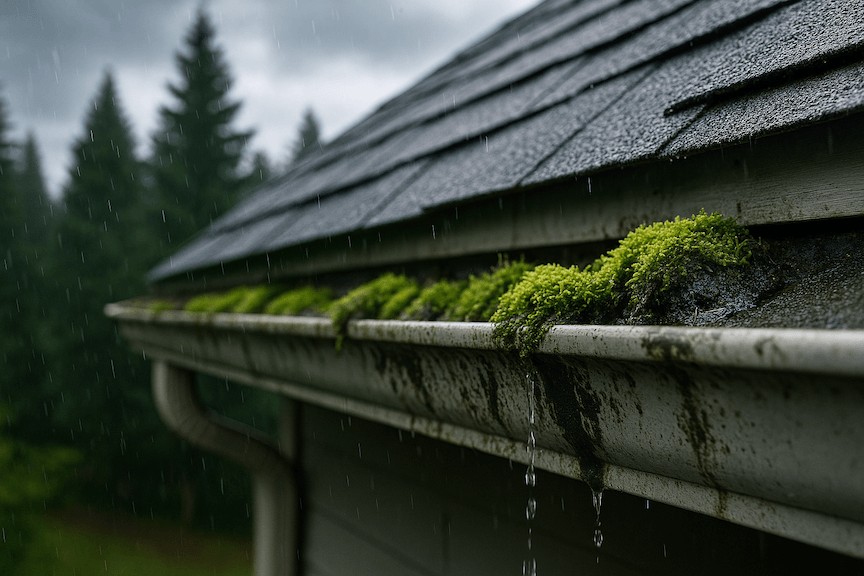
When moss establishes itself in gutters, it acts as a sponge, absorbing and retaining water. This water retention and growth add weight that strains gutter hangers and pulls entire gutter systems down. However, the damage goes deeper, as the moss in gutters attaches itself using tiny rhizoids that dig into gritty surfaces. This traps moisture directly against gutter surfaces, leading to rust and corrosion in steel gutters, as well as the degradation of aluminum gutters over time.

Most dangerously, moss in gutters prevents proper drainage, which means that water overflows and cascades down exterior walls, soaking the wooden fascia boards that hold the gutters. This is where a simple cleaning job can quickly escalate into a need for full fascia board replacement, which Washington residents would want to avoid.

When Mold in Gutters Becomes a Health Hazard

Wherever moss thrives, mold is never far behind. As such, your gutters could become a thriving ecosystem of various molds and mildews. Therefore, while cleaning visible growth from your gutters is important, you should also be concerned about what you can’t see.

The spores from mold in gutters can easily enter your house through small cracks, attic vents, and windows. Once inside, they degrade your indoor air quality and pose larger health risks, especially for people with allergies, asthma, and other respiratory illnesses. The musty smell that sometimes permeates a house after it rains can often be traced back to a moldy and overflowing gutter system by the window.

This makes addressing mold in gutter systems an essential part of home maintenance, not only for the structure but also for health reasons.

The Domino Effect: From Gutter Clogs to Fascia Board Rot

This is where the true cost of neglect adds up, a destructive sequence any experienced gutter repair Washington professional knows all too well.

It starts with the clog, then debris and mold build up, trapping water. As the water overflows, it spills onto the fascia boards. In Washington’s damp climate, constantly wet fascia boards do not dry out. Instead, the water soaks in, the wood softens, and the rotting begins. You never see it until the paint starts bubbling or you notice the wood crumbling. By then, the structural integrity of the wood has already been compromised.

Rotting fascia boards can no longer securely hold the weight of the gutters, especially when clogged with water and moss. The result is sagging gutters that fall off if not cleaned or repaired immediately. Typically, gutter problems are discovered during cleaning, and what began as a simple $200 gutter maintenance task now becomes a $2000 project that includes full gutter reinstallation and the necessary fascia board replacement that Washington homeowners dread.

How Professional Washington Gutter Cleaning Fights Back

You can always handle gutter cleaning yourself, but dealing with slippery, moss-laden gutters is a risky venture. Furthermore, professional Washington gutter cleaning involves more than just dirt and debris removal; it also includes inspecting the gutters and fascia and implementing protective measures.

Expert technicians do not just scoop the muck. They also power-flush downspouts to restore flow, inspect for signs of rot and corrosion, and even fix loose fasteners that you would miss. They also apply mild treatments to slow down moss and mold regrowth, thus giving your gutters a fighting chance.

For many homeowners, this proactive service is the difference between affordable routine maintenance and a desperate call for emergency gutter repair services in Washington during a storm.

Do Not Let the Northwest Green Take Over Your Home

As your gutters work tirelessly all year round to defend your home against Washington’s relentless weather, ignoring the unique threats posed by moss and mold isn’t just neglect, but a gamble with your home’s structural health and your own. What seems to be a simple issue today can quickly spiral into extensive and expensive repairs in the long run.

Luckily, at Gutter Empire, your local expert in gutter cleaning, repair, and maintenance in Washington, we understand that the solution is consistent and knowledgeable care. We know how the Washington climate attacks your gutter system, and since we confront this kind of damage daily, we have the expertise to both fix and prevent it.

As local gutter cleaning services near you, we are ready to help keep your home safe and dry. We handle everything from comprehensive Washington gutter cleaning that eliminates moss at its source to precise gutter repair residents trust to address damage early.

Don’t wait for water stains to appear on your ceilings or for your gutters to fall away from the roof. Schedule your professional gutter evaluation with Gutter Empire today by calling (971) 777-9899 or contacting us online for a free estimate. We’ll show you how a proactive gutter maintenance approach can save you thousands and deliver peace of mind all year long.


Key Takeaways

  1. Washington’s damp, evergreen climate fuels the growth of moss and mold, which clogs gutters, traps moisture, and accelerates wear and tear.
  2. Moss acts like a sponge in gutters, adding weight, causing corrosion, and leading to fascia board rot and sagging gutter systems.
  3. Mold growth in gutters is more than just a structural issue; it poses a significant health risk, as spores can enter homes and compromise indoor air quality.
  4. Neglected clogs trigger a domino effect, escalating from small maintenance needs to expensive fascia replacement and full gutter reinstallation.
  5. Professional Washington gutter cleaning services go beyond debris removal, providing comprehensive inspections, downspout flushing, minor repairs, and moss prevention treatments.

Last updated: October 2025

Categories
Blog Gutter Cleaning Gutter Installation

Box Gutters in Washington: Are They Worth the Upgrade?

If you’ve lived in Washington for even a year, you already know the rain doesn’t quit. Some weeks it feels like the sky can’t make up its mind: It’ll drizzle, clear up for twenty minutes, then drop buckets again. And then there’s the moss, always spreading, and pine needles clogging drains faster than you can scoop them out. That’s why gutters here matter so much more than they do in, say, Arizona.

The big debate? Whether upgrading to box gutters in Washington makes sense, or if you’re better off sticking with more familiar gutter system types like K-style or half-round. Let’s walk through how they stack up and where they might actually be worth the investment.

What Box Gutters Are (And Why They’re Different)

Box gutters aren’t the ones you can grab at the big-box store in aluminum sections. They’re built in place, usually square or rectangular, and designed to disappear into the roofline. That’s why people sometimes call them “built-ins.”

If you’ve walked around older neighborhoods in Seattle, such as Capitol Hill, Queen Anne, or even parts of Spokane, you’ve probably seen houses that look like they don’t have gutters. They do. They’re just tucked into the roofline. That’s the box gutter style.

Traditionally, builders lined them with copper or even lead sheets. Modern versions use copper, stainless steel, or EPDM membranes. When they’re detailed properly, they can last 70 years or more. However, if seams or corners are sloppy, water can creep into the walls and soffits, and you won’t notice until the paint bubbles or the ceiling stains.

Comparing Gutter System Types

So, how do box gutters compare with K-style and half-rounds?

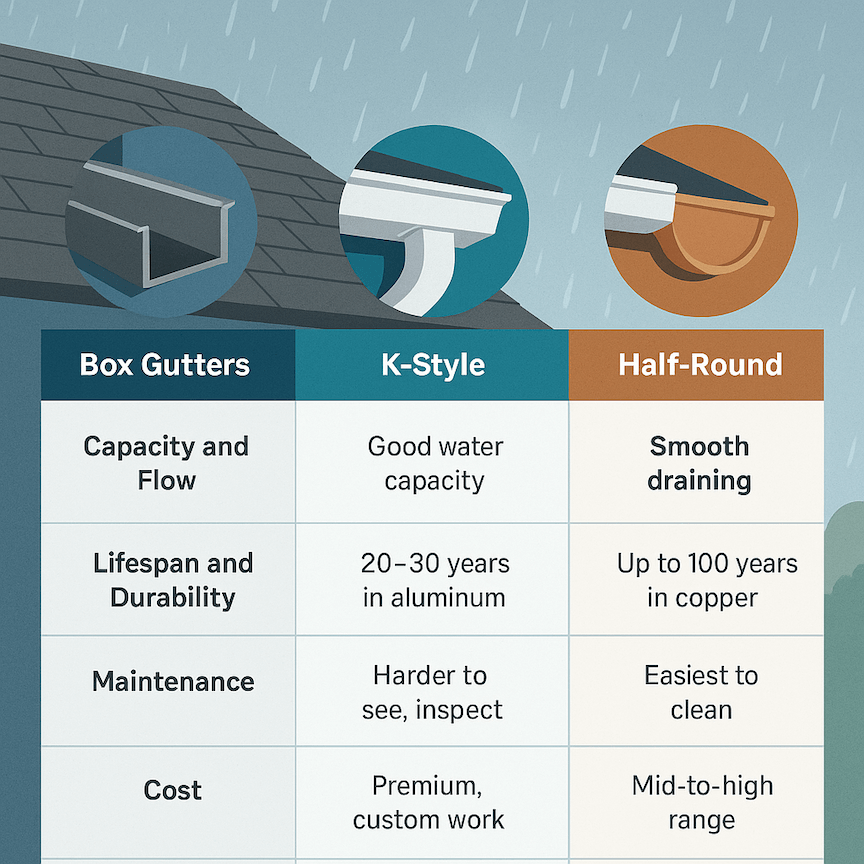
Capacity and Flow

  • Box gutters: These can be sized as big as you need. Flat or low-slope roofs, common on some Seattle modern builds, benefit most because water sheds more slowly.
  • K-style: They hold more water than half-rounds, thanks to their shape. But those sharp inside corners are a magnet for debris.
  • Half-rounds: They drain smoothly. Pine needles slip through more easily, but they carry less water overall, so during a storm, they can spill faster.

Lifespan and Durability

  • Box gutters: Copper or stainless liners can outlast the roof itself, sometimes for over 70 years. Membrane liners are less expensive but can fail prematurely, especially at seams.
  • K-style: Aluminum versions last 20–30 years, which is solid, but nowhere near the longevity of box gutters.
  • Half-rounds: In copper, they’re practically heirloom fixtures (close to 100 years). Steel or aluminum versions line up with K-style in lifespan.

Maintenance

  • Box gutters: Harder to see, harder to check. By the time you spot a problem, it might already be inside the house.
  • K-style: Easy to add guards, but corners still trap junk. You’ll be up a ladder often in the fall.
  • Half-rounds: By far the easiest to flush clean. That curved shape makes a difference in how debris moves.

Why People Actually Love Box Gutters

Washington architecture swings both ways: historic craftsman homes with ornate trim and ultra-modern builds with flat planes and sharp lines. Box gutters fit both.

  • Historic homes: Replacing original built-in gutters with K-style can throw off proportions. You lose the clean fascia line. Keeping box gutters preserves the original design.
  • Modern builds: Minimalist houses look sharper when the gutters are not visible at all. Box gutters essentially disappear, which is precisely the point.
  • K-style: The standard for most subdivisions. It is practical and adaptable, but visible.
  • Half-round: They carry an old-world elegance, perfect for those who want a heritage look.

What It Really Costs

Here’s the part most people ask first: the price.

  • Box gutters: Custom work, skilled installation, premium materials. All that adds up. Think at the higher end of gutter pricing, sometimes well beyond.
  • K-style: Aluminum K-style runs about $6–$13 per foot nationally. Affordable, easily accessible, and easily replaceable.
  • Half-round: Mid- to high-range, especially in copper, where costs hit $24–$36 per foot.

At first glance, box gutters appear to be overkill. However, if you plan to stay in the house for decades, its long lifespan can make it more cost-effective over time. One copper box gutter system might last seventy years. In that same stretch, you’d likely replace aluminum K-style gutters at least twice, maybe three times.

Who Box Gutters Are Best For

So, who should actually consider them?

  • Owners of historic homes: If you’re restoring a craftsman in Seattle or Tacoma, box gutters are part of the original design.
  • Fans of modern minimalism: For those flat-roofed, sharp-lined homes, visible gutters ruin the effect. Box gutters disappear.
  • Homes with big drainage needs: Flat or oversized roofs produce runoff that smaller systems just can’t manage.
  • Long-term homeowners: If you’re planning to pass the house down to your heirs or stay put for decades, box gutters make financial sense.

Maintenance in a Pine-Needle World

Washington homeowners can’t skip gutter maintenance. Pine needles fall year-round. Moss grows even in places you didn’t think possible.

  • With box gutters, the danger is hidden leaks. That means inspections are non-negotiable.
  • With K-style, you’ll be scooping needles out of corners unless you have guards, and even then, guards don’t stop everything.
  • With half-rounds, cleaning is easiest, but undersizing is a risk during storms.

So, Are They Worth It?

The million-dollar question: Are box gutters in Washington worth the upgrade?

  • Yes, if design, long lifespan, and custom capacity are the most important factors. They fit both historic preservation and modern minimalism.
  • Maybe, if you love the look but aren’t ready for the maintenance commitment or higher upfront cost.
  • No, if you want the simplest, most affordable option without the fuss. K-style will almost always get the job done.

Gutters don’t usually top the list of dream home upgrades. But here, in a state where rain is part of daily life, the choice of gutter system types isn’t cosmetic. It’s protection.

Box Gutters vs. K-Style vs. Half-Round: Washington Gutter Comparison

Feature Box Gutters K-Style Gutters Half-Round Gutters
Visibility / Aesthetic Built-in / concealed; preserves historic & modern lines. Visible profile; common on most homes. Visible rounded profile; classic/heritage look.
Capacity & Flow Custom-sized for very high capacity; ideal for large/flat roofs. Good capacity; corners can trap debris. Smooth flow but lower capacity; can overflow in downpours.
Best Roof Types Flat/low-slope, complex rooflines, historic or ultra-modern designs. Most pitched residential roofs; easy to spec and install. Pitched roofs seeking a traditional look; works well with guards.
Typical Materials Copper, stainless, or membrane liners (EPDM) within built-in trough. Aluminum most common; also steel or copper. Copper, aluminum, or steel.
Lifespan (well-maintained) Up to 70+ years (metal liners); membranes shorter. ~20–30 years (aluminum). Aluminum/steel ~20–30 yrs; copper can approach ~100 yrs.
Maintenance & Access Harder to inspect; hidden leaks can escalate. Easy to service; frequent corner cleanouts. Easiest to flush clean; debris sheds well.
Clog Tendency (PNW debris) Depends on design; requires vigilant inspection. Corners collect needles/leaves; guards recommended. Less debris buildup; still benefits from guards.
Pros
  • Discreet look (historic/modern).
  • Custom capacity for big roofs.
  • Very long life with premium liners.
  • Affordable & widely available.
  • Good capacity; easy to repair.
  • Works with many guard types.
  • Elegant look; easy cleaning.
  • Excellent lifespan in copper.
  • Smooth interior reduces snagging.
Cons
  • Highest upfront cost (custom).
  • Diagnosis/repairs more involved.
  • Corners trap debris.
  • Shorter lifespan vs. copper/box.
  • Lower capacity; risk of overflow.
  • Higher cost in copper.
Installed Cost (relative) Highest • Custom/liner-based pricing. Lower–Mid • Aluminum commonly most affordable. Mid–High • Copper at the top end.
Best For Historic preservation, modern minimalism, large/flat roofs, long-term owners. Most standard homes seeking value, availability, and easy service. Design-driven homes wanting classic aesthetics and easy upkeep.

Make the Call with Confidence

At the end of the day, gutters aren’t glamorous, but they’re essential. Box gutters bring a sleek, built-in look and the capacity to handle Washington’s unpredictable weather. They’re not right for everyone, but for the homes that need them, they’re hard to beat.

At Gutter Empire, we help homeowners weigh the options: box, K-style, or half-round, based on design, cost, and how they’ll perform here in the Northwest. If you’re thinking about an upgrade, reach out to us today. We’ll assess your home, roofline, and budget to design a system that keeps your house safe for years to come.


Key Takeaways

  • Box gutters offer a sleek, built-in design with a lifespan of up to 70+ years, but require higher upfront costs and careful maintenance.
  • K-style gutters are the most common choice, being affordable and practical, but they are prone to corner clogs and require more frequent replacements.
  • Half-round gutters offer easy maintenance and a classic look, with copper versions lasting up to 100 years, although they have a lower water capacity.
  • For historic or modern homes in Washington, box gutters preserve aesthetics while delivering strong drainage.
  • Choosing the right gutter system depends on budget, design preference, and long-term durability needs in Washington’s rainy climate.

    Last updated: October 2025
Categories
Blog Gutter Cleaning Gutter Guards

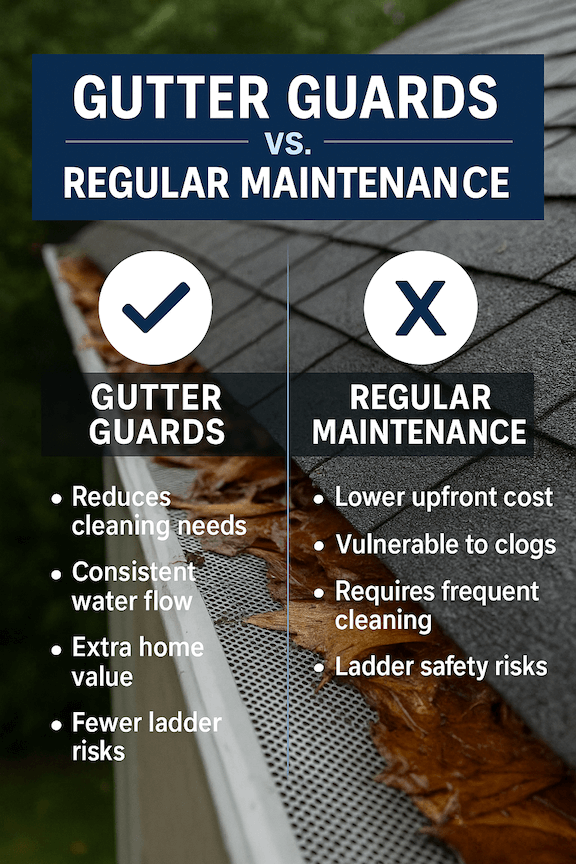
Gutter Guards vs Regular Maintenance: What’s Better for Rainy Washington?

If you own a home in Washington, you already know the story: Rain is part of life. From steady drizzles to downpours that seem to last for days, gutters are constantly put to the test. The bigger question isn’t whether you need them but how you keep them working.

Should you keep paying for regular cleanings, or is it smarter to install gutter guards and reduce the constant cycle of clogs and call-backs? Washington homeowners ask this every fall when the leaves drop, the fir needles drift down, and moss seems to multiply overnight.

Let’s take an honest look at gutter cleaning versus gutter guards in Washington, so you can decide which approach makes the most sense for your home and your budget.

Why Gutters Matter So Much in Washington

Rain itself isn’t the problem. It becomes an issue only when there is nowhere safe to go. In the Pacific Northwest, that’s an everyday challenge. Gutters deal with three big headaches:

  • Falling leaves from oaks and maples can pile up overnight in tree-lined neighborhoods.
  • Needles from firs and pines, thin but stubborn, that tangle together like a net and stop water in its tracks.
  • Moss, which grows thick on damp, shaded roofs and then breaks loose into the channels below.

When those clogs start, water backs up under shingles, drips into siding, or settles around a foundation. Given enough time, that can mean wood rot, mold inside the walls, or a wet basement no one wants to deal with. What starts as “just a little buildup” can quietly turn into thousands in repairs.

That’s why the decision between regular gutter cleaning in Washington and installing guards is about keeping a home protected in a climate where rain is always part of the forecast.

The Case for Regular Gutter Maintenance

Many homeowners stick with tried-and-true cleaning. It’s straightforward and, for the most part, effective.

Benefits of Routine Cleaning

  • Lower upfront cost: You pay per cleaning rather than covering the installation of a guard system.
  • Flexibility: If you already have landscaping or yard crews, adding gutter service to the routine is simple.
  • Built-in inspections: Every cleaning gives professionals a chance to spot sagging sections, leaky seams, or loose downspouts.

Some Washington homeowners even prefer to do it themselves. A Saturday with gloves, a ladder, and a bucket can clear out debris, at least temporarily.

Drawbacks of Cleaning

The problem is frequency. In WA, gutters clog faster than almost anywhere else in the country. Fir needles can fill a system in just weeks, meaning two, three, or even four cleanings may be required in a single season.

Add in the ladder risks, especially on slick fall days, and the “cheap” option doesn’t always feel worth it. Plus, missing even one cleaning during peak storm season can undo months of careful upkeep.

This is why relying solely on gutter maintenance sometimes feels like running in circles. You stay on schedule, but the trees and moss continue to shed.

The Case for Gutter Guards

Gutter guards act as a protective cover or filter, allowing rain to pass through while keeping most debris out. In Washington, that often means less stress when storms hit one after another.

Benefits of Gutter Guards

  • Reduced cleaning needs: Instead of climbing the ladder four times a year, many homeowners only need a quick seasonal checkup. That means less time scooping out soggy leaves.
  • Consistent water flow: Guards stop most debris from settling, so gutters can keep up during Washington’s heavy fall storms.
  • Extra home value: Buyers often view gutter guards as a bonus upgrade, a feature that makes a house easier to maintain over time.
  • Fewer ladder risks: Every skipped cleaning is one less chance of slipping on wet rungs or losing balance while reaching over the edge.

For many people, the biggest perk is peace of mind. It’s knowing you don’t have to drop everything during the first storm of the season to deal with overflow.

Drawbacks of Gutter Guards

Still, they’re not perfect. Upfront installation costs more than scheduling a cleaning. Fine debris, especially fir needles and moss dust, can still get through, depending on the system. And if guards aren’t installed correctly, water may overshoot the edge during torrential rains.

That’s why gutter guard installation in Washington calls for local expertise. Systems that work well in drier climates don’t always withstand our rainfall.

Cost and Convenience Comparison

So, which saves more money? The answer depends on how long you plan to stay in your home.

  • Short-term savings: Regular cleaning usually wins. A bill for a single cleaning costs far less than installing guards.
  • Long-term savings: Guards often catch up. If you’re spending hundreds each year on multiple cleanings, the math balances out within a few years.

Convenience also plays a role. If you dread calling for cleanings or hate seeing water spilling over during storms, guards may be worth the investment even if they take longer to pay for themselves.

How Gutter Empire Washington Helps Homeowners

Most homes in WA benefit from a mix of both.

At Gutter Empire, we install guards designed for the Pacific Northwest climate, strong enough to handle moss, needles, and heavy downpours. At the same time, we continue to offer professional gutter cleaning in WA, as even the best systems require seasonal maintenance.

A Kalama bungalow shaded by evergreens isn’t the same as a Vancouver craftsman under wide maples. We’ve worked on both, and we know how each roofline needs a slightly different guard setup.

Our job isn’t to sell one option over the other. It’s to provide you with the facts, explain the pros and cons, and ensure your gutters are ready before the rainy season arrives.

If you’re tired of worrying about what’s sitting in your gutters right now, it may be time to act. Call Gutter Empire at (971) 777-9899 to schedule an inspection. We’ll walk your property, show you the options, and help you decide whether gutter guards, regular maintenance, or a combination of both is the right choice for your home.

Last updated: October 2025

Categories
Blog Gutter Installation

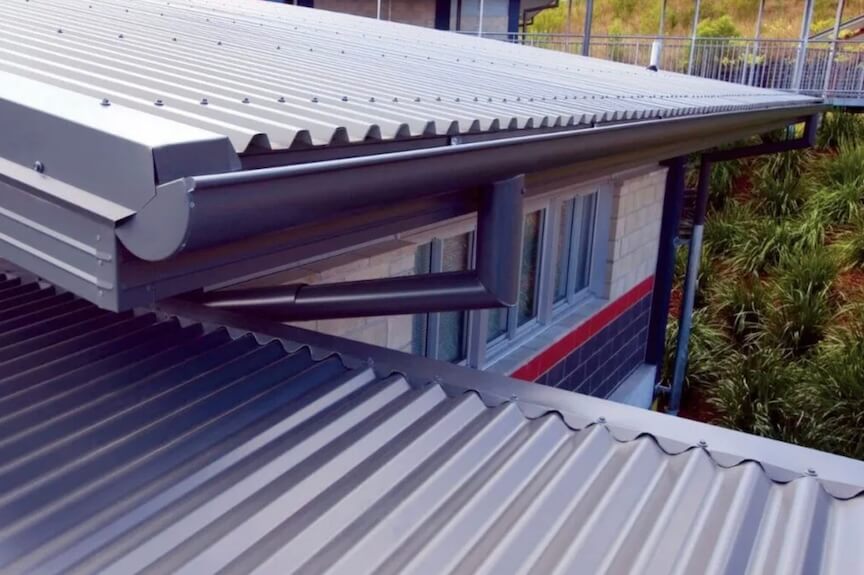
The 3 Main Types of Gutters for Metal Roofs

Metal roofs can look incredible on your house, and you must also think about maintaining them well. Installing an efficient gutter system is one of the best ways to do so. The gutter will catch hold of the rainwater and will not allow it to pool on the roof or around the house. However, just installing any random gutter system also does not work. You must get a gutter system that works efficiently and also looks great on your house’s metal roof. 

While there are several types of gutters available today in the market, you must learn the options that complement your metal roof well. Usually, there are 3 types of options available when you look for gutters for metal roof in Vancouver. Let us learn more about these gutters and many other aspects of gutters for a metal roof. 

Why Do You Need Gutters for a Metal Roof?

Many homeowners believe that since metal roofs are so strong, there is no need to install gutters. However, there are various reasons to get rain gutters on a metal roof. Let us review some of the most important ones here. 

  • Unpredictable Rain

Vancouver is known for its heavy rainfall, particularly during the winter months. You may experience unpredictable rainfall at various times of the year, except during the extreme summer months of July and August. Continuous rainfall can damage your roof as well as the house foundation and exterior structure. However, when you have a gutter system installed, the rainwater gets collected in it, and the downspout channels the water far away from the house foundation, keeping everything safe from water damage. 

  • The Snow

Apart from rainfall, Vancouver residents also experience substantial snowfall when winter arrives. When the snow starts melting, the water can again flood the roof and cause damage. However, with a proper gutter installed, the water moves through the downspout to reach a place away from the house foundation. Also, the gutter prevents water from entering the metal roof panels. Otherwise, this water can freeze, creating leaks and other damage. 

  • Soil Erosion

When water starts falling from different sides of the roof, this causes soil erosion around the house. To prevent this, you must install a gutter that allows water to flow through the downspout and discharge at a specific location. This reduces the chances of soil erosion around the house. 

  • Prevents the House from Water Damage

When water falls on the metal roof, it immediately glides down from all sides of the house. You can notice water falling from the roof, touching the house walls, windows, and other elements on the exterior of the house. Regular interaction with water will cause them to rot and get stains. So, again, a gutter system will prevent such instances and keep your house’s exterior from water damage. 

  • The House Foundation

One of the biggest problems of not having a gutter system is that it can cause substantial damage to the house foundation. When water seeps from the roof sides and falls on the house foundation, it causes soil erosion, and even the ground around the house to sink. This weakens the house foundation and increases the risk of cracks and other structural damage, for which you may have to spend a significant amount on repairs.  

  • Pooling at the Foundation

The water seeping from the roof not only causes the soil under the foundation to erode but also may create a pool of water around the house. When water remains in a single place for an extended period, it becomes a breeding ground for various insects, pests, and even smaller animals. These entities can even find their way to enter the basement and cause damage to the house’s interior assets. 

3 Main Types of Gutters for Metal Roofs

When searching for gutters for a metal roof in Vancouver, consider these three most efficient types to consider. 

  • Half-Round Gutters

A half-round gutter is a traditional gutter commonly found in most older homes. It is named so because it is semicircular. One of the best features of a half-round gutter is its higher durability. This is one of the primary reasons why many homeowners still prefer to install a half-round gutter, even when many modern options are available. 

A half-rounded gutter is available in various widths, ranging from approximately 4 inches to about 8 inches. These are available in various materials, including galvanized steel, copper, and aluminum. These gutters are installed along the roof’s eaves to collect water and channel the collected water through the downspout.  

While a half-rounded gutter is a common choice for many old residential properties, it is mostly found in historic buildings. The gutter system is excellent in preserving the architectural authenticity of the historic buildings. Also, the design of the gutter offers a natural character to the buildings. Similarly, many residential properties still use this gutter type to add a touch of elegance to their property. 

  • K-Style Gutters

This is the most common type of gutters for a metal roof in Vancouver. It has a flat base and rounded corners; however, when viewed from the side, you will notice the K-shaped letter. A K-style gutter is considered better than the traditional half-round gutter because it has a higher capacity to store more water. So, if you stay in a place with high rainfall or have a bigger roof, this style can be one of the best options for your house’s metal roof. 

The K-Style gutters range in width from 5 inches to 6 inches and can be made from diverse materials, including steel, aluminum, or vinyl. When you install this gutter, water from the roof’s eaves falls into the gutter and then the water finally channels to the downspout. 

A K-style gutter is a good idea for residential homes because it offers a fantastic aesthetic to the houses. Of course, it also has great functionality. On the other hand, it is most suitable for commercial buildings as this gutter type can handle a huge amount of water without any trouble. 

  • Box Gutters

Box gutters are named so because they are square or rectangular in shape. Compared to the above two gutter types, a box gutter is usually vertical and flat. Box gutters are typically customized to match the size and shape of the house’s roof. Similar to the above two gutter types, a box gutter also collects water from the roof eaves to channel it to the downspout. You can come across a box-style gutter in various materials, including copper, steel, and aluminum. 

You will find a box-type gutter usually in commercial buildings such as factories, warehouses, and similar others. These are a great choice for customized residential houses, offering an adaptive fit for gutters with a metal roof in Vancouver. 

How to Pick the Right Gutter for your Metal Roof?

Now, the big question is about picking the most suitable gutter from these three options for your house’s metal roof. While it can be an extremely complex and daunting task, understanding a few factors can make the task simpler. Let us break through these factors to offer you a much better idea for your selection. 

  • Gutter Material

Whether you want a half-round gutter, a K-style gutter, or a box gutter, you can pick from different materials out of which they are made. Aluminum is the most common material you will find when shopping for any of these gutter styles. Apart from aluminum, other common materials you will encounter include copper and steel. Here, it is essential to note that materials like copper are among the best options for offering both aesthetic appeal and durability to your roof; however, they are also among the most expensive options. Similarly, steel is another great option within budget; however, you may need to consider regular maintenance for it. Therefore, you must consider factors such as weather conditions and budget when selecting the right material for the gutter. 

  • The Style and Size

Now, it is time to choose the correct size of the gutter according to the style that you have chosen. Selecting the right gutter size is essential as it should be able to collect a larger amount of water according to your house’s roof. Often, you may need to upgrade the gutter size to a larger one, such as 6 inches, if you believe the current size is insufficient to hold enough water. 

The style should complement the house style well. For example, a K-style gutter features an angular design that may not complement all house styles. So, it is essential to understand which style will look aesthetically good on your house roof. Choosing the right gutter style that is compatible with your house’s roof is a crucial factor to consider. 

  • Durability

The durability of the gutter will depend on the material you choose for the gutter. You must consider factors like severe weather conditions and check whether the material you have chosen can withstand the impact of such weather conditions. Consider a material that remains intact without any cracks for an extended period. 

At the same time, the structure and construction of the gutter also play a major role in the durability factor. For example, a half-round gutter is considered one of the most durable options due to its long-lasting performance. Similarly, box gutters are specifically designed to withstand harsh weather conditions. 

  • The Installation

Installing gutters for a metal roof in Vancouver can get tough. So, you must pick a gutter style that is convenient to install. At the same time, the gutter should fit properly without any issues with attachment. In the event of improper gutter installation, issues such as leakage and water overflow may occur. If you have a complex roof design, it is essential to contact professional gutter services for installing a gutter. 

Options like a box gutter may require precise installation to avoid issues such as sagging and improper alignment. A box gutter is a great option for complex roofs because it is known for its customized installation. Search for the best gutter services near you, and the professionals will help you customize the box gutter to perfectly fit, shape, and size your house’s roof. 

  • Cost

Cost is a major factor to consider when choosing your gutter style and material. Several factors can impact the cost of a gutter, including the material chosen, design, and other considerations. In the case of a seamless design or installing a customized box design, skilled labor may be more expensive compared to other options. 

The cost of the gutter can rise based on the material you choose, such as copper, which can be an expensive option. Similarly, the size of the roof will also impact the gutter size and, accordingly, the price that you have to pay for it. 

  • Maintenance

Apart from all the above factors, you must also consider the maintenance of the gutter system. For example, while a K-style gutter can hold more water, it can also catch higher debris because of the several corners and crevices that it features. You should regularly clean and maintain the gutters to keep debris away and prevent clogging. On the other hand, a half-round gutter is easier to maintain. The rounded channels prevent debris from accumulating, thereby reducing the likelihood of clogging in this style. However, regardless of the gutter you select, you must ensure proper maintenance, such as installing a gutter guard to keep debris away. 

Select the Right Gutter Type

When you have a metal roof, it’s essential to select the right gutter type. A proper gutter will not only protect your roof and house exteriors from water damage but also offer an impressive aesthetic to the property. Go through the eminent factors and then pick the most suitable style of gutters for a metal roof in Vancouver for efficient rainwater management.  Still, if you face difficulty, you can consult a professional to understand the various gutter styles and the types of gutter guards that can be installed.

Last updated: October 2025