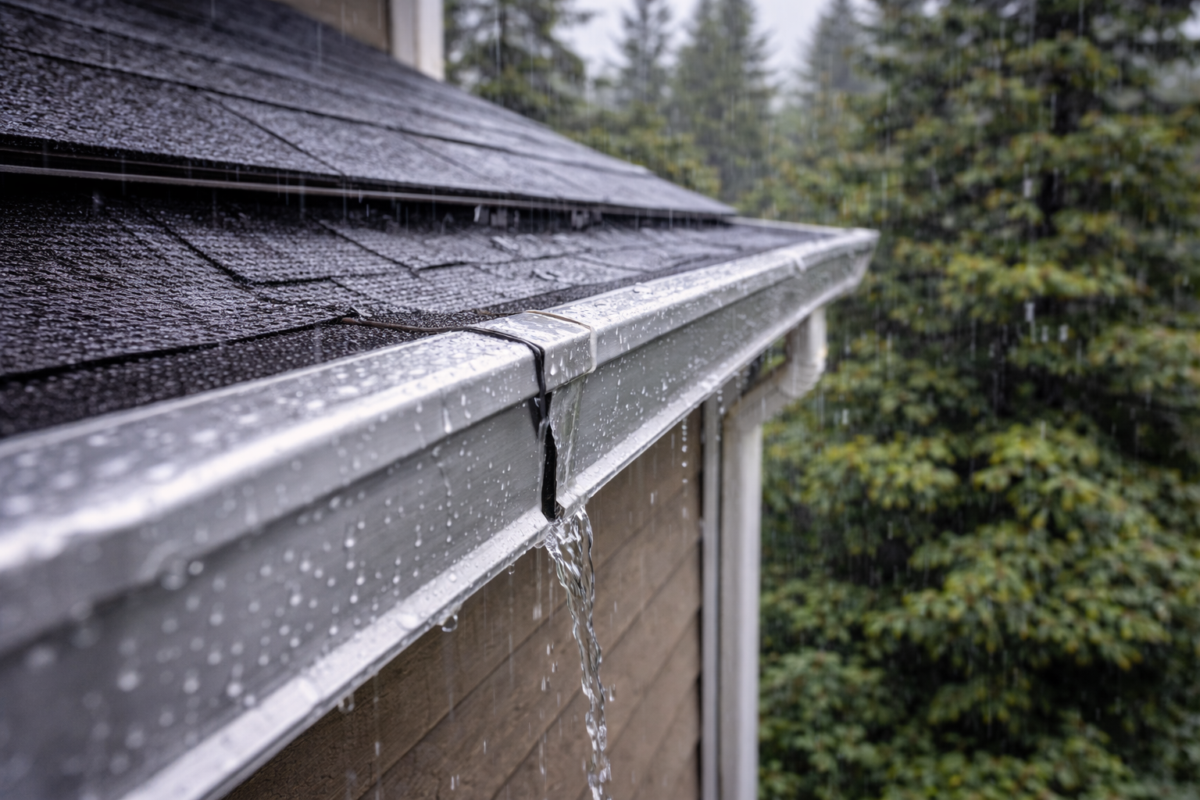
For Washington homeowners, gutters are not a small detail. They sit outside through months of steady rain, wind, and debris that never really takes a season off. That is why aluminum gutter installation continues to be the practical choice.
Aluminum holds up well in wet climates, but it still has limits. A system can last for decades, but only if it is installed correctly and maintained in a simple, consistent way.
In this article, we will look at why aluminum works so well here, what causes bending and sagging, and the basic habits that keep you from needing constant gutter repair.
Quick Answer
Aluminum gutters are the best balance of durability and affordability for Washington’s wet climate because they resist rust, stay lightweight, and perform well under constant rain. Most bending and sagging are caused by installation issues, clogged debris, or loose hangers—not the aluminum itself. With proper pitch, adequate support, and routine cleaning, an aluminum gutter system can last decades with minimal repairs.
Why Aluminum Is Washington’s Go-To Gutter Material
Aluminum has become the default material for many homes in the Pacific Northwest, and it is easy to see why once you think about the climate.
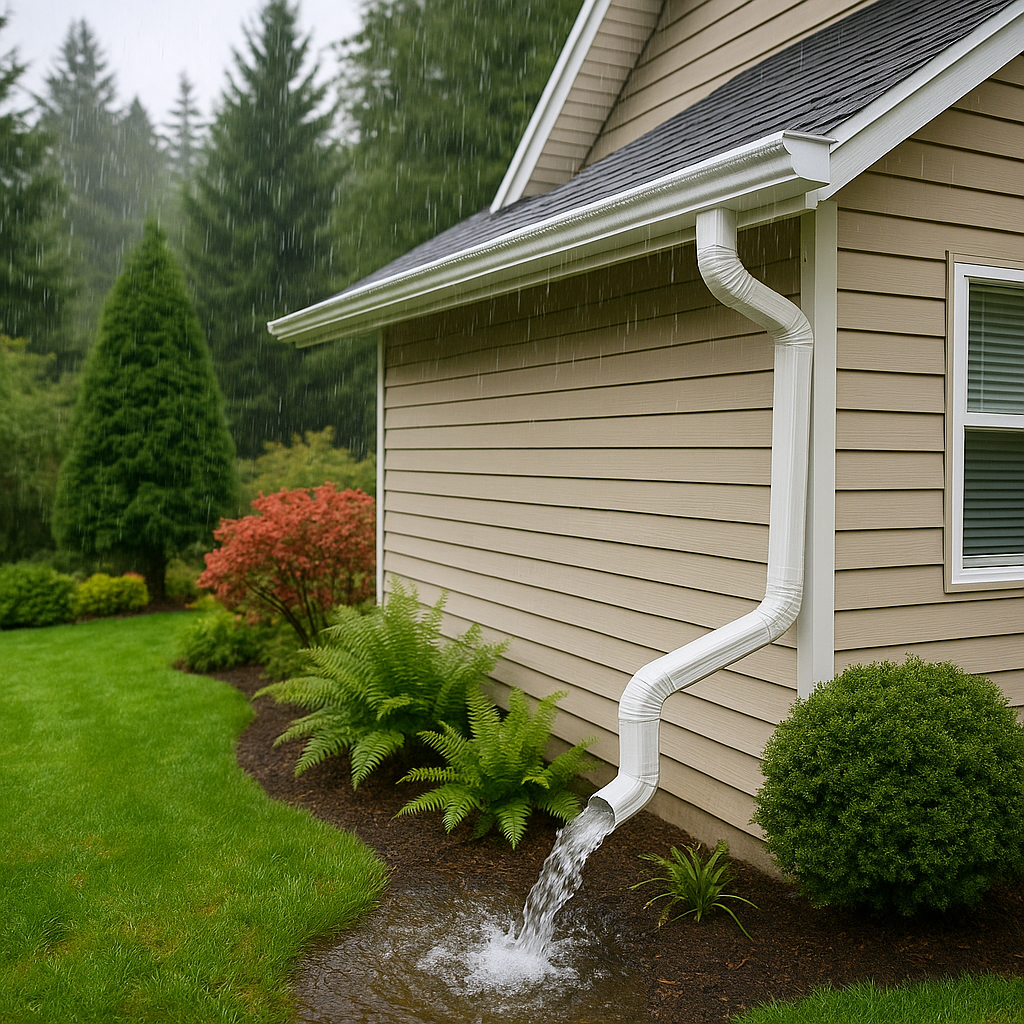
Aluminum works so well in wet climates because it does not rust the way steel can. It protects itself passively, forming a thin oxide layer when it comes into contact with air, which helps it remain stable over long periods of moisture and rain.
Its weight matters, too. Aluminum has sufficient strength for real runoff but remains light enough not to overload fascia boards or roof edges. During heavy storms, gutters can hold more water than most people expect, making proper support essential.
And then there is long-term value. Homeowners often want something that lasts without pushing them into the most expensive option. Aluminum tends to strike that balance. A well-done gutter installation can remain functional for years without becoming a constant maintenance project.
The Real Culprits Behind Bending and Sagging
Most homeowners assume that sagging gutters mean the material failed. Aluminum usually performs fine. The real issues often arise from what the gutter is required to hold and how it was originally installed.
Improper Installation
The most common cause of bending and sagging is simple: The gutters were not installed with the right support or pitch. When hangers are spaced poorly or the slope does not properly direct water toward the downspouts, water begins to pool. That adds weight and stress.
Loose or broken hangers, pulling fasteners, and drainage-slope problems are common issues in gutter maintenance. Those failures first appear at attachment points, not across the aluminum itself.
In Washington, this gets worse after storms. Wind shakes the long gutter, which runs like a lever. A weak connection may hold for a while, but it eventually shows up as a low spot or separation.
Debris Overload
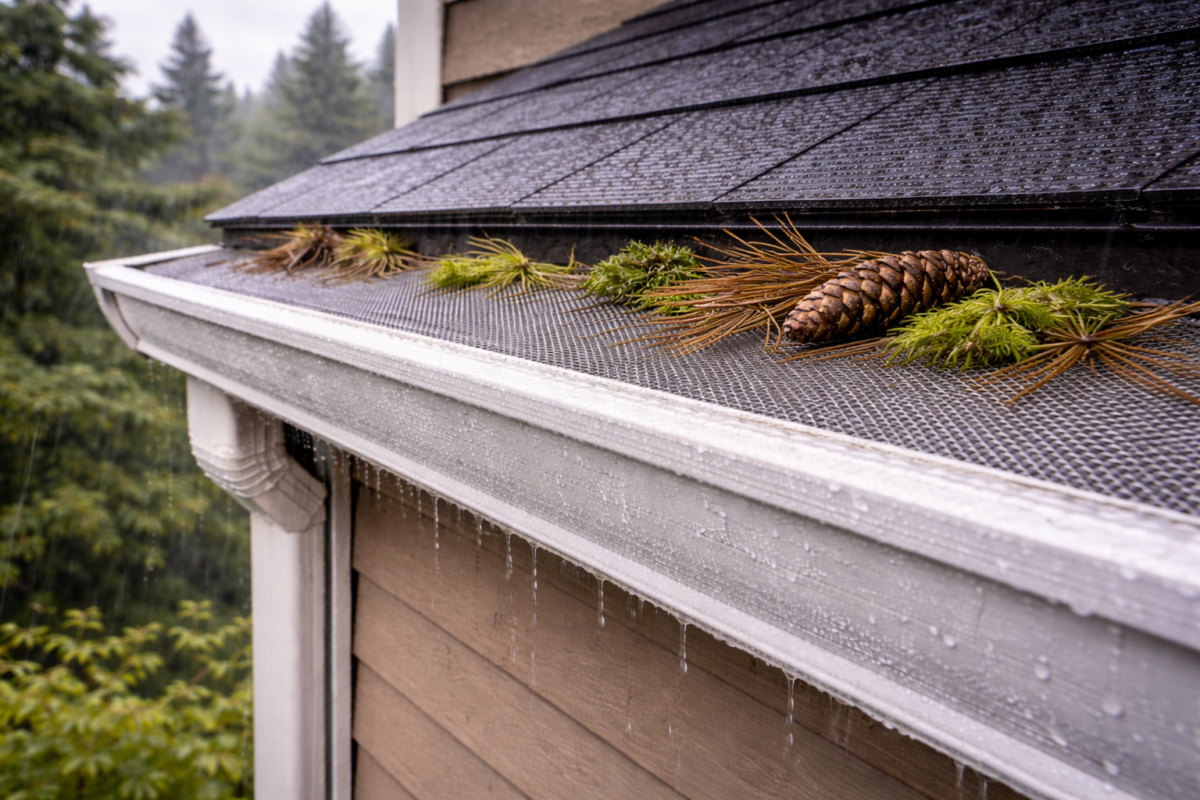
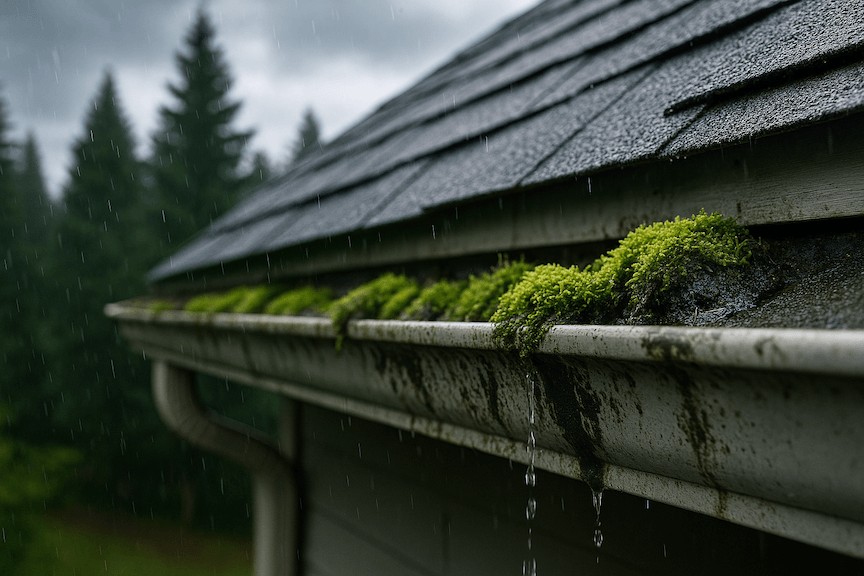
The next big culprit is debris. Washington does not just deal with dry leaves. Gutters here collect wet pine needles, roof grit, and compacted material that retain water. That creates a loop:
Clogged gutter → standing water → added weight → hanger strain → sagging → more standing water.
It builds slowly, then suddenly becomes obvious when water overflows.
Gutter and downspout cleaning is a basic preventive measure to reduce water damage. When water cannot move through the system, it finds another path, often right down your siding or into the foundation zone. That is when homeowners start calling for emergency gutter repair or even gutter replacement.
Ice Dam Pressure
Ice is less common in western Washington than in colder states, but freeze-thaw cycles still happen. Ice becomes a problem when gutters are already clogged with water or debris. When that water freezes, it expands and pushes against the gutter shape.
The key point is that ice rarely starts the issue. It usually exacerbates an existing weakness, such as poor drainage or clogged drains.
The Role of Professional Installation
Aluminum gutters last longest when the details are handled correctly upfront. That is where professional installation makes a major difference.
Seamless Advantage
Seamless aluminum gutters reduce the number of joints along the run. Since joints are common leak points, fewer seams mean fewer places for small drips to develop over time. This helps homeowners avoid chasing tiny problems every rainy season.
A seamless approach supports durability by removing many of the weak links that first appear in older systems.
Precision Pitch & Support
The slope and support of a gutter decide whether water keeps moving or settles into a heavy pool. When installers set the proper pitch and install hangers that can hold weight, the system remains stable during extended periods of rain. Any small dip can turn into trouble once debris builds up.
Strong storms raise the stakes. During the November 2024 cyclone, gusts near Seattle reached about 77 mph, the kind of wind that exposes loose fasteners fast when gutters are already loaded.
Right-Sizing the System
Not every home needs the same gutter capacity. Roof shape, pitch, valleys, and runoff concentration all affect what the system must handle.
Professionals consider these factors to ensure homeowners do not end up with undersized gutters that overflow during heavy rain. Choosing the right style and size helps prevent frequent gutter repairs down the road.
Essential Maintenance for a Hassle-Free System
Even the best gutters require basic maintenance. The goal is not constant work. It is simple habits that prevent larger failures.
The Cleaning Imperative
Clearing debris remains the single most important maintenance task. It stops the standing-water weight problem before it starts. FEMA and the GSA emphasize the importance of keeping gutters and downspouts clear, as clogged systems can cause overflow and structural stress.
Annual Inspection Checklist
A simple yearly check goes a long way. Ensure the hangers stay tight, the downspouts drain cleanly, and no section dips enough to retain water. Look over the corners for worn sealant, and take a second glance after strong winds in case any part of the system shifted or loosened.
Protective Add-Ons
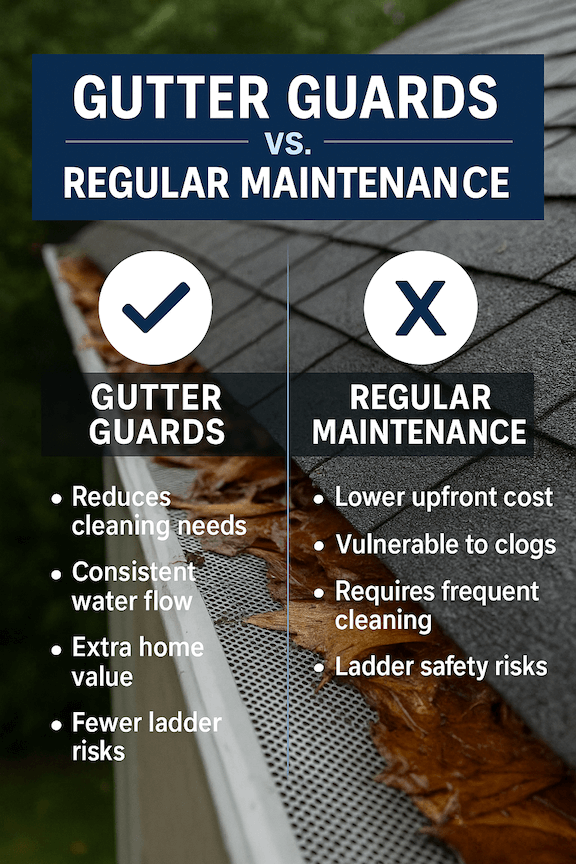
Gutter guards can reduce how often debris builds up, lowering the load the system must carry. They work best when the gutters already have the correct pitch and solid support. Guards do not fix failing attachment points, but they can make upkeep much simpler.
Secure Decades of Reliable Drainage
Aluminum gutters form a strong foundation for protecting a Washington home. They resist corrosion, withstand constant moisture, and remain reliable when installation and support are done correctly.
Most bending and sagging comes from preventable causes such as debris weight, poor pitch, or loose hangers, not from the aluminum itself. With basic yearly care and thoughtful upkeep, your system can stay out of your way and quietly do its job for years.
If you want that level of long-term reliability, contact Gutter Empire. We specialize in aluminum gutter installation and the support that prevents recurring gutter repair. Call us at (971) 777-9899, click here for a free estimate, or contact us to get a quote for lasting protection.
Key Takeaways
- Aluminum resists corrosion better than steel in Washington’s damp climate, forming a protective oxide layer that allows long service life without rust-related failure.
- Sagging gutters are usually an installation or maintenance problem—poor pitch, wide hanger spacing, or loose fasteners create standing water that overloads the system.
- Debris weight is the leading cause of deformation, especially wet pine needles and roof grit that trap moisture and increase structural stress.
- Seamless aluminum systems reduce leak points by eliminating most joints where separation and drips typically begin.
- Strong wind events expose weak attachments quickly, as Pacific Northwest cyclones regularly combine heavy rain with damaging gusts .
- Routine cleaning and annual inspections prevent most failures, keeping water moving freely through downspouts and away from fascia and foundations.
- Gutter guards help maintenance but cannot replace correct pitch and support—they work best on a healthy, properly installed system.
- Right-sizing gutters to roof runoff volume is essential to avoid overflow during Washington’s long, high-intensity rain periods.
Citations
- NASA: https://science.nasa.gov/earth/earth-observatory/extratropical-cyclone-whips-over-the-pacific-northwest-153605/