Gutter Installation & Gutter Guards in Vancouver, WA | Gutter Empire

Categories
Blog Gutter Repair

3 Common Myths About Gutter Repairs (and What Washington Homeowners Should Really Know)

If you live in Washington, you’re used to wet weather. Rain is part of daily life here, whether it’s a drizzle or a full-on downpour. The thing is, all that water must go somewhere, and that’s where your gutters come in. They quietly handle gallons of runoff during every storm, guiding it away from your roof, walls, and foundation.

However, just because your gutters look okay from the ground doesn’t mean they’re doing their job. A surprising number of people assume a quick cleaning is enough, or they try to patch leaks with whatever they have on hand, usually duct tape. Unfortunately, these assumptions can lead to some serious headaches.

This post addresses three of the most common myths about rain gutter repair, particularly for homeowners in Washington. We’ll also explain why ignoring small issues can lead to big and expensive problems and why bringing in the pros makes a real difference.

The Hidden Costs of Ignoring Small Repairs

Perhaps it begins with a loose bracket or a downspout that detaches after a windy day. These little things are easy to brush off.

When gutters sag or leak, water doesn’t drain properly. Instead of flowing away, it spills over the edge, seeps into the soil, and puts pressure on your foundation. You might not notice right away, but eventually, you’ll see cracks in the concrete or water spots creeping up the basement walls.

Seattle Public Utilities recommends directing gutter water at least five feet away from your home, and ten feet is even better. That might sound like overkill, but with the amount of rainfall we get, it’s necessary. One misaligned gutter can send thousands of gallons of water straight to your home’s base over time.

Then there’s safety. Climbing ladders to deal with clogs or leaks might seem like a money-saver, but the CDC continues to report high injury rates from DIY maintenance jobs. It’s not just about falling, either. Tools slip, brackets snap, and before you know it, a 10-minute chore becomes a trip to urgent care.

When you search for gutter repair near you, you’re not just hiring someone to patch a hole. You’re bringing in trained eyes to spot what you might miss and fix it the right way. That can mean gutter and fascia board replacement, downspout repair near you, or resealing a leak you didn’t know was there.

What Homeowners Get Wrong About Gutter Repairs

Let’s talk myths. These three ideas come up a lot, and while they sound reasonable, they don’t hold up in practice. Especially not in the Pacific Northwest.

Myth #1: “Gutters Only Need Cleaning, Not Repairs”

Cleaning out leaves and pine needles is important. But if that’s all you’re doing, you might be overlooking bigger problems.

Gutters can crack, sag, rust, or lose slope over time. Those issues aren’t solved with a leaf blower. Water still overflows, leaks still form, and mold and rot begin to creep in behind the scenes.

A single inch of rainfall on a 1,000-square-foot roof can generate more than 600 gallons of water. That’s a lot of pressure for a system that hasn’t been maintained properly. When something goes wrong, the water finds its way into places it shouldn’t be.

Gutter leak repair often involves resealing seams, replacing worn brackets, or even re-sloping sections to get water flowing again. This is cleanup as well as structural protection, and in Washington, it’s essential.

Myth #2: “Duct Tape Can Fix Gutter Leaks”

We’ve all used duct tape in a pinch. It’s a classic fix-it tool. But gutters? That’s where the tape meets its match.

Rain, wind, UV rays, and freezing temperatures work against duct tape’s adhesive power. It might hold for a little while, but once the rain picks up or the tape dries out, it peels, leaks, and allows moisture to enter the fascia board. Sometimes, it even traps water, speeding up the damage instead of stopping it.

When you apply a quick fix and forget about it, the real damage often happens behind the scenes. Moisture seeps under the roofline, the wood swells, the paint bubbles, and next thing you know, a small leak has turned into major rot.

A permanent solution requires removing damaged sections, replacing fasteners, resealing properly, or, in some cases, doing a full gutter and fascia replacement. If the system is too old or damaged, your best option may be a complete gutter replacement.

Myth #3: “Seamless Gutters Never Leak”

Seamless” gutters reduce leaks but don’t eliminate them. Corners and joints still exist, and without proper slope or sealing, even a quality seamless gutter installation can eventually leak.

Corners, end caps, and downspout outlets still exist, and they’re still vulnerable. If they’re not sealed well, or if debris builds up and puts pressure on those spots, leaks can happen.

We often see this in Washington. Pine needles, moss, and leaves collect around joints, clogging them up. Even with seamless gutters, water can back up and overflow if the system isn’t sloped correctly or cleaned regularly.

Also, seamless doesn’t mean self-healing. If something pulls away from the fascia or gets dented by a falling branch, it still needs professional attention. That’s why gutter installation near you should always involve experts who understand local weather patterns and construction codes.

Why Professional Repairs Are Worth It

You might be thinking, “I’ll deal with it next season.” But small gutter issues don’t just hang around. They grow. One loose bracket leads to sagging. That turns into overflow. Then your siding gets stained, or worse, your foundation starts shifting.

When you call a team that specializes in gutter leak repair, they do more than fix the obvious. They check slopes, connections, brackets, and downspouts. They also look at whether your gutters are the right size for your roof. Sometimes, overflow isn’t caused by damage; it’s caused by undercapacity.

Professionals also work fast and safely. No risky ladder balancing acts, no guesswork about which sealant works best in wet weather. And if your system is outdated, they’ll guide you toward full gutter replacement if that’s the better long-term fix.

At Gutter Empire, we specialize in everything from small gutter leak repair to full replacement, including professional seamless gutter installation. We work across Washington, helping homeowners like you stay ahead of the weather.

Ready to protect your home before the next big storm? Contact us at (971) 777-9899 or get a free estimate here to schedule your inspection today.


Key Takeaways

  • Small gutter issues like loose brackets or leaks can lead to foundation damage, wood rot, roof problems, and costly repairs if ignored.
  • Cleaning alone doesn’t fix structural issues—gutter repair often involves resealing, re-sloping, or replacing damaged components.
  • Duct tape is never a long-term fix; it fails quickly in Washington’s wet, windy weather.
  • Seamless gutters reduce leaks but can still fail at corners, joints, and downspouts if not properly maintained.
  • Professional gutter repair ensures safe, accurate, and long-lasting fixes that protect your home from Washington’s heavy rainfall.
  • Experts can identify hidden issues like improper slope, undersized gutters, or moss buildup that homeowners often miss.
Categories
Blog Gutter Cleaning

Washington: Why Multi-Story Homes in Washington Need Professional Gutter Cleaning

Living in a multi-story home in Washington means soaking in some stunning views: towering evergreens, mossy rooftops, and endless green. However, with that view comes a responsibility that’s easy to overlook: your gutters. Especially in this rain-heavy, tree-filled climate, gutter maintenance is a safety issue, a home preservation must, and a big part of protecting your yard and landscaping.

Let’s break down why professional gutter cleaning is the smart move for multi-story homeowners in the Pacific Northwest.

Washington’s Climate vs. Your Gutters

Washington’s weather isn’t gentle on your gutters, especially when your home is more than one story tall. Between frequent rain, tall trees, and fast-growing moss, your roof drainage system is working overtime year-round.

Heavy Rainfall Pushes Gutters to the Limit

Washington gets hit with intense rain bursts. In fact, Seattle’s hourly rainfall intensity has increased by nearly 6% since 1970. Thanks to atmospheric rivers, those giant water-packed storm systems, we now get 30–50% of our yearly precipitation in a few big events.

If your gutters are clogged, that kind of water has nowhere to go but down your siding, into your foundation, or out into your yard, eroding the soil around your home.

Roof Moss & Algae Create Hazards

With so much shade and moisture, roof moss is a given. It spreads fast, holding in water and making your shingles slick. That doesn’t just spell trouble for your roof. It also clogs up your gutters.

Wet moss builds up along the edges and creates dams that stop water from flowing freely. Over time, this leads to fascia rot and water leaks.

Tall Evergreens Drop Debris Year-Round

Pine needles, cones, and branches are constant companions for Washington homes. While they’re beautiful to look at, they’re brutal on gutters.

These tiny needles can slip through screens and settle into corners and downspouts, causing blockages that aren’t always visible until there’s an overflow. This is especially true on second and third-story runs, where cleaning by hand just isn’t realistic.

The Inherent Dangers of DIY Gutter Cleaning on Multi-Story Homes

It might feel like something you can tackle on your own: grab a ladder, a scoop, and get it done in a weekend. But for taller homes, cleaning your own gutters is far more dangerous and less effective than it seems.

Ladder Instability Is a Serious Risk

The higher the ladder, the harder it is to stabilize. Combine that with soft soil, uneven ground, or wet driveways, and you’ve got a high chance of a fall.

According to NIOSH, over 22,000 ladder-related injuries and 161 fatalities occurred in just one year. Most of them happened during home maintenance tasks.

Slippery Roofs Are Not DIY-Friendly

Climbing around gutters while juggling gutter cleaning tools is a recipe for disaster, especially when you’re 15–30 feet off the ground. It’s not just about falling. It’s also about causing damage to your roof or gutters just by trying to stay upright.

Consumer Tools Can’t Match Professional Equipment

Those scoop kits and garden hoses can’t reach three-story downspouts or clear dense mats of pine needles and moss. Even if you manage to get some debris out, the job’s not thorough, and any missed clogs will come back to bite you during the next storm.

The Professional Advantage: Safety, Tools, and Expertise

Hiring a gutter crew can be a time-saver. But it’s more about doing the job right, especially when your home isn’t just one story tall. On taller structures, safety and technique matter way more than most people think.

Safety Comes Standard

Professionals follow strict OSHA guidelines when working at height. That includes securing ladders with stabilizers, using tie-off harnesses on steep roofs, and maintaining the right ladder angles on uneven terrain. You won’t see them leaning too far or balancing on a shaky rung. They’re trained to protect themselves and your property.

Advanced Equipment Gets the Job Done Right

Forget scoops and garden hoses. The pros bring specialized tools that work from the ground up, including:

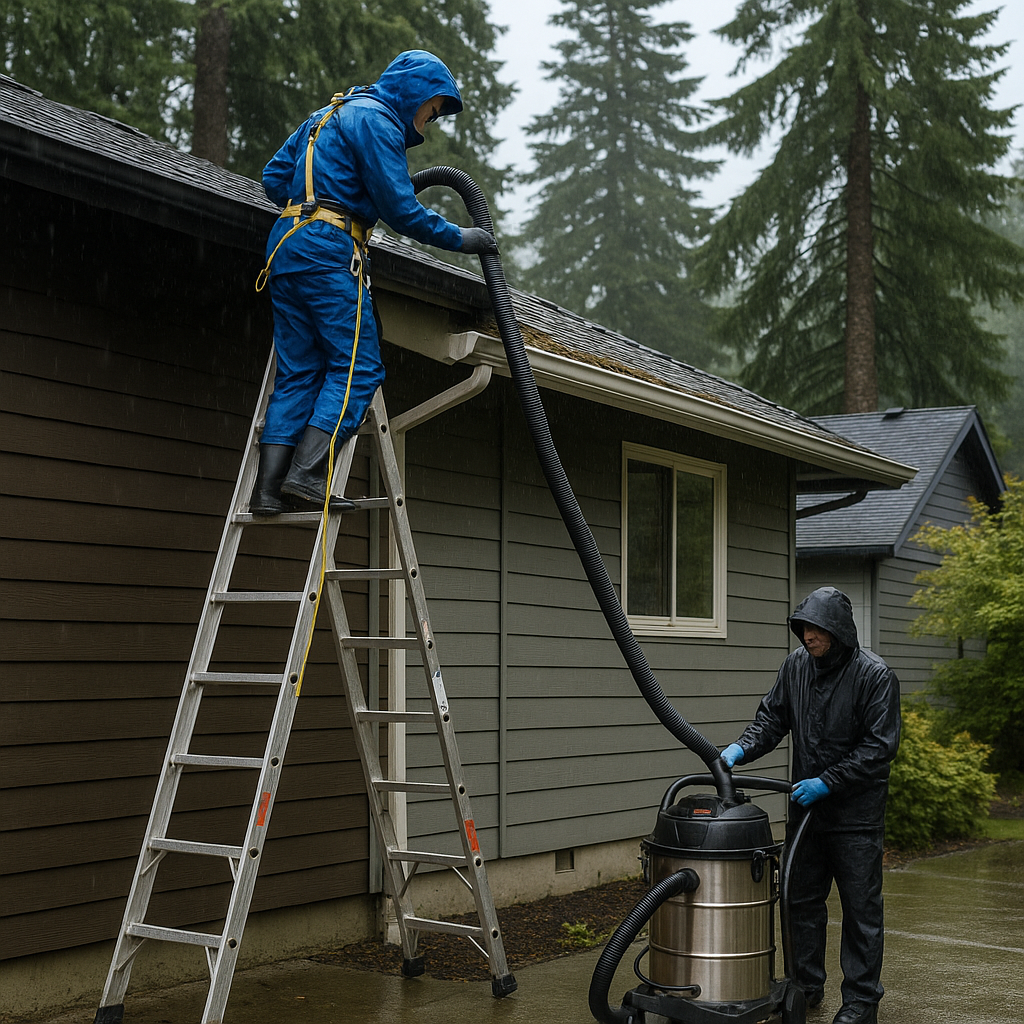
  • High-powered vacuums that function as a ground-level rain gutter cleaner
  • Heavy-duty extension poles that reach into tight corners
  • Targeted gutter cleaning tools for clogs in elbows and downspouts
  • Full-system flushing to confirm flow from roof to soil

An Expert Eye for Hidden Problems

During each cleaning gutters service, professionals often notice things homeowners miss, like loose brackets, early rust, or fascia rot starting to form. Catching those issues early keeps your system strong and helps you avoid costly gutter repair later.

The Practical Benefits of Professional Service

Sure, it’s safer and more thorough. However, professional gutter cleaning also protects your biggest investment, your home, plus the yard you’ve worked hard to maintain.

Thoroughness You Can’t Match Alone

Professionals don’t stop once the top debris is gone. They flush, test, check downspouts, and clear the elbows, those trouble spots where overflow starts. They make sure water flows freely through every part of your system.

Efficiency That Saves You Time and Stress

A job that could take you all weekend can often be done by pros in under two hours. And you don’t have to touch a ladder or clean up a mess afterward.

Preventive Maintenance Saves Big Down the Line

Recurring gutter cleaning and gutter repair don’t just protect your roof. It prevents:

  • Fascia and soffit rot from standing water
  • Roof leaks and interior water damage from clogged downspouts
  • Foundation erosion and yard destruction from water dumping into flowerbeds or mulch beds

Overflow can absolutely destroy your landscaping. Mulch gets displaced, plants drown, and topsoil erodes. That beautiful green lawn or garden bed could be gone if you let the water pool up in the wrong places.

Your Path to Protected Gutters

You’ve probably Googled “how to clean gutters safely” and thought, “Maybe I’ll try it myself this year.” For homes with steep pitches, tall structures, and Washington weather, it’s not worth the risk. There’s a reason more people are searching for gutter cleaning services near them, because that’s the responsible move.

Booking a clean gutters service is about preserving your roof, your siding, and your landscaping. Regular visits keep your entire drainage system working, no matter how heavy the rain or how thick the tree cover. For homes surrounded by tall firs and mossy roofs, it’s smart to get on a recurring plan, twice a year, and more if storms hit hard.

Don’t risk a fall for your gutters. Trust the experts at Gutter Empire for safe, thorough gutter cleaning. Call us at (971) 777-9899 to schedule your service today or get a free estimate here.


Key Takeaways (with footnotes/citations)

  • Washington’s rainfall intensity is increasing. Seattle’s average hourly rainfall has risen nearly 6% since 1970, meaning homes experience heavier downpours that overwhelm clogged gutters.【Axios Seattle – Rainfall Intensity Report, 2025†https://www.axios.com/local/seattle/2025/04/02/seattle-rainfall-grows-more-intense-with-climate-change】
  • Moss and evergreens create nonstop debris. Roof moss traps water and blocks drainage, while pine needles and twigs fall year-round, especially on multi-story homes where cleaning access is limited.
  • DIY gutter cleaning on tall homes is risky. The CDC reports over 22,000 ladder injuries and 161 deaths in a single year, mostly from home maintenance like gutter cleaning.【CDC – Ladder Safety†https://www.cdc.gov/niosh/falls/ladder/index.html】
  • Professionals ensure safety and precision. Certified crews use OSHA-compliant harnesses, stabilizers, and high-powered gutter cleaning tools that reach multi-story levels without damaging your roof or siding.
  • Routine cleaning prevents foundation and landscape damage. Overflowing gutters erode soil, flood flower beds, and cause fascia rot — issues easily avoided through recurring professional maintenance.
Categories
Blog Gutter Cleaning Gutter Repair

How Gutter Maintenance Protects Washington’s Evergreen Landscaping

There’s something magical about living in Washington. The air smells clean, like pine after it rains, and every turn reveals beautiful green landscapes. Those evergreens, moss-covered lawns, and wild ferns are part of what makes the Pacific Northwest so beautiful. But here’s the flip side: What feeds all that life can also destroy it.

Heavy rain and thick tree cover are tough on gutters. When they clog, the damage doesn’t stop at your roofline. Overflowing water can chew through soil, drown plants, and even weaken your home’s foundation. That’s why gutter cleaning and repair should be part of caring for your landscape.

Let’s look at how something as simple as a clean gutter system can protect the beauty around your home.

The Washington Climate Is a Double-Edged Sword

It’s no secret that Washington is wet. NOAA’s 2025 climate report shows the heaviest rainfall hits between November and January, when steady storms test every roof and drain in sight.

The state’s dense forests make things even trickier. Evergreen trees, such as pine needles, cones, moss, and twigs, shed year-round, creating a constant supply of debris. Conifers can intercept about half of the rainfall during a storm, and what slips past lands on your roof. If it doesn’t find a clear path down, it starts pooling in gutters and spilling over the sides.

Once that happens, it’s not just your roof at risk. It’s your soil, your plants, and sometimes even your basement.

The Domino Effect: How Failing Gutters Harm Your Landscape

You might think an overflowing gutter is harmless, but it’s the start of a chain reaction. Water that should drain slowly into the ground instead rushes downward like a hose turned full blast.

Overflow and Misguided Water

When gutters overflow, water dumps wherever gravity sends it. The EPA notes that this fast-moving runoff picks up sediment and contaminants, carrying them through your yard and into storm drains. Over time, it erodes soil, damages groundcover, and leaves muddy scars that take months to heal.

Soil Erosion

Strong runoff washes away topsoil, the layer that feeds your grass and garden. Without that protection, roots struggle to stay anchored and absorb nutrients. Areas with a slope are particularly susceptible to erosion during storms, as gravity increases the rate of soil movement.

Mulch and Garden Bed Destruction

Too much water can wash mulch away, exposing plant roots to cold air and sunlight. Flooded flower beds damage tender plants and compact the soil below them. Even bark or decorative rock can be washed away after heavy rain.

Foundation Soil Damage

Constant puddles near the foundation loosen packed soil, creating tiny shifts in structure. Over time, that leads to cracks or moisture sneaking into the basement, something WSU’s drainage guide lists as a common symptom of poor gutter flow.

Lawn and Hardscape Damage

Lawns develop channels or gullies where water repeatedly runs. Walkways and patios show orange or brown stains from sediment, and the edges crumble faster when the ground beneath stays wet for too long.

Every one of these problems starts with one small issue: blocked or damaged gutters that no longer carry water where it should.

The Solution: A Proactive Gutter Maintenance Plan

You can stop nearly all of this with a little attention and the right help. Think of gutter care as landscape insurance, protecting your lawn, flowers, and foundation before trouble begins.

Regular Cleaning

A professional gutter cleaning service does more than scoop out the leaves. They restore the natural flow of rainwater so it drains evenly across your property.

When technicians flush downspouts, they make sure the runoff spreads gently over grass or garden beds rather than carving channels through them. It is recommended to check gutters during active rainfall to confirm even dispersion.

Clean gutters turn a destructive stream into a slow, steady soak, exactly what your landscape needs.

Timely Repairs

Sometimes cleaning isn’t enough. Cracked seams, sagging runs, or broken hangers can redirect water into unwanted places. That’s when rain gutter repair comes in.

A technician can realign slopes, reseal joints, and reconnect downspouts so every drop flows away from your home. If you’re searching for gutter repair near you, look for teams that inspect both the gutters and the ground below them. The best repairs fix the metal and protect the ecosystem beneath it.

Your Seasonal Gutter Checklist for Washington Homes

If you live anywhere west of the Cascades, timing your maintenance is everything. Each season brings its own challenges.

Spring Cleaning

After months of rain, gutters fill with pine needles, moss, and fine grit from roof shingles. Early spring cleaning clears out the old and prepares for new growth. It also helps your lawn and beds absorb spring rain instead of flooding.

Late Fall Cleaning

This is the most important service of the year. October and November winds fill gutters right before the rainiest months begin. Waiting until after the first storm means you’re already playing catch-up. A single clogged downspout can lead to overflow that unravels mulch and soaks foundations within days.

Year-Round Inspection

Walk your property occasionally, especially during rain. Look for:

  • Water spilling over the gutter edge
  • Soil washed away under downspouts
  • Flattened plants or mulch piles

Gutters are pulling slightly away from the fascia.

These are early warning signs. Catching them now saves money later. According to the Insurance Information Institute, about 1 in 67 homes files a water-damage claim each year. Staying ahead of that statistic is as simple as regular gutter cleaning and repair.

Gutter Empire: Protecting Washington Homes and Landscapes

Here in the Pacific Northwest, rain shapes everything, from the forests that line our streets to the moss that creeps up our driveways. At Gutter Empire, we help that rain work for you, not against you.

We don’t simply provide gutter cleaning services. We consider your property to be a living system. Our technicians understand how rain patterns, evergreen debris, and soil types all come together. That’s why every project includes slope checks, downspout inspections, and precise rain gutter repair that keeps water flowing exactly where it belongs.

When we clean or repair a system, we’re not just protecting a roof. We’re protecting the landscapes that define Washington: the gardens, lawns, and evergreens that make your property part of this region’s natural beauty.

Protect your evergreen investment. Schedule your professional gutter cleaning and repair with Gutter Empire today, and keep your landscape thriving year after year. Call (971) 777-9899 to talk to an expert. You can also get a free estimate here.


Key Takeaways (with footnotes/citations)

  1. Heavy rainfall makes gutter care essential. NOAA reports that Washington’s wettest months—November through January—bring frequent storms that overwhelm clogged systems and increase runoff damage.【NOAA Climate Data†https://www.ncei.noaa.gov/access/monitoring/climate-at-a-glance/statewide/rankings/45/pcp】
  2. Clogged gutters can destroy your landscape. Overflowing gutters accelerate soil erosion, mulch loss, and foundation softening, sending sediment and pollutants into storm drains.【EPA: Urbanization & Stormwater Runoff†https://www.epa.gov/sourcewaterprotection/urbanization-and-stormwater-runoff】
  3. Proper drainage preserves soil structure and plant health. Washington State University’s extension program emphasizes roof runoff management as key to preventing compacted soils and waterlogged roots.【WSU Extension†https://extension.wsu.edu/clark/naturalresources/smallacreageprogram/managing-roof-runoff/】
  4. Routine cleaning and gutter repair protect property value. Overflow and misdirected water can cause basement leaks, cracked foundations, and lawn channeling—leading to costly claims that insurance may only partly cover.【Insurance Information Institute†https://www.iii.org/fact-statistic/facts-statistics-homeowners-and-renters-insurance】
  5. Seasonal timing matters. Spring cleaning removes pine needles and moss; late fall cleaning clears heavy debris before the rainy season; and quick inspections after storms prevent erosion before it starts.
Categories
Blog Gutter Cleaning

How to Clean Gutters Safely Without a Ladder

No one really looks forward to gutter cleaning, but it’s a necessary task to keep your house in good shape. Living in Washington makes this even more important. It rains most of the year, and clogged gutters can lead to leaks, mold, or even foundation problems.

The tricky part is that most people grab a ladder, climb up, and hope for the best. That’s where things can go wrong. Ladders are slippery in wet weather, and falls are one of the most common household accidents.

Each year in the U.S., more than 500,000 people are treated for ladder-related injuries, and about 300 people die from falls. Beyond the personal cost, these accidents result in an estimated $24 billion annually in medical bills, lost work, and legal expenses.

You don’t actually need a ladder. With the right tools and a little know-how, you can clean gutters without a ladder and keep your home protected.

Why Safe Gutter Cleaning Is Non-Negotiable (Especially in the Pacific Northwest)

Gutters have one primary function: to divert water away from your house. They direct rain so it doesn’t run down the siding, pool around the foundation, or leak back under shingles. When they’re clogged, that system fails.

In Washington, this happens fast. Between the rain, pine needles, moss, and leaves, gutters fill up quickly. Add in the fact that it rains more than 150 days a year here, and you’ve got the perfect recipe for overflow.

The problem is that climbing up to clear all that debris is dangerous. Roofs stay slick, ladders shift, and one wrong step can cause a serious fall.

Therefore, finding safer ways to clean gutters from the ground makes a great deal of sense. It’s about protecting your home without putting yourself at risk.

Essential Tools for Ground-Level Gutter Cleaning

The good news is that there are plenty of gutter cleaning tools designed for people who want to stay firmly on the ground.

Here are the main options:

  • Telescoping hose attachments for flushing out debris.
  • Wet/dry vacuum kits with long, curved nozzles.
  • Leaf blower extensions for clearing dry leaves.
  • Grabbers, tongs, and the classic gutter scoop adapted for poles.
  • Pressure washer attachments for tougher clogs.

Ground-Level Gutter Cleaning Methods

Different debris calls for different tools. Here’s a closer look at how each method works.

Telescoping Hose Attachments

These wands attach to your garden hose and hook over the gutter. They spray water along the channel, flushing leaves and dirt toward the downspout. This type of rain gutter cleaner is easy to use and works well for lighter clogs. Please note that it can be a bit messy, as everything tends to wash down.

Wet/Dry Vacuum Kits

Vacuum attachments use extensions and curved nozzles to literally suck debris out. They’re especially good for wet leaves and pine needles, which can be hard to move with water pressure alone. Most brands sell kits that fit most shop vacs, so you don’t always need to buy new equipment.

Leaf Blower Attachments

If your gutters are mostly filled with dry leaves, a leaf blower kit is a quick and effective solution. Extensions add reach, so you can walk around the house and blow out debris in minutes. Just keep in mind it won’t help much if the gutters are full of sludge.

Grabbers, Tongs, and Scoops

Sometimes, a more hands-on approach is more effective. You can use gutter grabbers to pinch clumps of leaves from the ground. It’s slower, but very precise. And while the classic gutter scoop is usually used from a ladder, pole adapters make it possible to use one without leaving the ground.

Pressure Washer Extensions (Use Caution)

Pressure washers can blast out stubborn clogs, but they’re not for everyone. Too much force can strip paint, loosen gutters, or damage shingles. If you choose this route, keep the pressure low and proceed with caution.

Step-by-Step Gutter Cleaning Routine

Although the right tool is important, how you use it makes the difference. Think of the following routine as a game plan you can follow:

  1. Safety Gear: Start with basics, including gloves, safety glasses, and a long-sleeved shirt. They keep you from getting scratched up or splashed.
  2. Prep Work: Wait for a dry break in the weather. Clear the yard space below so you can move around freely.
  3. Tool Assembly: Arrange the extension poles, snap them together, and take a test run before attempting to lift the load overhead.
  4. The Process: Start at the downspout and work your way out, clearing branches and debris as you go. Then, flush the area with water.
  5. Final Check: Each time you staff into a gutter section, run water through it and ensure everything drains properly.

When to Call a Professional Gutter Cleaning Service

There are times when cleaning gutters from the ground works fine, and then there are jobs that push past the limits of DIY. Part of staying safe is knowing when to hand it off.

Call in a professional if your house has multiple stories that tools can’t reach, or if gutters are packed with standing water, weeds, or even small plants. Damage is another red flag: Sagging runs, rust, or loose brackets usually mean repairs are needed.

Pest issues, such as wasps or rodents, are also a reason to stay away. And honestly, if you feel uneasy or just don’t want to risk it, that’s valid, too. At Gutter Empire WA, we use pro-grade gear and training to clean gutters safely and thoroughly.

Stay Grounded, Stay Protected

You don’t need a ladder to keep your gutters in shape. With the right setup, you can stay grounded and still achieve solid results. Modern gutter cleaning tools cover almost every situation. Telescoping hose attachments flush out debris, vacuums pull up wet leaves, blowers sweep out dry clumps, and pole-mounted grabbers or a gutter scoop handle the stubborn stuff.

That said, there’s a point where DIY must stop. Clearing a single-story home is one thing. Tackling sagging gutters on a three-story house is another. Routine cleaning helps prevent leaks, mold, and costly repairs, but only if it’s done safely.

At Gutter Empire WA, safety is always the priority. When the job is too tall, too messy, or simply more than you want to handle, we’ll take care of it. Contact us today to receive a complimentary quote. You can also get a free estimate.


Key Takeaways

  • Ladder-free gutter cleaning is safer and smarter. Each year in the U.S., over 500,000 people are treated for ladder-related injuries, making ground-level cleaning tools a safer alternative (source: CDC†).
  • Washington’s climate accelerates gutter clogs. With rain falling more than 150 days per year, gutters in Washington quickly fill with pine needles, moss, and debris, creating overflow risks (source: WRCC).
  • Specialized tools make cleaning from the ground easy. Options include telescoping hose attachments, wet/dry vacuum kits, leaf blower extensions, gutter grabbers, and pressure washer add-ons.
  • A routine cleaning process matters. Always use gloves and goggles. Start at the downspout, clear debris, flush with water, and double-check the drainage.
  • Know when to call professionals. Multi-story homes, severe clogs, structural damage, or pest infestations often require the services of a trained gutter cleaning professional to ensure safety and effectiveness.

Last updated: October 2025

Categories
Blog Gutter Cleaning Gutter Repair

From Moss to Mold: Unique Gutter Problems in Washington State

You know the Washington look. Lush evergreens with vibrant moss coating old stone walls, and rich, earthy smells after rain. It looks beautiful until it’s on your house. The same damp and cool climate that keeps Washington State evergreen is also a major enemy to one of your home’s first lines of defense: your gutters.

While other states worry about autumn leaves, Washington homeowners have to contend with a different menace: the slow and steady siege by moss, mold, and moisture that does more than just clog their gutters. These three silently compromise your roofing, rot your fascia boards, and even affect the air quality in your house.

Why Washington State’s Climate Is a Perfect Storm for Gutter Problems

The main issue is hardly the volume of rain, but its consistency. The constant drizzle creates a damp environment that is ideal for organic material. For instance, pine needles from cedars and firs fall throughout the year, creating a dense, net-like debris that holds moisture and serves as the perfect breeding ground for moss spores floating in the breeze and the mold that thrives in shady areas.

This combination not only blocks water flow from the roof, but also creates a heavy and wet living mass in your gutter system that accelerates wear and tear in ways dry leaves never could. This is why standard gutter maintenance strategies used in drier states often fall short here, since our unique environment demands a more vigilant approach to gutter maintenance that Washington homeowners can rely on.

Several key factors make our climate particularly harsh on gutters:

  • Year-Round Debris: Evergreens like cedars and firs drop needles constantly, creating a dense, net-like clog.
  • Moisture Retention: This debris acts like a sponge, holding water against your gutter surfaces.Spore Proliferation: The damp, shaded environment is perfect for moss and mold spores to take root and grow.
  • The Silent Gutter Killer: Moss in Gutters and Its Consequences

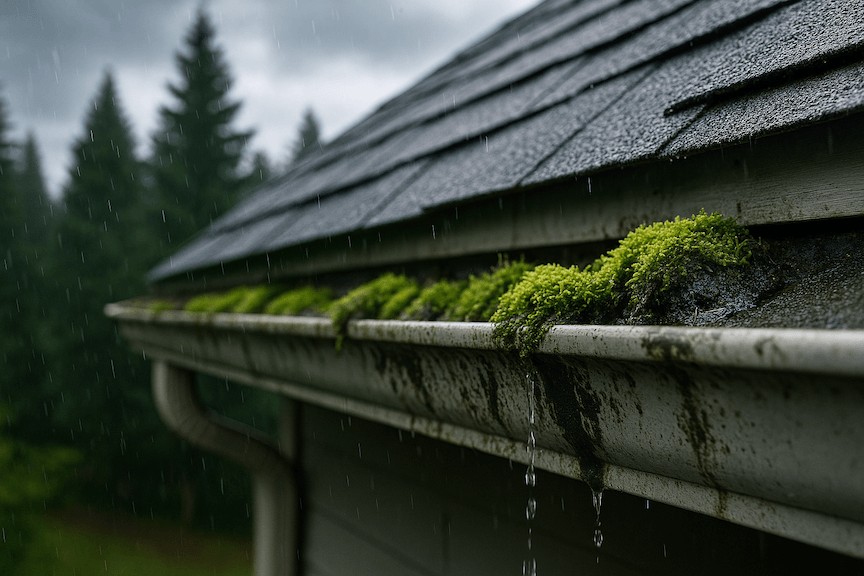
When moss establishes itself in gutters, it acts as a sponge, absorbing and retaining water. This water retention and growth add weight that strains gutter hangers and pulls entire gutter systems down. However, the damage goes deeper, as the moss in gutters attaches itself using tiny rhizoids that dig into gritty surfaces. This traps moisture directly against gutter surfaces, leading to rust and corrosion in steel gutters, as well as the degradation of aluminum gutters over time.

Most dangerously, moss in gutters prevents proper drainage, which means that water overflows and cascades down exterior walls, soaking the wooden fascia boards that hold the gutters. This is where a simple cleaning job can quickly escalate into a need for full fascia board replacement, which Washington residents would want to avoid.

When Mold in Gutters Becomes a Health Hazard

Wherever moss thrives, mold is never far behind. As such, your gutters could become a thriving ecosystem of various molds and mildews. Therefore, while cleaning visible growth from your gutters is important, you should also be concerned about what you can’t see.

The spores from mold in gutters can easily enter your house through small cracks, attic vents, and windows. Once inside, they degrade your indoor air quality and pose larger health risks, especially for people with allergies, asthma, and other respiratory illnesses. The musty smell that sometimes permeates a house after it rains can often be traced back to a moldy and overflowing gutter system by the window.

This makes addressing mold in gutter systems an essential part of home maintenance, not only for the structure but also for health reasons.

The Domino Effect: From Gutter Clogs to Fascia Board Rot

This is where the true cost of neglect adds up, a destructive sequence any experienced gutter repair Washington professional knows all too well.

It starts with the clog, then debris and mold build up, trapping water. As the water overflows, it spills onto the fascia boards. In Washington’s damp climate, constantly wet fascia boards do not dry out. Instead, the water soaks in, the wood softens, and the rotting begins. You never see it until the paint starts bubbling or you notice the wood crumbling. By then, the structural integrity of the wood has already been compromised.

Rotting fascia boards can no longer securely hold the weight of the gutters, especially when clogged with water and moss. The result is sagging gutters that fall off if not cleaned or repaired immediately. Typically, gutter problems are discovered during cleaning, and what began as a simple $200 gutter maintenance task now becomes a $2000 project that includes full gutter reinstallation and the necessary fascia board replacement that Washington homeowners dread.

How Professional Washington Gutter Cleaning Fights Back

You can always handle gutter cleaning yourself, but dealing with slippery, moss-laden gutters is a risky venture. Furthermore, professional Washington gutter cleaning involves more than just dirt and debris removal; it also includes inspecting the gutters and fascia and implementing protective measures.

Expert technicians do not just scoop the muck. They also power-flush downspouts to restore flow, inspect for signs of rot and corrosion, and even fix loose fasteners that you would miss. They also apply mild treatments to slow down moss and mold regrowth, thus giving your gutters a fighting chance.

For many homeowners, this proactive service is the difference between affordable routine maintenance and a desperate call for emergency gutter repair services in Washington during a storm.

Do Not Let the Northwest Green Take Over Your Home

As your gutters work tirelessly all year round to defend your home against Washington’s relentless weather, ignoring the unique threats posed by moss and mold isn’t just neglect, but a gamble with your home’s structural health and your own. What seems to be a simple issue today can quickly spiral into extensive and expensive repairs in the long run.

Luckily, at Gutter Empire, your local expert in gutter cleaning, repair, and maintenance in Washington, we understand that the solution is consistent and knowledgeable care. We know how the Washington climate attacks your gutter system, and since we confront this kind of damage daily, we have the expertise to both fix and prevent it.

As local gutter cleaning services near you, we are ready to help keep your home safe and dry. We handle everything from comprehensive Washington gutter cleaning that eliminates moss at its source to precise gutter repair residents trust to address damage early.

Don’t wait for water stains to appear on your ceilings or for your gutters to fall away from the roof. Schedule your professional gutter evaluation with Gutter Empire today by calling (971) 777-9899 or contacting us online for a free estimate. We’ll show you how a proactive gutter maintenance approach can save you thousands and deliver peace of mind all year long.


Key Takeaways

  1. Washington’s damp, evergreen climate fuels the growth of moss and mold, which clogs gutters, traps moisture, and accelerates wear and tear.
  2. Moss acts like a sponge in gutters, adding weight, causing corrosion, and leading to fascia board rot and sagging gutter systems.
  3. Mold growth in gutters is more than just a structural issue; it poses a significant health risk, as spores can enter homes and compromise indoor air quality.
  4. Neglected clogs trigger a domino effect, escalating from small maintenance needs to expensive fascia replacement and full gutter reinstallation.
  5. Professional Washington gutter cleaning services go beyond debris removal, providing comprehensive inspections, downspout flushing, minor repairs, and moss prevention treatments.

Last updated: October 2025

Categories
Blog Gutter Cleaning Gutter Guards

Gutter Guards vs Regular Maintenance: What’s Better for Rainy Washington?

If you own a home in Washington, you already know the story: Rain is part of life. From steady drizzles to downpours that seem to last for days, gutters are constantly put to the test. The bigger question isn’t whether you need them but how you keep them working.

Should you keep paying for regular cleanings, or is it smarter to install gutter guards and reduce the constant cycle of clogs and call-backs? Washington homeowners ask this every fall when the leaves drop, the fir needles drift down, and moss seems to multiply overnight.

Let’s take an honest look at gutter cleaning versus gutter guards in Washington, so you can decide which approach makes the most sense for your home and your budget.

Why Gutters Matter So Much in Washington

Rain itself isn’t the problem. It becomes an issue only when there is nowhere safe to go. In the Pacific Northwest, that’s an everyday challenge. Gutters deal with three big headaches:

  • Falling leaves from oaks and maples can pile up overnight in tree-lined neighborhoods.
  • Needles from firs and pines, thin but stubborn, that tangle together like a net and stop water in its tracks.
  • Moss, which grows thick on damp, shaded roofs and then breaks loose into the channels below.

When those clogs start, water backs up under shingles, drips into siding, or settles around a foundation. Given enough time, that can mean wood rot, mold inside the walls, or a wet basement no one wants to deal with. What starts as “just a little buildup” can quietly turn into thousands in repairs.

That’s why the decision between regular gutter cleaning in Washington and installing guards is about keeping a home protected in a climate where rain is always part of the forecast.

The Case for Regular Gutter Maintenance

Many homeowners stick with tried-and-true cleaning. It’s straightforward and, for the most part, effective.

Benefits of Routine Cleaning

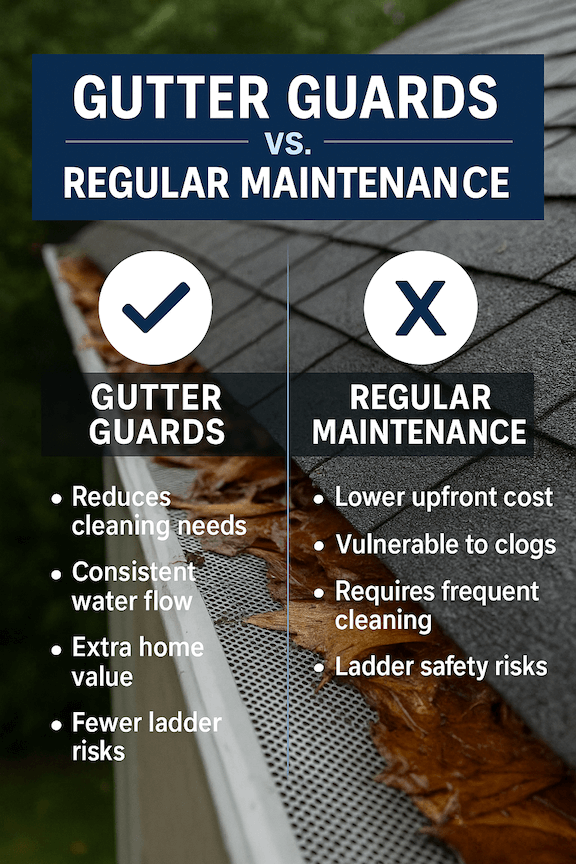
  • Lower upfront cost: You pay per cleaning rather than covering the installation of a guard system.
  • Flexibility: If you already have landscaping or yard crews, adding gutter service to the routine is simple.
  • Built-in inspections: Every cleaning gives professionals a chance to spot sagging sections, leaky seams, or loose downspouts.

Some Washington homeowners even prefer to do it themselves. A Saturday with gloves, a ladder, and a bucket can clear out debris, at least temporarily.

Drawbacks of Cleaning

The problem is frequency. In WA, gutters clog faster than almost anywhere else in the country. Fir needles can fill a system in just weeks, meaning two, three, or even four cleanings may be required in a single season.

Add in the ladder risks, especially on slick fall days, and the “cheap” option doesn’t always feel worth it. Plus, missing even one cleaning during peak storm season can undo months of careful upkeep.

This is why relying solely on gutter maintenance sometimes feels like running in circles. You stay on schedule, but the trees and moss continue to shed.

The Case for Gutter Guards

Gutter guards act as a protective cover or filter, allowing rain to pass through while keeping most debris out. In Washington, that often means less stress when storms hit one after another.

Benefits of Gutter Guards

  • Reduced cleaning needs: Instead of climbing the ladder four times a year, many homeowners only need a quick seasonal checkup. That means less time scooping out soggy leaves.
  • Consistent water flow: Guards stop most debris from settling, so gutters can keep up during Washington’s heavy fall storms.
  • Extra home value: Buyers often view gutter guards as a bonus upgrade, a feature that makes a house easier to maintain over time.
  • Fewer ladder risks: Every skipped cleaning is one less chance of slipping on wet rungs or losing balance while reaching over the edge.

For many people, the biggest perk is peace of mind. It’s knowing you don’t have to drop everything during the first storm of the season to deal with overflow.

Drawbacks of Gutter Guards

Still, they’re not perfect. Upfront installation costs more than scheduling a cleaning. Fine debris, especially fir needles and moss dust, can still get through, depending on the system. And if guards aren’t installed correctly, water may overshoot the edge during torrential rains.

That’s why gutter guard installation in Washington calls for local expertise. Systems that work well in drier climates don’t always withstand our rainfall.

Cost and Convenience Comparison

So, which saves more money? The answer depends on how long you plan to stay in your home.

  • Short-term savings: Regular cleaning usually wins. A bill for a single cleaning costs far less than installing guards.
  • Long-term savings: Guards often catch up. If you’re spending hundreds each year on multiple cleanings, the math balances out within a few years.

Convenience also plays a role. If you dread calling for cleanings or hate seeing water spilling over during storms, guards may be worth the investment even if they take longer to pay for themselves.

How Gutter Empire Washington Helps Homeowners

Most homes in WA benefit from a mix of both.

At Gutter Empire, we install guards designed for the Pacific Northwest climate, strong enough to handle moss, needles, and heavy downpours. At the same time, we continue to offer professional gutter cleaning in WA, as even the best systems require seasonal maintenance.

A Kalama bungalow shaded by evergreens isn’t the same as a Vancouver craftsman under wide maples. We’ve worked on both, and we know how each roofline needs a slightly different guard setup.

Our job isn’t to sell one option over the other. It’s to provide you with the facts, explain the pros and cons, and ensure your gutters are ready before the rainy season arrives.

If you’re tired of worrying about what’s sitting in your gutters right now, it may be time to act. Call Gutter Empire at (971) 777-9899 to schedule an inspection. We’ll walk your property, show you the options, and help you decide whether gutter guards, regular maintenance, or a combination of both is the right choice for your home.

Last updated: October 2025