Gutter Installation & Gutter Guards in Vancouver, WA | Gutter Empire

Categories
Blog Gutter Cleaning Gutter Repair

What Happens When Clogged Gutters Are Ignored Too Long

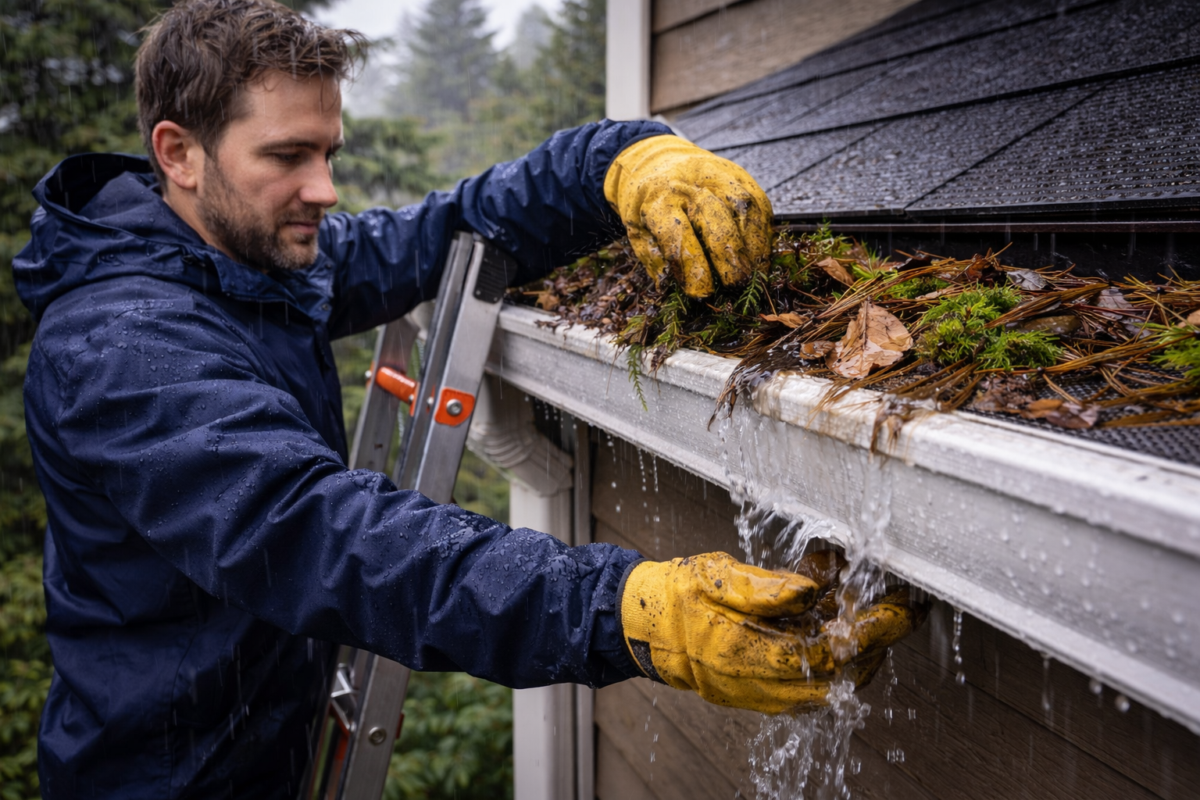
You walk past your gutters every day. Maybe you notice weeds growing out of them or a thick line of pine needles packed along the edge. You keep meaning to schedule gutter cleaning, but other things take priority.

In Washington, that delay matters more than most people realize. NOAA reported 27 separate billion-dollar weather disasters across the U.S. in 2024 alone, totaling roughly $182.7 billion in damage. Washington has averaged 2.2 billion-dollar disasters per year over the last five years, well above its long-term average.

When clogged gutters sit through storm after storm, small maintenance quietly turns into expensive structural damage.


Quick Answer Summary

Ignoring clogged gutters allows water to overflow and collect around the roofline, fascia, and foundation. Over time, trapped debris adds weight, causing gutters to sag, pull away, and leak. In Washington’s heavy rain climate, this can lead to roof damage, soil erosion, basement moisture, and mold growth. Routine gutter cleaning is far less expensive than repairing structural damage caused by prolonged overflow.


Stage 1: Water Finds Another Path

Rain always moves. If it cannot travel through the gutter system, it finds another route.

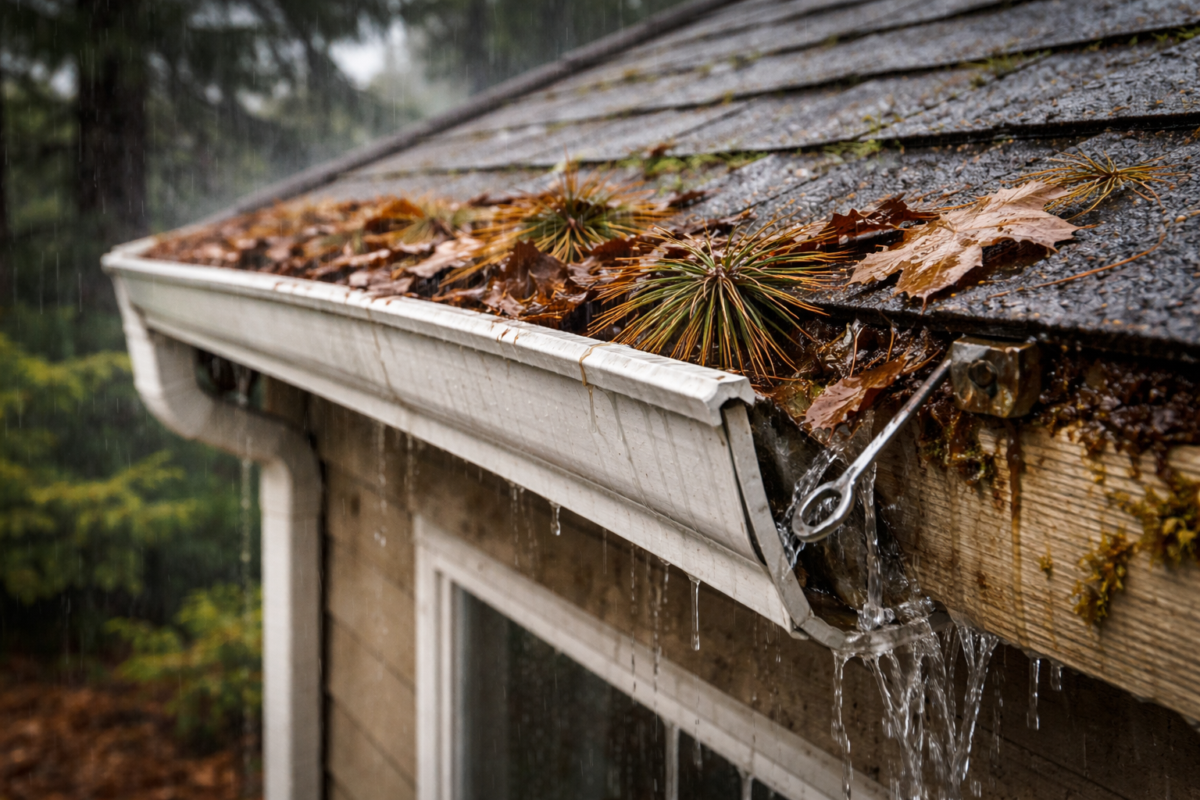
Leaves, fir needles, roof grit, and moss collect inside the channel. In western Washington, especially, tree coverage makes this constant. That debris forms a dam. Water that should flow toward downspouts instead pools and backs up.

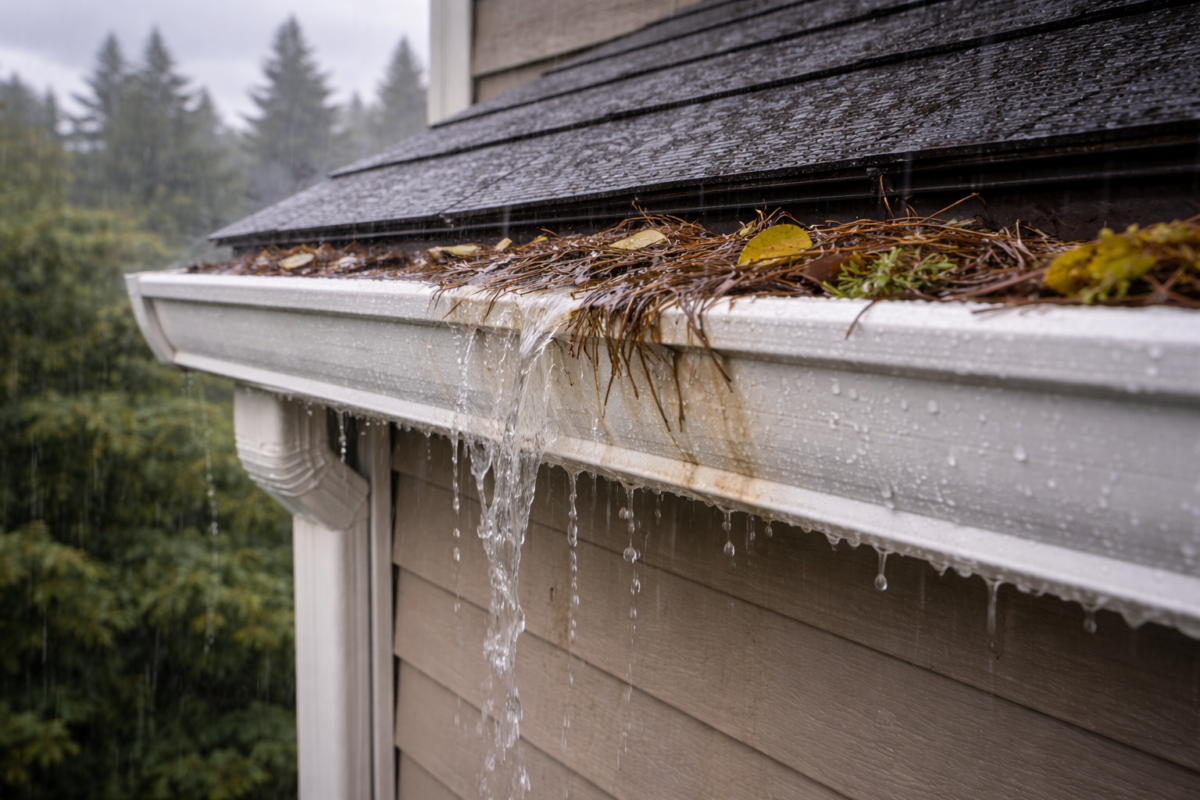
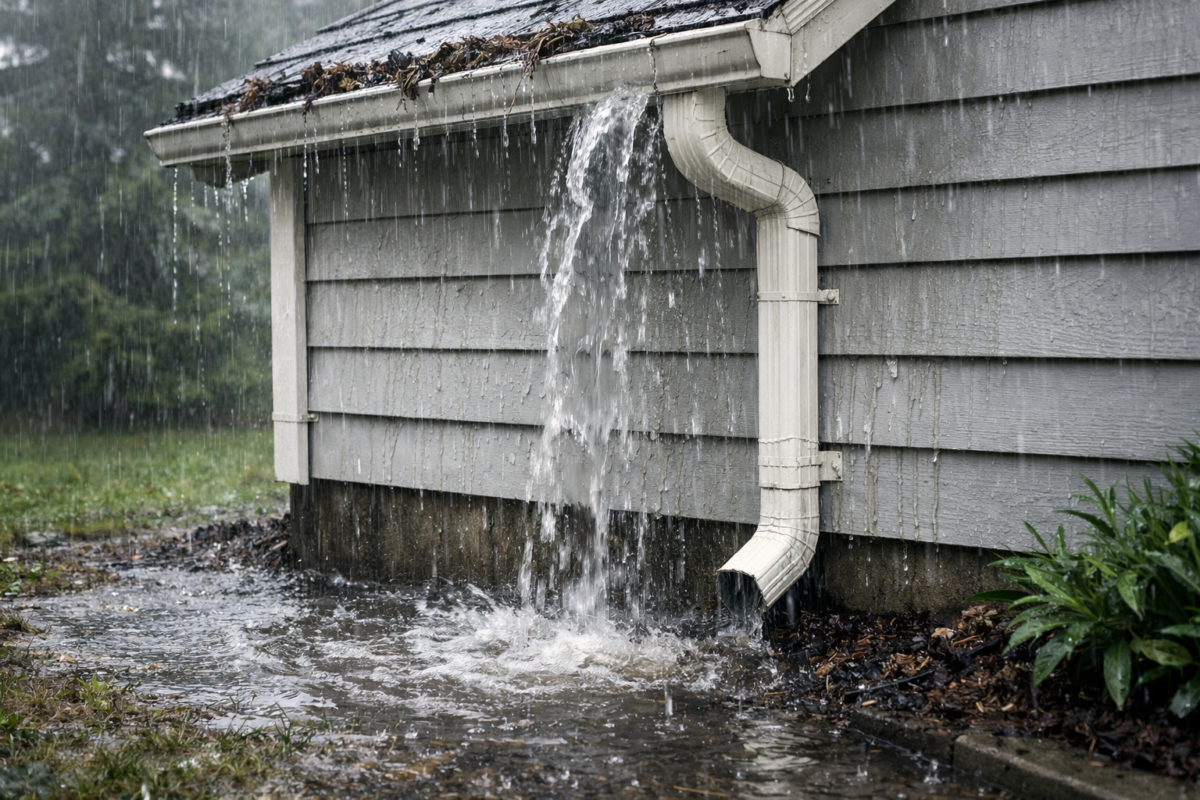
During heavier rain, you may see water spilling over the edge. It splashes against the siding or pounds the landscaping below. It looks temporary, feels harmless, and is easy to assume it will drain eventually.

However, clogged systems can contribute to severe water damage and basement flooding when runoff is not directed away from the home. Gutter maintenance is a key prevention step against indoor moisture problems. When overflow becomes routine, damage becomes cumulative.

Stage 2: Structural Strain Begins

Once debris traps standing water, weight becomes the issue. Aluminum gutters are built to carry flowing water, not hold water mixed with soaked organic matter.

Wet leaves are surprisingly heavy. A system filled with saturated debris adds ongoing stress to hangers and fasteners. Over time, that strain compounds. The gutter starts to sag slightly. You may not notice it right away, but the pitch changes.

Insurance data from the Insurance Information Institute shows water damage and freezing losses affected 1.5 percent of insured homes between 2019 and 2023, while wind and hail affected 2.8 percent.

In 2024, wind-related claim severity increased sharply, according to LexisNexis Risk Solutions. When strong winds hit a system already weighed down by debris, hardware loosens faster.

At that point, you are no longer just dealing with a blockage. You are facing gutter repair to re-secure the system and restore proper slope. And if the aluminum bends repeatedly under the weight, it rarely straightens perfectly again.

Stage 3: Roof and Fascia Under Attack

When gutters overflow or pull away from the house, water can back up behind them.

It runs along the back edge of the gutter and soaks the fascia board. From there, it can creep under shingles at the roof edge. Aluminum itself resists corrosion fairly well, but the wood behind it does not. Prolonged saturation softens fascia boards and weakens the anchor points that hold the entire system in place.

FEMA winter guidance specifically advises keeping gutters clear so melting snow and rain can drain properly and avoid roof-edge damage. Even short freeze-thaw cycles can push water under shingles when drainage fails.

This is often the stage where homeowners begin searching for roof and gutter repair near services them, because the problem spreads beyond cleaning and into structural wood and roofing materials.

Stage 4: Foundation and Landscape Erosion

When water is not carried safely away through downspouts, it falls wherever gravity takes it.
That usually means directly beside the foundation. Over time, concentrated runoff erodes soil, changes grading, and allows water to pool against exterior walls. In crawl-space homes common across Washington, moisture lingers beneath the structure.

Homes stay safer when roof runoff drains away from the foundation, but clogged gutters quickly break that protection. On top of that, repeated storms have become costly, which makes any small weakness add up faster than people expect.

A simple gutter cleaning issue can slide into drainage fixes or even foundation repairs, and the jump in cost feels huge once you reach that point.

Stage 5: Mold and Structural Decay

Water from clogged gutters does not sit politely at the edge of the roof. It drifts into wall cavities, attic corners, and the spaces under your flooring before anyone notices.

EPA’s 2025 mold guidance explains that drying things within a day or two helps prevent growth. That is nearly impossible when overflow happens every time it rains. Moisture lingers, wood begins to soften, and insulation stops doing its job.

Soon, small seam issues turn into gutter leak repair, and interior materials become the real expense, not the aluminum exterior.

The Financial Reality: Cleaning Cost vs. Repair Cost

Routine maintenance feels optional. Structural repair never does.

National reporting on Aon’s 2024 disaster summary placed insured losses at $112.7 billion across the United States. The broader environment around storm-related damage continues to intensify. A routine gutter cleaning service costs a fraction of the cost of fascia replacement, roof decking repair, or foundation correction.

Aluminum gutters can last for decades when properly maintained. Without regular gutter cleaning, they sag, lose pitch, and place constant stress on attachment points. What might have been addressed with a simple appointment often escalates into recurring gutter repair.

Early gutter cleaning near you protects both the system and the structure behind it.

Act Before the Damage Becomes Irreversible

Washington’s rain does not slow down. Every storm that moves through a neglected system adds stress, moisture, and structural strain. NOAA’s recent data confirms that severe weather exposure remains high. Each overflow quietly adds risk.

The gap between simple upkeep and serious reconstruction usually comes down to how early you act. Clearing clogged gutters before they sag or warp keeps the aluminum in shape, the hangers tight, and the water flowing where it should. When you start noticing uneven runs, small drips along seams, or constant overflow, it is better to address them before another storm pushes things further.

At Gutter Empire, LLC, we help homeowners avoid unnecessary gutter repair and catch small issues before they turn into full gutter leak repair jobs. Contact us at (971) 777-9899, click here for a free estimate, or fill out our contact form to schedule your gutter cleaning service today.


Key Takeaways

  • The U.S. experienced 27 billion-dollar weather disasters in 2024, increasing the importance of proper home drainage systems.¹
  • Washington averages 2.2 billion-dollar disasters per year, raising exposure to heavy rain and storm damage.¹
  • Clogged gutters prevent proper runoff, which can contribute to basement moisture and water intrusion.²
  • Standing debris adds weight that causes gutters to sag, lose pitch, and pull away from fascia, leading to repair costs.³
  • Wind-related claim severity has increased, and weakened gutter systems are more likely to fail during storms.⁴
  • FEMA recommends keeping gutters clear to prevent roof-edge damage from rain and snowmelt.⁵
  • Poor drainage allows water to pool near the foundation, increasing the risk of soil erosion and structural moisture problems.²
  • Moisture that is not dried within 24–48 hours can lead to mold growth, especially when overflow happens repeatedly.⁶
  • Repairing fascia, roofing, or foundation damage costs significantly more than routine gutter cleaning.⁷

Citations

  1. NOAA / Climate.gov – Billion-dollar weather disasters data
    https://www.climate.gov/news-features/blogs/beyond-data/2024-active-year-us-billion-dollar-weather-and-climate-disasters
  2. Insurance Information Institute – Water damage and runoff risk
    https://www.iii.org/fact-statistic/facts-statistics-homeowners-and-renters-insurance
  3. Insurance Information Institute – Wind, hail, and water loss frequency
    https://www.iii.org/fact-statistic/facts-statistics-homeowners-and-renters-insurance
  4. LexisNexis Risk Solutions – Home trends and wind claim severity
    https://risk.lexisnexis.com/about-us/press-room/press-release/20251023-home-trends-report-2025
  5. FEMA – Winterizing your home and gutter maintenance guidance
    https://www.fema.gov/sites/default/files/documents/fema_dr-4749-il-winterizing-your-home.pdf
  6. EPA – Mold and moisture guidance (24–48 hour drying window)
    https://www.epa.gov/mold/brief-guide-mold-moisture-and-your-home
  7. AP News – Economic losses from storms and flooding damage
    https://apnews.com/article/hurricanes-wildfires-floods-damage-economic-loss-a3a6a5ec11d25edf4e845889eac9cd83
Categories
Blog Gutter Cleaning Gutter Repair

How Water Pooling Near Foundations Often Starts With Minor Gutter Issues

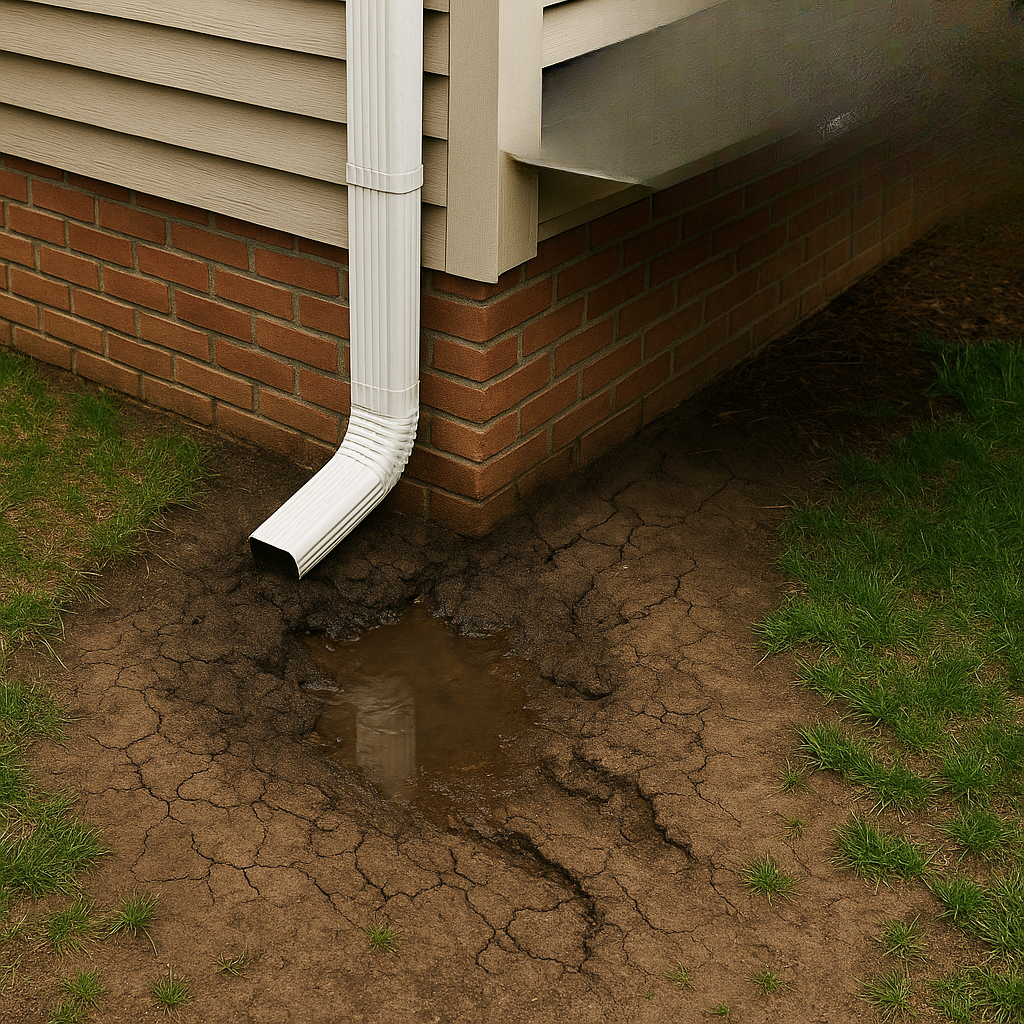
A puddle sitting next to your foundation after a storm does not look dramatic. Most people step around it and move on.

However, in Washington, that small pool often marks the end of a chain reaction that started up at the roof edge. During major Pacific Northwest storms, including a 2024 cyclone that knocked out power to nearly 600,000 people in Washington, exterior drainage systems are heavily tested. Weak spots show up fast.

Chronic pooling is rarely random. Building-science guidance in the U.S. consistently identifies runoff control as the first line of defense against foundation moisture. Small, correctable gutter defects can repeatedly misdirect roof water. That is why many gutter repair calls start with a wet patch near the wall, not a broken gutter section.

We will trace that path step by step so you can spot the risk early and act before the damage grows.


Quick Answer

Water pooling near your foundation usually starts with a minor gutter problem. Clogged downspouts, leaking seams, sagging sections, or short discharge extensions can redirect roof runoff to the base of the home instead of several feet away. In Washington’s heavy rain, repeated misdirected flow quickly saturates the soil, increasing the risk of erosion, foundation moisture, and structural damage. Fixing small gutter issues early restores proper drainage and prevents costly repairs.


The Foundation’s Need: A Dry Perimeter

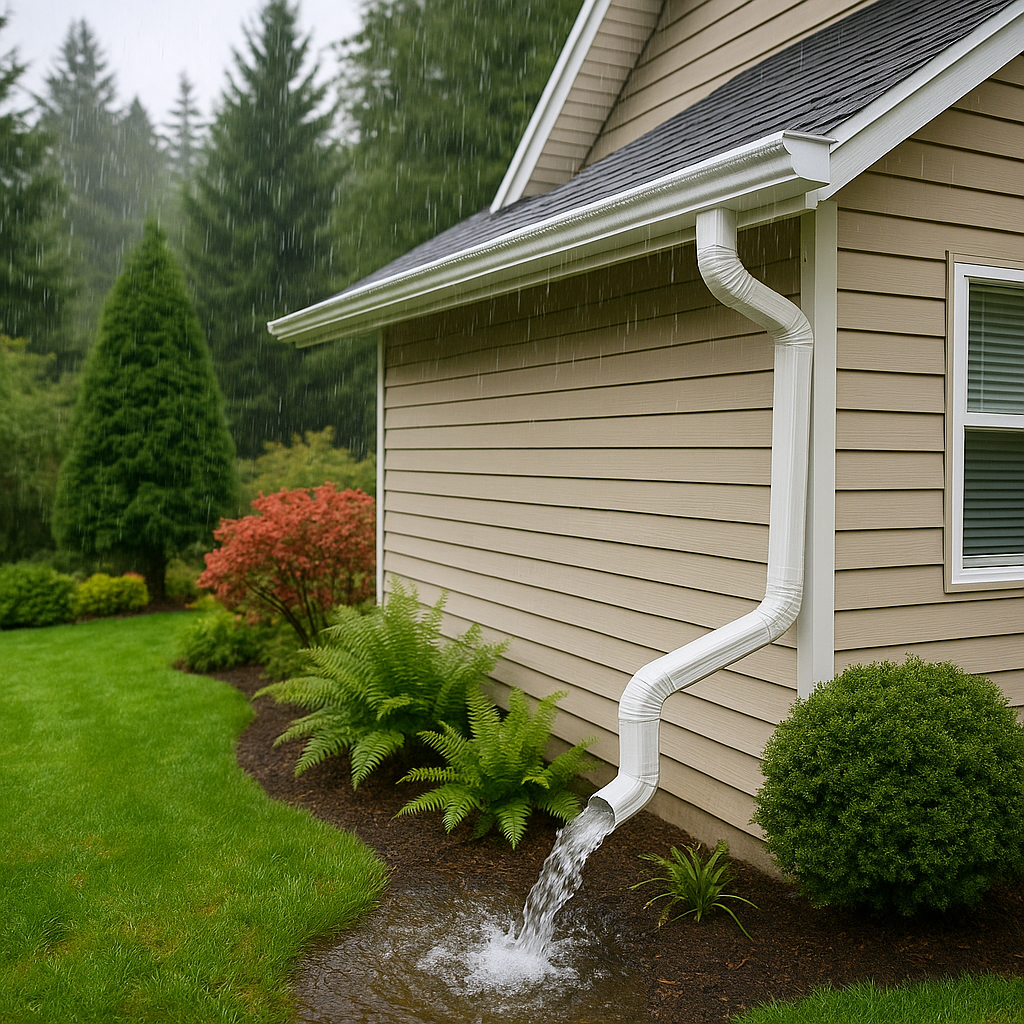
Every home needs one simple thing at ground level: a dry perimeter. That is the goal behind proper drainage design. Roof water should flow through gutters into downspouts and discharge several feet away from the structure, so the surrounding soil remains stable rather than being soaked.

The best protection against foundation water intrusion is to prevent soil around the foundation from becoming saturated. Recommended grading slopes, about half an inch per foot for ten feet, exist for that reason. Gutters are not optional trim. They are part of the drainage system.

Washington adds pressure to that system. NOAA recorded 27 separate billion-dollar weather disasters across the U.S. in 2024, with 17 tied to severe storms. For homeowners here, that translates into repeated heavy runoff events.

When volume goes up, small gutter weaknesses matter more. That is often when people start searching for gutter repair services near them after they notice water collecting where it never used to.

The Chain Reaction: From Gutter Flaw to Ground Saturation

This process usually starts small. A loose seam. A slightly bent aluminum run. A downspout that drains more slowly than it should. Aluminum gutters hold up well overall, but over time they can bend or sag from debris weight, wind stress, or hanger movement. The change can be subtle at first.

Then the direction of flow changes. Instead of flowing cleanly to the downspout, water seeps through a seam, spills over a low spot, or backs up and overflows the front edge. Gutters and downspouts must stay clear and intact, specifically to keep runoff moving away from the home. When that path breaks, water lands right beside the wall.

After that, the soil takes the hit. One storm might not do much. Repeated storms will. Repeated wetting saturates soil and reduces its ability to absorb more water. Once that happens, you start seeing standing water. The puddle is not the first problem. It is the visible one.

Common “Minor” Issues That Cause Major Problems

Clogged Downspouts

This is the most direct failure point. When a downspout clogs, water has nowhere to go but over the gutter edge or out a seam. Regular gutter and downspout cleaning is recommended to prevent misdirected flow.

In Washington, evergreen needles and storm debris make clogging more frequent, which is why many gutter repair services near you include downspout clearing as a first step.

Leaking Seams/Joints

A seam leak does not look urgent. It drips instead of pouring. Still, that drip line lands in the same strip of soil every storm.

Building-science water management models treat continuous channel flow as essential. Break the channel to create a wet zone at the perimeter. Over time, even aluminum seams can separate slightly due to expansion, contraction, and load stress.

Sagging or Improper Pitch

Gutters must slope enough to move water. When aluminum sections bend or hangers loosen, a low spot forms. Water collects there, then spills over that exact point.

Guidance around drainage always comes back to directional control. Once pitch fails, control fails too. This is one of the most common triggers for a targeted gutter repair rather than a full replacement.

Short or Missing Extensions

Sometimes the gutter works fine, but the discharge point is wrong. Homeowners should watch where water collects during a normal storm. If the downspout ends too close to the house, runoff still saturates the foundation zone. Extensions that carry water farther out often solve pooling without major construction.

From Pooling to Damage: The Escalating Risk

Standing water near a foundation is not just cosmetic. Moving water erodes soil. Unmanaged runoff can erode supporting ground and contribute to settlement around structures.

There is also pressure to think about. Saturated soil pushes against foundation walls. Soil saturation is a primary driver of intrusion risk. When crawl spaces or basements start feeling damp, the issue often stems from exterior water control.

Costs climb fast at that stage. Insurance industry data show that average water damage and freezing claims sit around $15,400 in severity based on recent multi-year averages. Compared to that, targeted gutter repair and early fixes look small.

The Preventative Solution: Inspection and Timely Repair

The useful shift is mental. When you see puddles near the wall, look up before you look down. Observe runoff behavior during an average rainstorm. Where does the water go? Does it overshoot, drip, or spill?

A professional inspection connects those dots. Gutter and drainage systems work as a chain: roof edge, channel, downspout, discharge, and grading. A technician can pinpoint whether the real fix is seam sealing, re-hanging a sagging aluminum run, correcting pitch, or repairing a damaged downspout. Good gutter repair services near you should focus on restoring flow, not just patching metal.

The final layer is distance. Federal runoff guidance emphasizes carrying water several feet away from the structure footprint. Clearing blockages and extending discharge lines often delivers immediate improvement.

Stop the Flow at the Source

Protecting your foundation starts at the roofline, not the slab. Keep water from saturating the soil around the home. Storm data from NOAA and NASA show why this matters even more in regions that experience repeated wind and rain stress.

Small gutter flaws are fixable. Left alone, they redirect water to the worst possible place. We see it all the time, and we fix it at the source. Contact us at Gutter Empire LLC at (971) 777-9899, click here for a free estimate, or use the contact form to schedule your inspection with our team.


Key Takeaways

  • Water pooling near a foundation usually begins with small gutter defects such as clogged downspouts, leaking seams, or improper pitch that redirect roof runoff toward the home instead of away from it.
  • Washington’s frequent storms and wind events put extra stress on exterior drainage systems, exposing weak gutter connections and flow problems more quickly.¹
  • Proper drainage requires gutters to move water into downspouts and discharge it several feet away so the surrounding soil remains stable and unsaturated.
  • Repeated runoff in the same location saturates soil, reduces its absorption capacity, and increases the risk of erosion and foundation settlement over time.
  • Short or missing downspout extensions are a common cause of pooling even when the gutter itself is functioning correctly.
  • Early gutter repairs—such as clearing blockages, resealing seams, correcting slope, or rehanging sagging sections—cost far less than addressing structural water damage later.
  • Severe storms and high-runoff events are becoming more common, increasing the importance of maintaining continuous, controlled roof drainage.²
  • Water damage and freezing claims remain one of the most frequent and costly homeowners insurance losses, making preventative gutter maintenance a high-value investment.³

Citations

  1. NASA Earth Observatory – Extratropical Cyclone Over the Pacific Northwest
    https://science.nasa.gov/earth/earth-observatory/extratropical-cyclone-whips-over-the-pacific-northwest-153605/
  2. NOAA National Centers for Environmental Information – Billion-Dollar Weather and Climate Disasters
    https://www.ncei.noaa.gov/access/billions/time-series
  3. Insurance Information Institute – Homeowners and Renters Insurance Facts & Statistics
    https://www.iii.org/fact-statistic/facts-statistics-homeowners-and-renters-insurance
Categories
Blog Gutter Cleaning Gutter Repair

Signs Gutter Cleaning Needs to Happen More Often in Washington

Washington looks peaceful from the outside. Tall evergreens, wet air, and rain that feels constant but almost normal once you live here long enough.

The problem is that gutters experience all of that up close. Needles fall every day, leaves show up even when it is not “fall,” and rain keeps coming back before things ever dry out.

That is why basic twice-a-year gutter cleaning often misses the reality for many Washington homes. The environment works against a neat seasonal schedule.

In this article, we will walk through the signs that your gutters need attention sooner and why changing your cleaning frequency can help protect your home before overflow and water damage start to accumulate.


Quick Answer

Washington’s wet climate, heavy tree canopy, and recurring atmospheric river storms cause gutters to clog faster than standard twice-per-year schedules account for. This guide explains the real-world signs that gutters need more frequent cleaning — including overflow, visible debris, sagging, and pest activity — and why increasing cleaning frequency helps prevent fascia rot, foundation saturation, and system failure.


Key Warning Signs Your Gutters Need Cleaning Sooner

Some gutter problems announce themselves loudly. Others start quietly, then become obvious during the wrong storm. Washington has enough rain that you do not get many second chances.

The Evidence of Overflow

The clearest warning sign is also the most immediate.

You stand outside during a storm and see water spilling over the edge instead of moving through the downspouts. That is not just messy. It means flow is already restricted.

Even small clogs matter here because Washington rain events can be intense. A few inches of rainfall on a roof can create several thousand gallons of runoff. Gutters have one job: carry that water away instead of letting it pour straight down the exterior.

And storms in Washington do not always arrive gently. In December 2025, parts of the Olympics and Cascades received more than 10 inches of precipitation in a few days, with multiple rivers reaching record flood levels.

When rain comes like that, clogged gutters are no longer a minor issue. Overflow can hit fascia boards, soak siding, and send water right to the foundation in real time.

At that point, calling a local gutter cleaning service near you becomes mandatory.

Visible Debris Accumulation

Sometimes you notice the problem before the storm even starts.

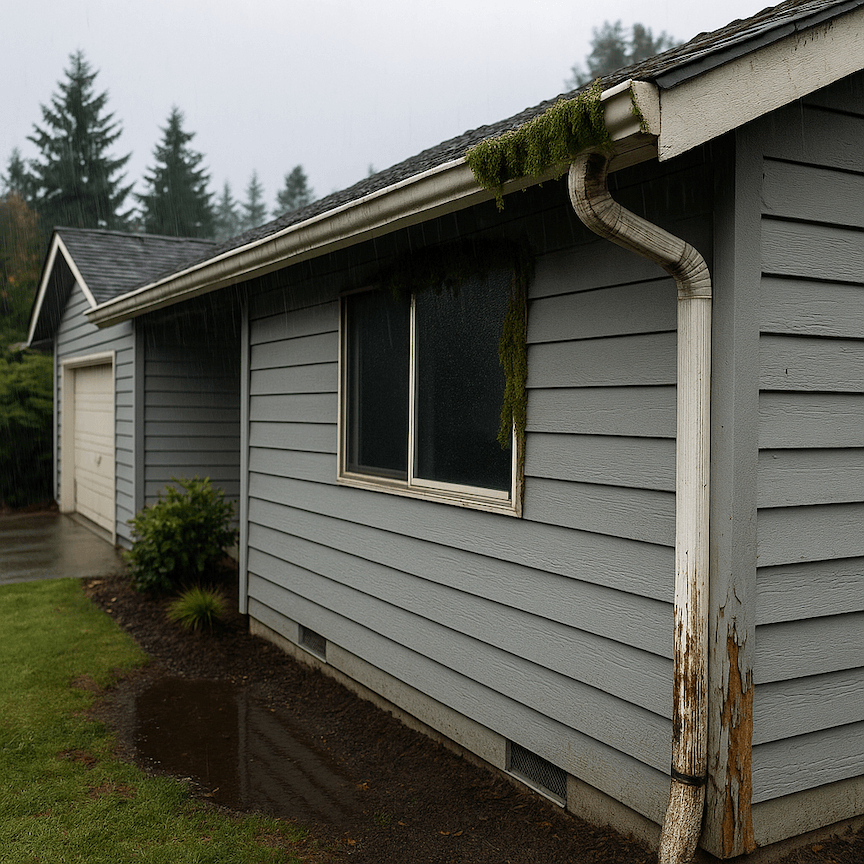
Maybe you look up, and the gutters appear full. Dark clumps sit along the channel. You might even spot little bits of moss or plant growth.

That buildup tells you debris has been sitting long enough to hold moisture. And in Washington, moisture sticks around. Organic material does not just dry out and disappear. It compacts.

Tree cover is one reason this happens faster here. Urban Washington averages about 33% tree canopy. That means debris falls constantly, not once a year. Pine needles, leaves, cones, twigs. The gutters keep collecting.

Over time, that weight strains the system, and the trapped moisture accelerates rust and wood rot. If you keep seeing this, you likely need more frequent gutter cleaning services, not just a seasonal check.

Sagging or Pull-Away

Gutters should stay tight to the roofline. When sections start bending downward, something is weighing them down.

Wet debris gets heavy fast. Rain turns loose leaves and needles into dense-packed material. That weight stresses the hangers and fasteners until they fail.

When gutters sag, the risk is not just performance. Detachment can happen. Repairs become expensive. This is where gutter cleaning and repair often overlap, because cleaning alone may not address the strain damage that has already begun.

Animal or Pest Activity

One sign that people do not always connect with gutters is the presence of pests. Birds start hovering near the eaves. Rodents find nesting material. Insects show up more around the roof edge.
Clogged gutters create the perfect setup: wet organic debris, shelter, and sometimes standing water. That attracts pests because it gives them both cover and resources.

The urgency is that pests can worsen blockages, damage roof edges, and sometimes enter attic spaces. In a climate where gutters stay damp for long stretches, these nesting conditions last longer than they would in a dry region.

Why the “Standard” Schedule Fails in Washington

Washington is not a place where gutters only fill up in October. The environment does not work that way.

Heavy Tree Canopy Coverage

The tree canopy alone changes everything. Urban areas average about 33% coverage, and Washington is more than half forested overall. Many homes are subject to constant debris fall.

Needles do not politely wait for autumn. They drop year-round. Leaves show up in waves. The gutters refill continuously, making a twice-a-year routine feel unrealistic for many neighborhoods.

Frequent and Heavy Rainfall

Heavy rainfall washes debris into corners and downspouts. It also compresses existing clogs into thick, heavy masses.

During the December 2025 atmospheric river cycle, over 100,000 residents were placed under evacuation notice in some areas. Even if your home never floods like that, the lesson still matters. When rain intensifies, gutters must function perfectly. Even partial clogs can fail.

That is why homeowners dealing with recurring clogged gutters often need cleaning more often than the calendar suggests.

Moss and Algae Growth

Washington’s climate encourages moss growth on roofs and algae buildup inside gutters. That adds another layer of clogging material, in addition to leaves and needles.

Moss does not flush easily. It builds slowly, stays wet, and thickens into a stubborn organic blockage. It is another reason many homeowners choose professional gutter cleaning over treating it as an occasional chore.

The Proactive Benefits of Increased Cleaning Frequency

Cleaning more often is not about perfection. It is about avoiding preventable damage.

Prevents Costly Water Damage

Roof runoff must be directed away from the home to prevent soil saturation, mold growth, and durability issues. In Washington, water keeps coming back. If overflow happens repeatedly, fascia rot and foundation erosion become much more likely.

Preserves Your Gutter System

Frequent cleaning reduces strain on seams, hangers, and attachment points. It prevents the heavy buildup that causes sagging and pull-away. That preservation matters because replacing gutters costs far more than maintaining them.

Saves Money Long-Term

Extra cleanings cost less than major repairs. Fixing fascia boards, correcting drainage issues, or addressing water intrusion can add up quickly. Staying ahead with a regular gutter cleaning service near you usually saves money over time.

Take Control of Your Gutter Schedule

Recognizing these signs is the first step in adapting your home maintenance to Washington’s demanding environment. When you clean more often, you stop reacting to overflow and start protecting your home before damage becomes routine.

If you are seeing repeated buildup, overflow, or sagging, we can help. Contact Gutter Empire LLC to schedule professional gutter cleaning and repair services. Call us at (971) 777-9899, click here for a free estimate, or contact us to ensure your gutters are ready for the next stretch of rain.


Key Takeaways

  • Washington’s heavy rainfall and atmospheric river events can overwhelm partially clogged gutters very quickly.
  • Overflow during storms is the clearest sign that gutter cleaning is already overdue.
  • Visible debris, moss, and plant growth indicate moisture-retaining buildup that accelerates gutter and fascia damage.
  • Sagging or pull-away sections often mean wet debris weight is stressing brackets and fasteners.
  • Pest activity near the roofline often signals clogged, organic-filled gutters.
  • Due to high tree canopy coverage and year-round needle drop, many Washington homes need cleaning more than twice per year.
  • More frequent cleaning helps prevent water damage, preserve gutter structure, and reduce long-term repair costs.

Citations

  1. CW3E Atmospheric River Summary – December 2025 precipitation and atmospheric river impacts in the Pacific Northwest
    https://cw3e.ucsd.edu/wp-content/uploads/2025/12/23Dec2025_Summary/23Dec2025_Summary.pdf
  2. Washington State Department of Natural Resources — Tree canopy and statewide tree coverage metrics
    https://dnr.wa.gov/news/2025/american-forests-washington-state-department-natural-resources-launch-statewide-tree-equity-score
  3. University of Washington Climate Impacts Group — December 8–11, 2025 heavy rainfall and flooding historical context
    https://climate.uw.edu/2026/01/13/december-8-11-2025-heavy-rainfall-and-flooding-historical-context-and-a-note-on-snow-drought/
Categories
Blog Gutter Installation Gutter Repair

How Inconsistent Water Flow Signals Gutter System Stress in Washington

You can usually tell when something is off with your gutters long before there is a major leak. One of the clearer signs is uneven water flow: water spilling from one corner while another section stays strangely dry.

That imbalance often shows up during Washington’s long stretches of heavy rain, especially when storms roll in back-to-back. When that happens, your system is signaling early stress that may require gutter repair before something more serious develops.

Small flow changes can connect to bigger issues, such as pitch shifts, loose brackets, or capacity problems. A careful gutter inspection can reveal why the system is struggling and what kind of fix will restore proper drainage.

What Inconsistent Flow Looks Like

Flow problems tend to show themselves in a few noticeable ways. Sometimes a single spot spills over during steady rain while the nearby downspout runs dry. Other times, you notice trickling midway through a gutter run, almost like the water is escaping before it reaches the outlet.

If water lingers in the gutter after rain ends, it usually means the channel is no longer evenly guiding the flow. Instead of moving as a single path, sections slow down or back up. When water spills or stalls before reaching the downspout, the slope or structural alignment has likely changed.

That imbalance usually needs rain gutter repair to keep a small flow issue from spreading into deeper siding or fascia damage.

Common Culprits in Washington Homes

A few conditions occur frequently in the region, especially during high-rain months.

Pitch Problems (Improper Slope)

Gutters rely on a slight, consistent slope to move water. Even small deviations can create low spots.

Building-science guidance recommends a minimum of about 1/16 inch per foot to keep water moving. When the slope is too shallow, water collects, worsening the sag over time.

Washington’s multi-day storms highlight these issues fast, especially when heavier rainfall pushes more water into areas that already drain slowly. Homes that have not been re-leveled in years often need gutter installation adjustments to correct the pitch.

Bracket Fatigue & Wind Damage

Wind can shift gutters even when nothing appears broken. In the November 2024 windstorm, gusts reached around 70 mph across parts of Washington, with even stronger bursts in higher elevations.
Those conditions loosen brackets and change alignment just enough to disrupt flow. The gutter may still hang in place, but the slope is no longer correct, and water starts to drain unevenly. After events like this, rain gutter repair often becomes the only way to restore the original path and prevent further sagging.

Partial Blockages

Pine needles, leaves, and other debris create partial clogs that behave like tiny dams. The water backs up at one section, spills over, and never reaches the downspout.

During the December 2025 atmospheric river events, NASA reported 15–24+ inches of rainfall in parts of the Cascades, leading to constant debris movement and clogs forming quickly. Even a single small blockage can create a strange mix of overflow here and dryness there. When downspouts slow to a trickle, downspout repair may also be needed to clear the obstruction completely.

Undersized or Overwhelmed Systems

A system that is too small for the roof area or the region’s rainfall will always struggle to keep up. Downspouts spaced too far apart, sometimes more than 40–50 feet, reduce carrying capacity during heavy downpours.

When NOAA documented 12–15+ inches of rainfall over the Cascades in December 2025, many older systems failed simply because they were not built for that level of sustained water. In those cases, upgrading to seamless gutters with the right capacity can prevent repeated overflow at the same weak points.

The Consequences of Ignoring the Warning Signs

Small overflows add up quickly. When water consistently spills in the wrong place, the siding and fascia take the hit. The wood softens, the paint peels, and mold starts to form in tight corners. Uneven flow also pushes water straight to the foundation line.

Building-science guidance recommends moving discharge at least five feet away from the structure. Without that distance, soil saturation increases. Once erosion begins, repairs become much more complicated.

Standing water in low gutter spots also accelerates corrosion. In winter, the trapped water can freeze, further stressing the channel and increasing the load on an already fragile section. These problems usually escalate without proper gutter repair in Washington, allowing damage to occur early.

Why Professional Diagnosis Is Essential

The visible splash is rarely the full story. A professional can trace the cause back to what is failing, like pitch, brackets, blockages, capacity, or all the above.

A full gutter inspection examines slope consistency, hanger spacing, and downspout performance. It also checks for structural issues, such as wood deterioration behind the gutters. That kind of assessment helps determine if a quick adjustment will solve the problem or if the setup needs a deeper correction.

Sometimes the right choice is a localized fix, such as downspout repair. Other times, the entire channel needs re-pitching. The goal is to stop the uneven flow before the damage spreads to the rest of the home.

From Diagnosis to a Lasting Solution

Once the source of the imbalance is clear, repairs usually focus on restoring smooth, consistent water movement. That often means tightening or replacing brackets, re-establishing pitch, and clearing any debris blocking the line.

When a system is too small or too worn, gutter installation with properly sized channels offers long-term stability. Many Washington homeowners also choose seamless gutters because they eliminate the weak points where leaks often start.

Fixing these issues early prevents expensive exterior or foundation repairs later. A steady, predictable flow is the best sign that your system is working again.

Address the Warning Before It Becomes an Emergency

Flow irregularities usually appear long before a major failure, and that early warning gives you a chance to stop wind and water damage from advancing into the structure. In Washington’s climate, waiting only gives storms more opportunities to widen the problem. A targeted gutter repair in Washington can stabilize the system, protect the home, and prevent deeper water intrusion. If you want help protecting your home from wind and water damage, contact us at (971) 777-9899, or click here for a free estimate. 


Key Takeaways

  • Uneven gutter water flow is an early warning sign of system stress, often caused by pitch shifts, loose brackets, or partial blockages.
  • Washington’s multi-day storms and atmospheric river events quickly expose flow problems that may not appear during lighter rainfall.
  • Small slope deviations or bracket movement can cause water to overflow in one area while leaving downspouts dry elsewhere.
  • Partial debris clogs act like dams, redirecting water and preventing proper drainage during heavy rain.
  • Undersized or outdated gutter systems struggle to handle modern storm intensity and sustained rainfall.
  • Ignoring inconsistent flow increases the risk of fascia rot, siding damage, foundation saturation, and corrosion.
  • Professional gutter inspections identify whether repairs, re-pitching, downspout corrections, or full system upgrades are needed.

Citations

  1. Pacific Northwest National Laboratory (PNNL), Gutters and Downspouts – Building Science Guidance
    https://basc.pnnl.gov/resource-guides/gutters-and-downspouts
  2. NASA Global Precipitation Measurement (GPM), NASA Tracks Tropical Moisture Flooding Washington
    https://gpm.nasa.gov/applications/weather/news/nasa-tracks-tropical-moisture-flooding-washington
  3. NOAA Weather Prediction Center, Meteorological Watch – December 2025 Atmospheric River Event (MD 1261)
    https://www.wpc.ncep.noaa.gov/metwatch/metwatch_mpd_multi.php?md=1261&yr=2025
Categories
Blog Gutter Repair

How High Winds in Washington Cause Gutter Detachment, and How to Prevent It

Washington homeowners know wind season is not just a noisy inconvenience. Strong gusts roll in from the Pacific, push through mountain gaps, and sweep across towns with surprising force.

Some years feel especially intense, with the National Weather Service in Spokane reporting straight-line winds that can top 100 mph. When storms get more frequent (NOAA shows the U.S. has jumped from an average of $9 billion in disasters per year to more than $27 billion recently), small parts of a home’s exterior start to show the strain.

Gutters sit right at that intersection of wind, rain, and debris. When they loosen or detach, water goes exactly where it should not.
This guide walks through why wind affects gutters so directly, what usually fails first, and how a few smart upgrades can protect your home before the next round of storms hits.

Why Washington’s Windstorms Create the Perfect Conditions for Gutter Failure

Washington’s windstorms have a pattern. They hit during fall and winter, usually with colder fronts or downbursts. Those downbursts drop air fast, and when that air hits the ground, it spreads horizontally with a force that can lift and shake anything attached to a roofline. That includes gutters that are carrying water or debris. Gusts push, tug, and rattle.

  • Wind Uplift: Wind flowing under the gutter edge creates a lifting force. If a fastener is already loose, that small motion becomes a bigger gap with each storm.
  • Side Pressure: Sideways gusts shake the entire run. Over time, that movement weakens brackets and nails, especially on older homes with aging fascia.
  • Storm Frequency: More frequent severe weather across the U.S. and Washington’s geography leaves many communities exposed. That means gutters take more hits each year than they used to.

All of this helps explain why rain gutter repair is becoming routine after wind events. In a state where storms come back year after year, even new systems need the right layout and hardware to stay secure.

How Improper Installation and Aging Systems Fail First

Some gutters survive wind with barely a wobble. Others start pulling away after one rough week. The difference usually comes down to how the system was installed and how old the supporting materials are.

  • Spacing Problems: Hangers spaced too far apart let long sections sag under weight, and windy weather stretches those areas even further, eventually pulling the gutter out of line.
  • Fastener Issues: Spikes look sturdy, but they work loose over time. Screws hold far better, especially when they reach into the roof framing rather than just fascia boards.
  • Fascia Rot: Moisture behind old gutters can soften fascia. Once the wood loses strength, no hanger can properly grab it.
  • Seam Failures: Sectional gutters have multiple joints. Those seams catch wind and shift, making the entire run more vulnerable.

Gutters need uplift-rated hardware, closer fastener spacing, and proper anchoring behind flashing. When systems lack these basics, even moderate storms can start pulling metal away from the roof edge.

It’s one of the reasons homeowners eventually need gutter replacement or updated hardware, even if the gutters themselves still look good. This is also where seamless gutters installation makes a real difference. Fewer seams mean fewer weak points.

How Wind + Water + Debris Create a Cascade of Structural Problems

Wind alone is tough on gutters, but the real trouble often appears when wind combines with other forces. Washington’s long rainy season fills gutters quickly, and debris from evergreens adds sudden weight. When the temperature drops, ice forms, and that weight multiplies.

  • Clogs create standing water: Water trapped in one section becomes heavy enough to bend metal downward.
  • Ice locks gutters into a fixed position: When wind hits a frozen, overloaded run, the system can’t flex. Something gives, usually a bracket.
    A poor slope keeps water from draining: That trapped water strains the fasteners during storms.
  • Downspout blockages push water back: The pressure stays near the roofline, where wind hits hardest.

This mix explains why national insurance data shows that wind and hail account for 34–42% of recent homeowners’ claims. Once a gutter shifts, water has a direct path behind siding or toward the foundation. That’s why homeowners often search for downspout repair services near them after wind events, as downspouts take hits almost as often as the gutters themselves.

The Real Consequences When Gutters Detach in Washington

The moment gutters detach, even slightly, the system stops doing its job. Water spills where it shouldn’t, and it only takes one storm for the damage to spread.

Water Damage

Rain can flow behind siding and soak wall cavities. Over time, that moisture invites mold and damages insulation.

Foundation Issues

Overflowing gutters dump water directly along the base of the house. Soil saturates, concrete shifts, and small cracks grow.

Insurance Exposure

When homeowners file wind-related claims, premiums often rise. With years like 2024 producing 27 billion-dollar disasters nationwide, insurers watch loss patterns closely. That matters because a simple gutter replacement costs far less than repairing water-damaged walls or filing a claim.

Proven Prevention Steps to Keep Gutters Secure in High Winds

Fixing damage after a storm is doable, but avoiding it in the first place saves a lot of stress. Washington homes stay safer when a few small habits become routine.

A continuous gutter run has fewer weak spots, so seamless gutter installation often holds up better in strong winds. Some people close the gap between hangers to spread the strain. Others shift to uplift-rated fasteners because they grip tighter and stay put when older hardware starts to loosen.

Seasonal cleaning also matters, primarily when debris collects near the roof edges. Strong anchors help downspouts stay put during gusty weather, which makes downspout repair less likely after rough storms. Checking the slope once things calm down keeps small shifts from turning into bigger repairs.

Protect Your Home by Working With Washington’s Gutter Wind-Damage Specialists

After reading through the mechanics of wind damage, you can see why gutters rarely fail at random. They respond to how they were installed, how often they are maintained, and how well they can handle Washington’s storm cycles.

At Gutter Empire LLC, we approach every project with that context in mind. We secure failing hardware, reinforce weak points, repair downspouts, and replace old systems with durable options built for high-wind areas. If you need gutter repair solutions near you, we are ready to help. Contact us at (971) 777-9899, or click here for a free estimate.

Categories
Blog Gutter Repair

3 Common Myths About Gutter Repairs (and What Washington Homeowners Should Really Know)

If you live in Washington, you’re used to wet weather. Rain is part of daily life here, whether it’s a drizzle or a full-on downpour. The thing is, all that water must go somewhere, and that’s where your gutters come in. They quietly handle gallons of runoff during every storm, guiding it away from your roof, walls, and foundation.

However, just because your gutters look okay from the ground doesn’t mean they’re doing their job. A surprising number of people assume a quick cleaning is enough, or they try to patch leaks with whatever they have on hand, usually duct tape. Unfortunately, these assumptions can lead to some serious headaches.

This post addresses three of the most common myths about rain gutter repair, particularly for homeowners in Washington. We’ll also explain why ignoring small issues can lead to big and expensive problems and why bringing in the pros makes a real difference.

The Hidden Costs of Ignoring Small Repairs

Perhaps it begins with a loose bracket or a downspout that detaches after a windy day. These little things are easy to brush off.

When gutters sag or leak, water doesn’t drain properly. Instead of flowing away, it spills over the edge, seeps into the soil, and puts pressure on your foundation. You might not notice right away, but eventually, you’ll see cracks in the concrete or water spots creeping up the basement walls.

Seattle Public Utilities recommends directing gutter water at least five feet away from your home, and ten feet is even better. That might sound like overkill, but with the amount of rainfall we get, it’s necessary. One misaligned gutter can send thousands of gallons of water straight to your home’s base over time.

Then there’s safety. Climbing ladders to deal with clogs or leaks might seem like a money-saver, but the CDC continues to report high injury rates from DIY maintenance jobs. It’s not just about falling, either. Tools slip, brackets snap, and before you know it, a 10-minute chore becomes a trip to urgent care.

When you search for gutter repair near you, you’re not just hiring someone to patch a hole. You’re bringing in trained eyes to spot what you might miss and fix it the right way. That can mean gutter and fascia board replacement, downspout repair near you, or resealing a leak you didn’t know was there.

What Homeowners Get Wrong About Gutter Repairs

Let’s talk myths. These three ideas come up a lot, and while they sound reasonable, they don’t hold up in practice. Especially not in the Pacific Northwest.

Myth #1: “Gutters Only Need Cleaning, Not Repairs”

Cleaning out leaves and pine needles is important. But if that’s all you’re doing, you might be overlooking bigger problems.

Gutters can crack, sag, rust, or lose slope over time. Those issues aren’t solved with a leaf blower. Water still overflows, leaks still form, and mold and rot begin to creep in behind the scenes.

A single inch of rainfall on a 1,000-square-foot roof can generate more than 600 gallons of water. That’s a lot of pressure for a system that hasn’t been maintained properly. When something goes wrong, the water finds its way into places it shouldn’t be.

Gutter leak repair often involves resealing seams, replacing worn brackets, or even re-sloping sections to get water flowing again. This is cleanup as well as structural protection, and in Washington, it’s essential.

Myth #2: “Duct Tape Can Fix Gutter Leaks”

We’ve all used duct tape in a pinch. It’s a classic fix-it tool. But gutters? That’s where the tape meets its match.

Rain, wind, UV rays, and freezing temperatures work against duct tape’s adhesive power. It might hold for a little while, but once the rain picks up or the tape dries out, it peels, leaks, and allows moisture to enter the fascia board. Sometimes, it even traps water, speeding up the damage instead of stopping it.

When you apply a quick fix and forget about it, the real damage often happens behind the scenes. Moisture seeps under the roofline, the wood swells, the paint bubbles, and next thing you know, a small leak has turned into major rot.

A permanent solution requires removing damaged sections, replacing fasteners, resealing properly, or, in some cases, doing a full gutter and fascia replacement. If the system is too old or damaged, your best option may be a complete gutter replacement.

Myth #3: “Seamless Gutters Never Leak”

Seamless” gutters reduce leaks but don’t eliminate them. Corners and joints still exist, and without proper slope or sealing, even a quality seamless gutter installation can eventually leak.

Corners, end caps, and downspout outlets still exist, and they’re still vulnerable. If they’re not sealed well, or if debris builds up and puts pressure on those spots, leaks can happen.

We often see this in Washington. Pine needles, moss, and leaves collect around joints, clogging them up. Even with seamless gutters, water can back up and overflow if the system isn’t sloped correctly or cleaned regularly.

Also, seamless doesn’t mean self-healing. If something pulls away from the fascia or gets dented by a falling branch, it still needs professional attention. That’s why gutter installation near you should always involve experts who understand local weather patterns and construction codes.

Why Professional Repairs Are Worth It

You might be thinking, “I’ll deal with it next season.” But small gutter issues don’t just hang around. They grow. One loose bracket leads to sagging. That turns into overflow. Then your siding gets stained, or worse, your foundation starts shifting.

When you call a team that specializes in gutter leak repair, they do more than fix the obvious. They check slopes, connections, brackets, and downspouts. They also look at whether your gutters are the right size for your roof. Sometimes, overflow isn’t caused by damage; it’s caused by undercapacity.

Professionals also work fast and safely. No risky ladder balancing acts, no guesswork about which sealant works best in wet weather. And if your system is outdated, they’ll guide you toward full gutter replacement if that’s the better long-term fix.

At Gutter Empire, we specialize in everything from small gutter leak repair to full replacement, including professional seamless gutter installation. We work across Washington, helping homeowners like you stay ahead of the weather.

Ready to protect your home before the next big storm? Contact us at (971) 777-9899 or get a free estimate here to schedule your inspection today.


Key Takeaways

  • Small gutter issues like loose brackets or leaks can lead to foundation damage, wood rot, roof problems, and costly repairs if ignored.
  • Cleaning alone doesn’t fix structural issues—gutter repair often involves resealing, re-sloping, or replacing damaged components.
  • Duct tape is never a long-term fix; it fails quickly in Washington’s wet, windy weather.
  • Seamless gutters reduce leaks but can still fail at corners, joints, and downspouts if not properly maintained.
  • Professional gutter repair ensures safe, accurate, and long-lasting fixes that protect your home from Washington’s heavy rainfall.
  • Experts can identify hidden issues like improper slope, undersized gutters, or moss buildup that homeowners often miss.
Categories
Blog Gutter Repair

Top 3 Causes of Foundation Erosion From Poor Drainage in Washington

In much of Washington, runoff isn’t just a seasonal concern. It’s constant. And if that water isn’t properly managed, it ends up exactly where it shouldn’t: along your home’s foundation.

Poor drainage can quietly shift soil, compromise support, and set the stage for long-term structural issues. It often begins with overlooked issues, such as clogged rain gutters or short downspouts.

Over time, pressure builds, cracks form, and moisture seeps into the walls. The erosion doesn’t look dramatic at first, but the damage adds up.

Below, we’ll break down the top causes and how simple fixes can keep your foundation solid through any storm

1. Overflowing or Undersized Rain Gutters

Rainfall isn’t light in Washington. Most roofs collect way more water than people think. During a single storm, thousands of gallons can rush off just one roof, and if your rain gutters aren’t built for that kind of volume, the water ends up spilling over the edge and straight down to your foundation.

Why does this happen? Sometimes the gutters are just too narrow. What worked in a milder climate can’t keep up here. Other times, they’re packed with pine needles or roof debris, blocking water from draining. Occasionally, it’s the pitch; if the gutters aren’t angled right, the water stalls and starts spilling over. Aging systems don’t help either. We see a lot of rusted joints or seams that leak halfway down the run.

It doesn’t take long for that constant overflow to start breaking down the soil near your home. Even if you don’t see damage right away, it’s building up with each storm.

What Helps

Get those gutters cleaned regularly. If they’re old or leaking, think about seamless gutters installation or full gutter replacement. Additionally, always double-check the slope: Water should be moving, not sitting.

2. Poor Downspout Placement or Damage

Even with perfectly working gutters, your home isn’t protected if the water has nowhere to go. The way your downspouts are positioned and where they release water can make or break your drainage system.

How It Creates Erosion

Downspouts that discharge too close to the foundation create concentrated streams of water right where you don’t want them. Instead of dispersing outward, that water soaks into the soil directly against your home’s footing.

Over time, it weakens the compacted soil and causes uneven settling. If you’ve noticed standing puddles near your exterior walls or damp basement corners, your downspouts are likely the culprit.

In some cases, the problem isn’t placement but wear and tear. A crushed, disconnected, or rusted downspout can redirect water unpredictably. You might not spot the issue until you see erosion grooves or staining on the siding.

Simple Adjustments That Work

Fixing downspout issues doesn’t require a full overhaul. In most cases, small changes go a long way.

One of the easiest upgrades is adding a downspout extension, which should be long enough to carry water at least five feet from the base of your home. You can also redirect the flow into a gravel trench or a dry well to help it drain slowly.

Similarly, splash blocks work, especially on slopes, by breaking up the force of the water. If you notice leaks or misaligned joints, it’s time to schedule downspout repair near you before the next storm rolls in.

3. Chronic Clogging From Evergreen Debris

If you live under tall pines, you already know how relentless debris can be. Pine needles, moss, and cones build up inside gutters faster than most homeowners can clear them. The result is a system that’s constantly blocked and overflowing.

Why It’s a Problem Here

The Pacific Northwest’s evergreen forests shed debris all year long. Combine that with months of rainfall, and you get a heavy, soggy buildup that slows or completely stops drainage.

Clogged rain gutters can’t move water efficiently. It spills over the edge, runs down the siding, and lands exactly where it shouldn’t: along the foundation line.

That overflowing water not only erodes soil but also damages your fascia boards and roofline. Once rot starts, it spreads quickly and weakens the entire gutter system.

What to Do About It

  • Aim to clean your gutters twice a year, once after the leaves have fallen and again before spring rains arrive. If you’d rather not climb a ladder, professional gutter cleaning and repair near you can take care of it safely and thoroughly.
  • Add gutter guards to reduce debris buildup (especially for homes surrounded by trees).
  • Test your system after cleaning to make sure water flows smoothly from end to end.
  • Address any signs of sagging or leaks immediately through rain gutter repair.

How to Prevent Foundation Damage Before It Starts

Foundation problems are sneaky. By the time cracks appear, the damage has typically been accumulating for months, sometimes even years. The key is prevention. Keeping water away from your foundation is far cheaper and easier than fixing erosion once it begins.

  1. Spend the money on a good system: You cannot go wrong by installing a seamless gutter system.
  2. Keep it clean: Schedule consistent gutter repair and cleaning throughout the year.
  3. Direct runoff properly: Use extensions or piping for better control of flow.
  4. Monitor the slope: Ensure the soil around your home slopes away from the foundation by at least six inches over a distance of ten feet.
  5. Upgrade when necessary: Don’t patch a failing system indefinitely; consider a full gutter replacement when leaks or corrosion spread.

Protect the Home Beneath You Before the Next Storm

In Washington, the rain isn’t letting up anytime soon, and neither is the risk of foundation erosion. What can change is how well your home is prepared to handle it.

Check your rain gutters before the start of storm season. In addition, clean downspouts and watch for early signs of water pooling.

If your system is outdated, we offer expert gutter installation specifically designed for Washington’s weather conditions. For homes that need an upgrade, we also install seamless gutters with improved flow and reduced leaks. You can count on us for fast and affordable rain gutter repair when damage appears. Reach out to Gutter Empire or get a free estimate here, and let’s protect your home, starting from the foundation.


Key Takeaways

  • Overflowing gutters are the leading cause of foundation erosion in Washington homes, especially when gutters are clogged, undersized, or poorly sloped.
  • Downspout placement is crucial — discharging water too close to the house undermines the soil and causes foundation settling over time.
  • Evergreen debris clogs gutters year-round, slowing drainage and creating overflow that damages both siding and soil.
  • Preventive maintenance is cheaper than foundation repair. Regular gutter cleaning, extensions, and proper slope grading can save homeowners thousands in structural repairs.
  • Seamless gutter systems and guards provide long-term protection against chronic clogging and heavy rain, making them a smart investment for Washington properties.
Categories
Blog Gutter Cleaning Gutter Repair

How Gutter Maintenance Protects Washington’s Evergreen Landscaping

There’s something magical about living in Washington. The air smells clean, like pine after it rains, and every turn reveals beautiful green landscapes. Those evergreens, moss-covered lawns, and wild ferns are part of what makes the Pacific Northwest so beautiful. But here’s the flip side: What feeds all that life can also destroy it.

Heavy rain and thick tree cover are tough on gutters. When they clog, the damage doesn’t stop at your roofline. Overflowing water can chew through soil, drown plants, and even weaken your home’s foundation. That’s why gutter cleaning and repair should be part of caring for your landscape.

Let’s look at how something as simple as a clean gutter system can protect the beauty around your home.

The Washington Climate Is a Double-Edged Sword

It’s no secret that Washington is wet. NOAA’s 2025 climate report shows the heaviest rainfall hits between November and January, when steady storms test every roof and drain in sight.

The state’s dense forests make things even trickier. Evergreen trees, such as pine needles, cones, moss, and twigs, shed year-round, creating a constant supply of debris. Conifers can intercept about half of the rainfall during a storm, and what slips past lands on your roof. If it doesn’t find a clear path down, it starts pooling in gutters and spilling over the sides.

Once that happens, it’s not just your roof at risk. It’s your soil, your plants, and sometimes even your basement.

The Domino Effect: How Failing Gutters Harm Your Landscape

You might think an overflowing gutter is harmless, but it’s the start of a chain reaction. Water that should drain slowly into the ground instead rushes downward like a hose turned full blast.

Overflow and Misguided Water

When gutters overflow, water dumps wherever gravity sends it. The EPA notes that this fast-moving runoff picks up sediment and contaminants, carrying them through your yard and into storm drains. Over time, it erodes soil, damages groundcover, and leaves muddy scars that take months to heal.

Soil Erosion

Strong runoff washes away topsoil, the layer that feeds your grass and garden. Without that protection, roots struggle to stay anchored and absorb nutrients. Areas with a slope are particularly susceptible to erosion during storms, as gravity increases the rate of soil movement.

Mulch and Garden Bed Destruction

Too much water can wash mulch away, exposing plant roots to cold air and sunlight. Flooded flower beds damage tender plants and compact the soil below them. Even bark or decorative rock can be washed away after heavy rain.

Foundation Soil Damage

Constant puddles near the foundation loosen packed soil, creating tiny shifts in structure. Over time, that leads to cracks or moisture sneaking into the basement, something WSU’s drainage guide lists as a common symptom of poor gutter flow.

Lawn and Hardscape Damage

Lawns develop channels or gullies where water repeatedly runs. Walkways and patios show orange or brown stains from sediment, and the edges crumble faster when the ground beneath stays wet for too long.

Every one of these problems starts with one small issue: blocked or damaged gutters that no longer carry water where it should.

The Solution: A Proactive Gutter Maintenance Plan

You can stop nearly all of this with a little attention and the right help. Think of gutter care as landscape insurance, protecting your lawn, flowers, and foundation before trouble begins.

Regular Cleaning

A professional gutter cleaning service does more than scoop out the leaves. They restore the natural flow of rainwater so it drains evenly across your property.

When technicians flush downspouts, they make sure the runoff spreads gently over grass or garden beds rather than carving channels through them. It is recommended to check gutters during active rainfall to confirm even dispersion.

Clean gutters turn a destructive stream into a slow, steady soak, exactly what your landscape needs.

Timely Repairs

Sometimes cleaning isn’t enough. Cracked seams, sagging runs, or broken hangers can redirect water into unwanted places. That’s when rain gutter repair comes in.

A technician can realign slopes, reseal joints, and reconnect downspouts so every drop flows away from your home. If you’re searching for gutter repair near you, look for teams that inspect both the gutters and the ground below them. The best repairs fix the metal and protect the ecosystem beneath it.

Your Seasonal Gutter Checklist for Washington Homes

If you live anywhere west of the Cascades, timing your maintenance is everything. Each season brings its own challenges.

Spring Cleaning

After months of rain, gutters fill with pine needles, moss, and fine grit from roof shingles. Early spring cleaning clears out the old and prepares for new growth. It also helps your lawn and beds absorb spring rain instead of flooding.

Late Fall Cleaning

This is the most important service of the year. October and November winds fill gutters right before the rainiest months begin. Waiting until after the first storm means you’re already playing catch-up. A single clogged downspout can lead to overflow that unravels mulch and soaks foundations within days.

Year-Round Inspection

Walk your property occasionally, especially during rain. Look for:

  • Water spilling over the gutter edge
  • Soil washed away under downspouts
  • Flattened plants or mulch piles

Gutters are pulling slightly away from the fascia.

These are early warning signs. Catching them now saves money later. According to the Insurance Information Institute, about 1 in 67 homes files a water-damage claim each year. Staying ahead of that statistic is as simple as regular gutter cleaning and repair.

Gutter Empire: Protecting Washington Homes and Landscapes

Here in the Pacific Northwest, rain shapes everything, from the forests that line our streets to the moss that creeps up our driveways. At Gutter Empire, we help that rain work for you, not against you.

We don’t simply provide gutter cleaning services. We consider your property to be a living system. Our technicians understand how rain patterns, evergreen debris, and soil types all come together. That’s why every project includes slope checks, downspout inspections, and precise rain gutter repair that keeps water flowing exactly where it belongs.

When we clean or repair a system, we’re not just protecting a roof. We’re protecting the landscapes that define Washington: the gardens, lawns, and evergreens that make your property part of this region’s natural beauty.

Protect your evergreen investment. Schedule your professional gutter cleaning and repair with Gutter Empire today, and keep your landscape thriving year after year. Call (971) 777-9899 to talk to an expert. You can also get a free estimate here.


Key Takeaways (with footnotes/citations)

  1. Heavy rainfall makes gutter care essential. NOAA reports that Washington’s wettest months—November through January—bring frequent storms that overwhelm clogged systems and increase runoff damage.【NOAA Climate Data†https://www.ncei.noaa.gov/access/monitoring/climate-at-a-glance/statewide/rankings/45/pcp】
  2. Clogged gutters can destroy your landscape. Overflowing gutters accelerate soil erosion, mulch loss, and foundation softening, sending sediment and pollutants into storm drains.【EPA: Urbanization & Stormwater Runoff†https://www.epa.gov/sourcewaterprotection/urbanization-and-stormwater-runoff】
  3. Proper drainage preserves soil structure and plant health. Washington State University’s extension program emphasizes roof runoff management as key to preventing compacted soils and waterlogged roots.【WSU Extension†https://extension.wsu.edu/clark/naturalresources/smallacreageprogram/managing-roof-runoff/】
  4. Routine cleaning and gutter repair protect property value. Overflow and misdirected water can cause basement leaks, cracked foundations, and lawn channeling—leading to costly claims that insurance may only partly cover.【Insurance Information Institute†https://www.iii.org/fact-statistic/facts-statistics-homeowners-and-renters-insurance】
  5. Seasonal timing matters. Spring cleaning removes pine needles and moss; late fall cleaning clears heavy debris before the rainy season; and quick inspections after storms prevent erosion before it starts.
Categories
Blog Gutter Repair Gutter Replacement

The 3 Most Overlooked Signs You Need Gutter Repair in Washington

When you live in Washington, rain is part of the routine. From steady drizzles in the fall to heavy downpours in the winter, water is always testing your home’s defenses.

Most people know their roof is the first line of protection, but gutters are just as critical. They move water safely away from your siding and foundation. Many homeowners overlook the subtle signs that something is amiss until the damage has already become extensive.

Let’s break down the three most overlooked warning signs that mean it’s time for gutter repair before you’re forced into costly replacements.

The 3 Most Overlooked Signs You Need Gutter Repair in Washington

Not every gutter issue shows up as a dramatic overflow. In fact, the quiet signs are usually the most dangerous. Here’s what to watch for.

1. Water Pooling at the Perimeter (The Silent Foundation Threat)

One of the clearest yet often ignored warnings is water collecting right next to the house. After a steady rain, step outside and look around the foundation. Do you notice puddles that don’t drain away or soil that looks washed out? That is a red flag.

Pooling means the gutters or downspouts aren’t doing their job. In Washington, where rain falls so frequently, that repeated soaking quickly adds up. Water seeps into the soil, pressing against foundation walls. Over time, this can lead to cracks, basement leaks, or mold growth in the lower levels of the house.

What makes this subtle is that the damage happens underground, out of sight. By the time homeowners notice a musty smell in the basement, the repair bills have multiplied. That’s why spotting puddles early is critical.

Look for the following:

  • Mulch or gravel is displaced near downspouts.
  • Erosion lines in the soil after storms.
  • Damp basement walls or floors.

Extending downspouts at least five feet from the foundation is a smart first step. But if the issue persists, you’ll need roof gutter repair or adjustments to the slope of your system. Consider this a low-cost prevention measure compared to the high cost of structural fixes later.

2. Peeling Paint and Soft Fascia Along the Roofline

Another easy-to-miss warning is peeling paint or soft spots around the edges of your roofline. Many homeowners blame paint age or sunlight, but in a rainy climate like Washington, it usually signals gutter trouble.

When gutters overflow or develop small leaks, water runs down the fascia boards and siding. Instead of drying out, those areas stay damp for weeks at a time. As a result, paint begins to blister, wood softens, and hidden mold starts to grow behind the surface.

It may appear to be a cosmetic issue, but it’s actually the first stage of structural damage. Peeling paint indicates that moisture is consistently hitting the same spots, and soft fascia suggests that rot is already in progress.

Check for the following warning signs:

  • Dark streaks or stains just under the gutters.
  • Nails or screws on the ground, often from the fascia pulling loose.
  • Soft or spongy trim when gently pressed with a screwdriver.

The good news is that fascia board repair can often solve the problem before it spreads. Resealing seams, reattaching loose sections, or replacing a short run of damaged fascia is far cheaper than a full siding job. Addressing these small leaks now can save you from the need for complete gutter replacement later.

3. Subtle Sagging and Moss Build-Up Slowing Flow

Sagging gutters are sometimes written off as “not a big deal.” But in Washington, where moss thrives on shaded, damp roofs, sagging is more than an eyesore. It’s a warning that gutters are not holding water, but rather allowing it to accumulate.

Moss and evergreen needles create heavy clogs that put constant strain on hangers. Over time, this weight causes gutters to sag away from the fascia. Once water sits in those low spots, it accelerates rusting, seam failure, and eventual collapse.

In many cases, homeowners only notice a problem when water starts spilling over the sides. However, the sag is the real clue because it indicates that the system is already losing its effectiveness.

Signs to keep an eye on:

  • Gutters that no longer look perfectly straight.
  • Water lines or “tide marks” inside the gutter trough.
  • Standing water hours after a storm has passed.

In this climate, waiting until gutters collapse is the most expensive option. A timely call for gutter repair near you, whether that’s tightening hangers, clearing moss, or adjusting the pitch, prevents the chain reaction that can lead to total system failure.

Why Small Fixes Save You More Than Full Replacement

One of the biggest misconceptions is that gutters only need attention when they’re overflowing dramatically. The truth is that minor fixes often make the biggest difference. Resealing end caps, rehanging sections, or extending downspouts can be done quickly and affordably.

Ignore those steps, and you’re looking at far more than gutters. Water damage can spread to fascia, soffits, siding, and even basements. At that stage, you’re paying for more than just gutter replacement. You’re paying for carpentry, painting, and possibly mold remediation.

Quick DIY Checks Before You Call

Not every issue needs a ladder and a toolbox. A few quick checks can tell you if your gutters are headed for trouble.

Step outside during a steady rain. If water pours over the edge or leaks from seams, that’s a warning. Look at your downspouts, too; they should send water at least five feet from the base of your home.

Press gently on the fascia beneath the gutter. Soft spots mean water damage. Finally, scan the roofline for moss. Moss slows the flow and signals clogs ahead.

These quick inspections only take a few minutes but provide valuable insights. If you notice any of these red flags, scheduling roof gutter repair promptly will save you the stress of larger projects down the road.

Act Before the Rain Wins

In Washington, the rain never really takes a season off. That steady moisture is exactly why small gutter problems grow quickly. Maybe you’ve seen water pooling near the steps, a strip of paint peeling under the eaves, or a sag starting along the fascia. Those details might look minor, but they’re early warnings. Acting now with gutter repair is far cheaper than waiting for mold, rot, or foundation cracks.

At Gutter Empire WA, we handle everything that involves gutters. Let’s stop the damage before the next storm. Contact us today by calling (971) 777-9899 or book a free estimate here.


Key Takeaways

  1. Pooling water near the foundation is a silent threat. Standing water around the base of your home often indicates that your gutters or downspouts aren’t diverting water properly, which can lead to cracks, leaks, and basement mold.
  2. Peeling paint and soft fascia boards signal hidden leaks. Overflowing or leaking gutters cause moisture damage that rots wood trim and weakens attachment points, often going unnoticed until repairs become costly.
  3. Sagging gutters and moss buildup reduce flow. In Washington’s damp climate, moss and evergreen needles create clogs that strain hangers and cause gutters to sag, trapping water that accelerates rust and seam failure.
  4. Small fixes prevent full replacements. Resealing seams, rehanging sections, and extending downspouts are low-cost solutions that prevent expensive siding, foundation, or mold repairs later.
  5. Regular inspections protect your home. Quick DIY checks during rainstorms—such as looking for leaks, soft spots in the fascia, or sagging lines—help homeowners identify issues early and know when to call a professional gutter repair service.

Last updated: October 2025

Categories
Blog Gutter Cleaning Gutter Repair

Fall Gutter Preparation in Washington: Get Ready Before Freezing Temps Hit

It’s that time of the year when the air is crisp and the leaves are turning brilliant shades of red and gold. Fall in Washington is a beautiful season, but it should also serve as a critical warning bell for homeowners. Winter is coming, and those picturesque leaves are about to become your gutter system’s worst enemy. Ignoring them now could lead to a winter of discontent filled with ice dams, roof leaks, and damaged fascia.

Your home gutter system is a core defensive feature against Washington’s relentless winter weather. If the system is clogged or damaged, it cannot function properly. And when rain becomes snow and ice, the problems quickly multiply. As such, gutter winterization for Washington homeowners is not a suggestion, but a necessity.

Why Washington Winters Are So Hard on Gutters

Washington’s all-year-round damp weather and exceptionally wet fall season present a unique challenge, as it deposits a constant layer of debris from the abundant vegetation. When winter brings freezing temperatures to many areas across the state, it sets the perfect conditions for gutter failure.

When gutters clog due to debris and moss buildup, water has nowhere to go and thus pools and freezes in the gutter system. This creates heavy blocks of ice that bend seams, pull gutters away from the home, and form ice dams on the roof. Ice dams prevent melting snow from draining and force water back under your roof shingles, allowing it to flow into your attic. The result is stained ceilings, rotting rafters, and mold growth.

The combined weight of ice, snow, and debris places a tremendous strain on the fascia boards where gutters are mounted, often necessitating the need for fascia board replacement in Washington. That project can end up costing more than routine preventive maintenance.

Your Essential Fall Gutter Preparation Checklist

A little effort this fall can prevent a future catastrophe during winter. This guide will walk you through the simple, actionable steps needed for successful gutter winterization in Washington, protecting both your home and wallet.

Step 1: The Thorough End-of-Fall Cleaning

This is the simplest and most important step. Do not skip that fall season gutter cleaning and let winter find your gutters full of wet, heavy leaves.

  • Remove all leaves, pine needles, and moss by hand or with a scoop.
  • Flush the entire system using a garden hose to check for flow and reveal hidden clogs.
  • Ensure that water exits freely from the downspouts and does not pool at the base.

For many homeowners, this task is best left to professionals. A thorough gutter cleaning in Washington from a company like Gutter Empire does more than just remove debris because experts can spot early signs of damage that the untrained eye might miss.

Step 2: Inspect for Damage and Leaks

Once the gutters are clean, you can now see what you are working with.

Look for the following warning signs:

  • Cracks or Splits: Even the tiniest hairline cracks can expand when water freezes inside them.
  • Rust or Corrosion: Gutters made of metal, such as steel, show orange-brown spots where the material is corroding.
  • Sagging Sections: These indicate that there are loose or broken hangers or fasteners that can no longer support the weight of ice.
  • Leaky Seams: Check where gutter sections are joined together for signs of separation or dripping.

If any of these issues are observed, you should seek professional gutter repair in Washington. Since these are minor maintenance tasks, patching small leaks and fixing loose fasteners now is infinitely cheaper than repairing water damage later.

Step 3: Ensure Proper Downspout Maintenance

Your downspouts are the exit chute for every gallon of water collected on your roof, and should thus be clear and functional. Therefore:

  • Ensure that downspouts extend at least five feet away from your home’s foundation.
  • Check that water is not dumping directly into flower beds or other areas where it can pool.
  • Consider adding downspout extensions or underground drains to route water even farther away from your foundation.

While the upper levels of your gutter system protect your fascia, exterior walls, and roof, this simple downspout maintenance step ensures that this protection extends to your foundation, thereby maintaining your home’s structural integrity.

Step 4: Inspect Your Fascia Boards

Your gutters are mounted to horizontal straight boards known as fascia boards. While these boards add aesthetic appeal to your home, they also serve a structural function, as this is where gutters are typically mounted. Therefore, these boards are highly susceptible to water damage from leaking or overflowing gutters. As such:

  • Look for signs of wood rot, such as spongy wood, bubbling or peeling paint, and visible water stains. Press on the wood behind the gutters; if it feels soft or crumbles, it is compromised.
  • Check for loose fasteners: Rotten fascia cannot securely hold gutter spikes or hangers, causing sagging that eventually leads to complete gutter collapse under the weight of ice and snow.

If you find rot, then a fascia board replacement service in Washington is a non-negotiable repair that must happen before gutters can be repaired or new ones installed.

When to Call a Gutter Winterization Washington Service

While some gutter maintenance tasks are DIY-friendly, certain situations demand expert help. For instance:

  • When your home has more than one story.
  • You are uncomfortable on a ladder or unable to use one.
  • You find significant clogging, damage, corrosion, or sagging.
  • You suspect fascia board damage.
  • You simply do not have the time or desire to do it yourself.

Opting for professional gutter services near you from a company like Gutter Empire guarantees the job is done safely and correctly. Even for routine tasks such as gutter cleaning in Washington, we do not just clean. We also do a full system inspection, tighten all the hardware, and make quick on-the-spot repairs. If the damage is moderate or extreme, be assured that we can handle everything from simple maintenance to full fascia board replacement in Washington projects.

Do Not Let Winter Catch You Off Guard

While the transition from fall to winter in Washington is unpredictable, damage to your home does not have to be. Preparing with fall gutter winterization in Washington is one of the smartest moves a homeowner can make. You get to protect your roof, siding, and foundation, as well as your peace of mind and wallet.

As you continue to enjoy the joys of autumn leaves and the crisp air, let it be your reminder to schedule a gutter service.

Contact Gutter Empire today for a comprehensive fascia and gutter inspection, as well as gutter cleaning in Washington. Our team will ensure that your system is pristine, secure, and ready to face whatever curveballs winter throws its way. Call us at (971) 777-9899 for more information or use our online free estimate tool.


Key Takeaways

  1. Washington winters create unique gutter risks — clogged gutters turn into ice dams, causing roof leaks, fascia rot, and costly structural damage.
  2. End-of-fall cleaning is critical — removing debris, flushing the system, and checking downspouts ensures proper water flow before freezing temps hit.
  3. Inspections catch hidden damage — such as cracks, rust, sagging sections, and leaky seams — that should be repaired before snow and ice exacerbate the issues.
  4. Fascia boards are highly vulnerable — rotting boards can no longer hold heavy gutters, leading to collapse under ice and snow loads.
  5. Professional gutter services offer peace of mind — experts provide cleaning, inspection, and repairs that prevent small issues from turning into major winter disasters.

Last updated: October 2025