
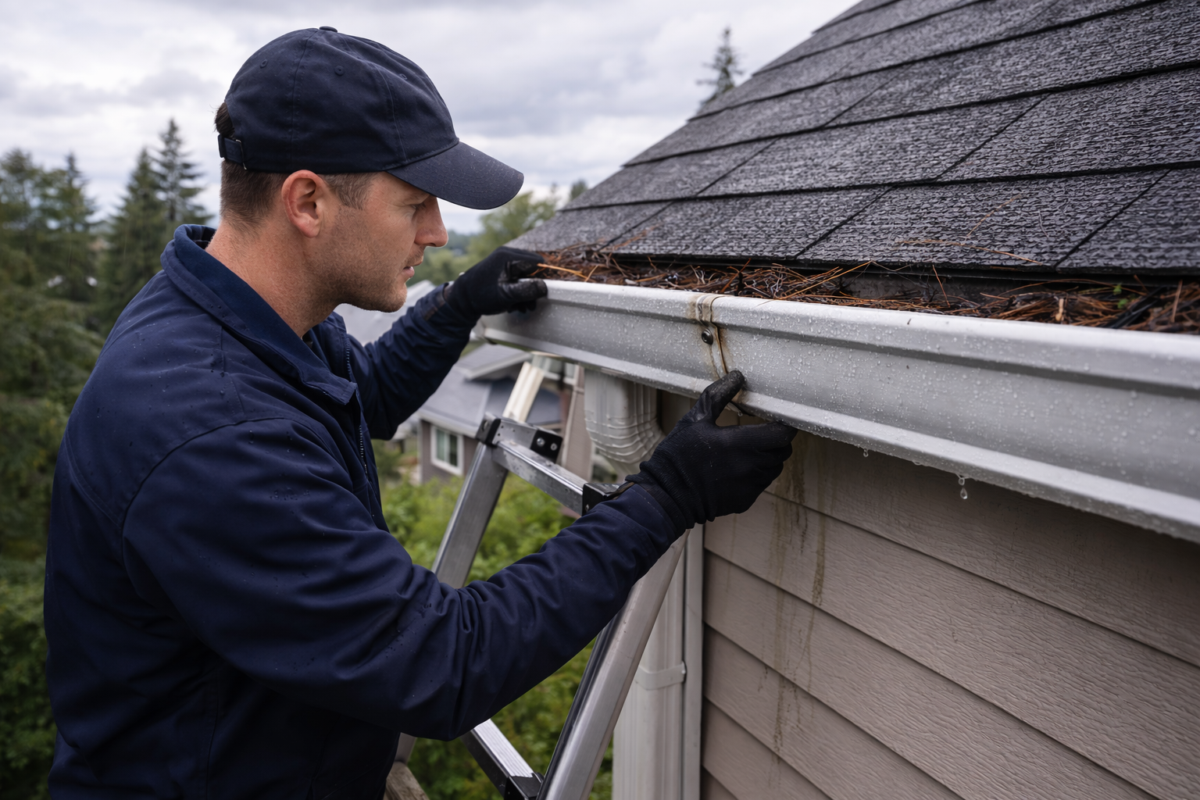
When a Washington storm finally calms, it is easy to assume the worst is over. The sky clears, everything looks familiar, and nothing seems out of place from the driveway.
But storms here often leave behind the kind of damage people do not notice right away, such as subtle shifts from wind and clogged downspouts packed tight with debris. Small changes in gutter pitch may only show themselves during the next heavy rain.
The above issues build quietly, which is why a post-storm inspection can make such a difference. It is a simple step that catches hidden problems before they grow, especially when you pair it with professional gutter cleaning and repair that restores the system to proper function.
Washington Storms Are More Than Just Heavy Rain
Storm systems in this region behave differently from what many homeowners expect. They not only bring steady rain, but they also arrive with bursts of strong wind that test the entire exterior of a home.
The National Weather Service has issued high-wind watches in Washington. During the 2024 bomb cyclone, mountain areas saw gusts reach 68 mph. Speeds like that push rain sideways and place uneven pressure on seams, end caps, and fasteners. Gutters may flex or shift from these forces without showing apparent damage. A section that once carried water smoothly may move just enough to disrupt that flow.
Heavy wind brings down pine needles, shingle granules, and small branches, materials that end up in gutters almost immediately. Residents should clear gutters and downspouts before and after storms because blockages form quickly in this climate. It does not take a dramatic pileup to cause an issue. Even a small plug at a corner or elbow can slow the entire system.
Wind also creates vibration, which weakens brackets and hanger screws over time. The system may stay attached but shift gradually out of alignment. These changes often remain invisible until the next long stretch of rain reveals them through overflow or leaking.
Hidden Damage: What You Might Not See From the Ground
A quick glance upward gives the impression that everything is fine. That is usually when problems hide most effectively.
Loosened Brackets & Hangers
Strong gusts can loosen attachment points little by little. A gutter may look firmly in place, but the slight pull-away creates sagging later. When water collects in these dips, the extra weight compounds the problem.
Shifted Gutter Alignment
Gutters rely on a consistent pitch to move water toward the downspout. Slight shifts from wind pressure interrupt that slope. Water slows, collects in the wrong places, and eventually spills over the front edge. None of this can be seen from the ground.
Clogged or Detached Downspouts
Downspouts, especially elbows, trap storm debris quickly. Homeowners should inspect them because clogs can cause water to back up toward the roofline or discharge directly at the foundation. A downspout can also disconnect at the bottom during a storm without anyone noticing.
Seam Separation
Wind flex can open narrow gaps at joints or end caps. These gaps might not show when the sky is clear, but during the next rain, they release thin streams of water that land right against fascia boards or siding.
The Consequences of Delayed Action
Once a gutter system has shifted or clogged, storms begin to expose the weak points in ways that create longer-term repairs.
From Misalignment to Overflow
Overflow starts small. The pitch changes, debris slows the flow, and water spills over instead of draining cleanly. Homeowners sometimes assume the rain was too heavy, even though the real issue is a hidden blockage or misalignment.
Foundation Erosion
Downspouts should carry water at least five feet away from a home’s base. When a damaged or clogged downspout sends water directly downward, soil around the foundation becomes oversaturated. Repeated storms make that saturation last longer, increasing the risk of erosion or moisture movement into crawlspaces.
Siding and Fascia Rot
Minor leaks at seams or constant overflow in the same spot keep wooden fascia and lower siding damp long after the storm ends. Wood rot does not start quickly; it grows from repeated, low-level moisture exposure. Many homeowners do not connect the damage to the storm that caused it.
Your Post-Storm Inspection Checklist
A few minutes of observation can reveal the following early signs of trouble after a major wind-and-rain event.
Ground-Level Signs
Look for shingle granules gathered in new places, branches or needles piled near the foundation, or fresh water stains on siding. These small clues show where water may have overflowed or moved differently.
Visual Inspection (If Safe)
From a safe angle, you might notice a dip in the gutter run, a subtle separation from the fascia, or a downspout that seems out of place. These are signs that the system is not handling drainage the way it should. When anything feels uncertain, calling for gutter cleaning services near you helps confirm the condition without risking a ladder.
The Professional Advantage
Professionals can assess alignment, pitch, seam integrity, and downspout flow, things homeowners usually cannot evaluate accurately. Agencies like the National Weather Service and FEMA warn people to use caution after storms because debris, slick conditions, and unstable surfaces create hazards. A trained team providing full-system gutter service is safer and more thorough than a DIY check.
Why Professional Repair Is Non-Negotiable After Severe Weather
Safety & Expertise
Post-storm environments can include slippery roofs, loose branches, and unstable structures. FEMA and NOAA both emphasize caution after wind events for good reasons. Professionals use secure equipment and know how to evaluate the entire gutter system without putting themselves or homeowners at risk.
Comprehensive Solutions
Storm-related gutter repair is rarely a single fix. It might involve tightening hangers, correcting pitch, resealing open seams, or clearing packed elbows. This is why early gutter cleaning and repair solutions near you help stop problems before they escalate.
Preventing the Cascade
A small problem rarely stays small for long. A loosened bracket can quietly turn into a sag, then an overflow point, and eventually moisture where it should not be. Catching that shift early keeps minor fixes from turning into urgent repairs.
Secure Your Home Before the Next Forecast
Storm patterns continue to show up across the country, and Washington sees its fair share of gusty, rain-heavy systems. A gutter system that worked fine a week ago may behave differently after one major event. Checking it is not paranoia. It is maintenance. And it preserves the part of your home that quietly moves thousands of gallons of water away from your walls and foundation each year.
If you want help protecting your home after a major storm, Gutter Empire is here to provide reliable gutter cleaning and repairs. For dependable inspection and gutter services, contact us here, call us at (971) 777-9899, or fill out this form here for a free estimate.
Key Takeaways
- Washington storms stress gutters in multiple ways — high winds, debris buildup, and heavy rainfall can shift gutter alignment, loosen brackets, and clog downspouts even when damage isn’t visible from the ground.¹
- Wind-driven debris forms fast-developing blockages — pine needles, roof granules, and branches often collect in elbows and corners, slowing drainage and increasing overflow risk.¹
- Minor post-storm misalignment leads to long-term issues — small pitch changes can cause sagging, chronic overflow, fascia moisture exposure, and water pooling near the foundation.²
- Downspout failures create foundation and crawlspace risk — when water discharges too close to the home, repeated storms keep soil saturated and increase erosion and moisture migration.²
- Professional inspection is safer and more comprehensive — storm conditions create ladder and roof hazards, and trained gutter technicians can properly assess alignment, seams, and drainage function.²
Citations
- ¹ Associated Press — Bomb cyclone brings damaging wind gusts and storm impacts across the West Coast
https://apnews.com/article/california-oregon-washington-atmospheric-river-bomb-cyclone-d5006d946cda1fc1f4ecb8fe5b94ba59 - ² Seattle Public Utilities — Wet Weather Preparation: Drainage & Flooding Prevention Guidance for Homeowners
https://www.seattle.gov/utilities/your-services/sewer-and-drainage/drainage-issues/wet-weather-preparation