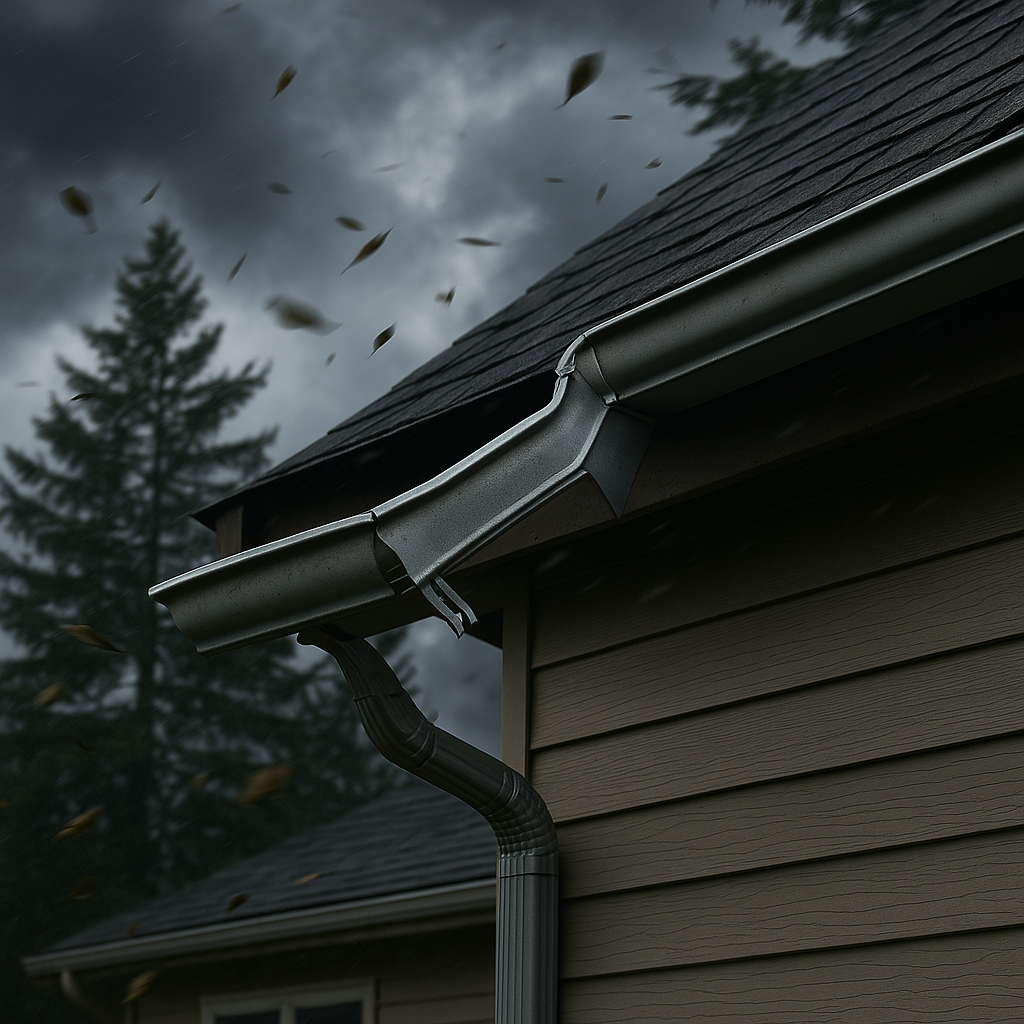
Washington homeowners are used to rain, but wind is often underestimated. Storm systems moving in from the Pacific regularly bring gusts strong enough to rattle roof edges, shake exterior fixtures, and push rain sideways instead of straight down.
During recent storms, parts of Washington recorded wind gusts well over 70 miles per hour, strong enough to cause power outages, downed trees, and exterior damage. Gutters sit directly in that danger zone.
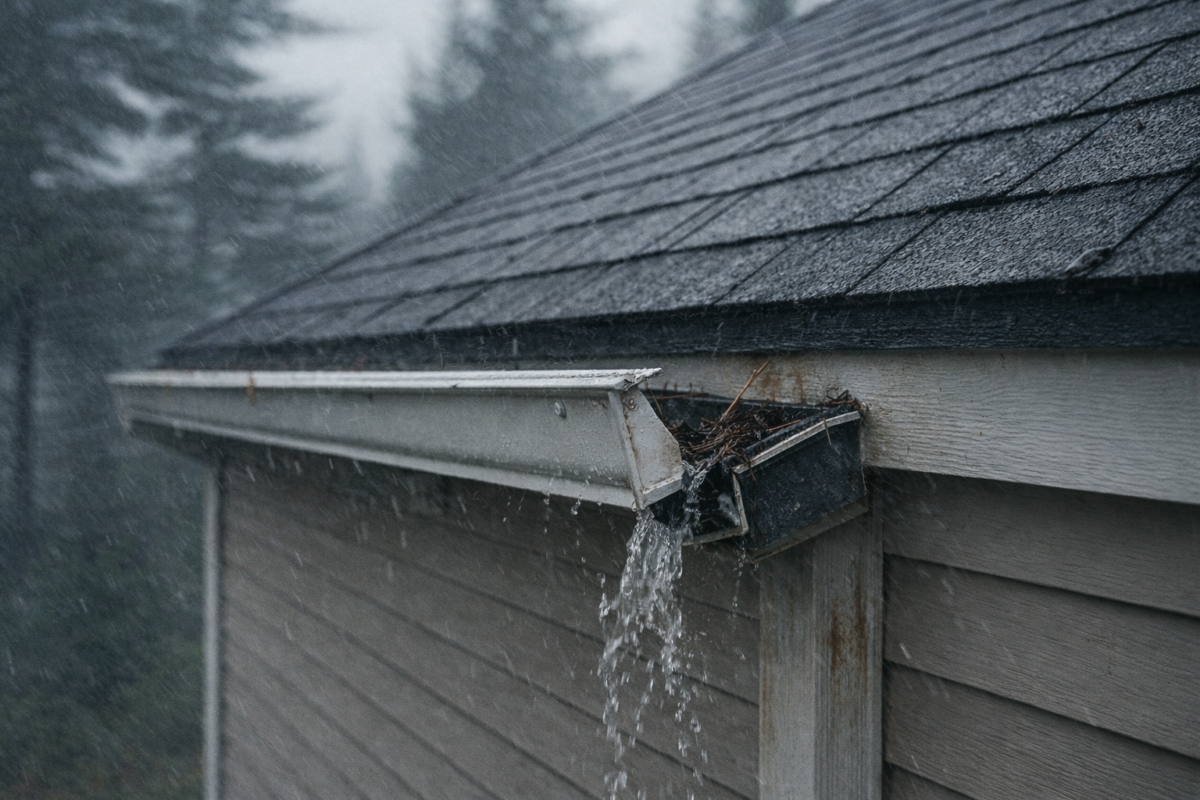
When wind repeatedly stresses the weakest parts of a gutter system, end caps are often the first to fail. Once that happens, water stops flowing where it should and starts finding its way into places it does not belong.
Understanding how wind affects gutters, what happens when end caps loosen, and how to address the problem early can make a real difference in protecting a home through Washington’s storm cycles.
Why Washington Windstorms Put Extra Stress on Gutter End Caps
Washington windstorms are not gentle, steady breezes. They arrive in bursts, with gusts that spike and change direction quickly. That matters because gutters are mounted along the roof edge, where wind pressure increases as air moves up and over the structure. The ends of the gutter run take the brunt of that pressure.
Wind-driven rain adds another layer of stress. Research from building science organizations shows that rain rarely falls straight down during storms. Wind pushes it sideways and upward, forcing water toward seams, joints, and terminations. End caps sit at the exact point where water flow stops and pressure builds. Over time, repeated storms flex the metal, loosen fasteners, and stress the sealant.
This effect becomes more pronounced on taller homes or houses exposed to open areas, hillsides, or coastal weather patterns. The higher the roofline, the more leverage wind has. In these conditions, even well-installed rain gutters can start to show weaknesses at their endpoints.
Why End Caps Are the Most Vulnerable Point in a Gutter System
End caps look simple, but they perform a critical job. They seal the gutter run so water stays inside the channel and moves toward the downspout. When everything works as intended, they rarely draw attention. When they fail, the system can unravel quickly.
End caps tend to fail for practical reasons tied to local conditions. Constant wind vibration can slowly loosen fasteners. Sealants age, dry out, and lose adhesion over time when exposed to moisture. When debris builds up, the added weight increases movement during storms. Even well-made aluminum gutters still flex under repeated wind pressure.
On multi-story homes, the risk increases. Wind speeds are often higher at elevation, and longer gutter runs expand and contract more noticeably. Without reinforcement, end caps can separate just enough to create small gaps. Those gaps do not constantly drip during light rain, which is why many homeowners miss the problem until a major storm hits.
This is where experienced gutter installation companies make a difference. Proper attachment methods and reinforcement account for the forces Washington gutters face year after year.
What Happens When End Caps Loosen or Go Missing
When an end cap loosens or detaches, water no longer follows the designed path. Instead of flowing cleanly into a downspout, it spills out at the gutter edge or behind the gutter itself. That change sets off a chain reaction.
When water seeps behind a gutter, it saturates fascia and soffits that are not designed for constant moisture, then tracks down the siding, causing stains, softening materials, and peeling paint. At ground level, runoff collects near the foundation, increasing the risk of pooling and seepage. Industry data shows that wind and water damage remain among the most common sources of homeowner insurance claims, which highlights how quickly these issues can escalate.
Interior problems often follow. Moisture can migrate into wall cavities, leading to damp insulation or hidden mold growth. The damage rarely announces itself right away. Homeowners may only notice a musty smell, peeling paint, or minor interior staining long after the storm has passed.
This is why heavy-duty gutters and downspouts matter. A system designed to handle wind stress reduces the risk that a single loose component will redirect water into vulnerable parts of the home.
Warning Signs Homeowners Should Check After Windstorms
After a windstorm, small checks can reveal early signs of trouble. Many issues are visible from the ground if you know what to look for.
- Water spilling from the end of the gutter instead of flowing toward the downspout during rainfall
- Drip lines, dark streaks, or staining near fascia corners
- Visible gaps, bent metal, or separated seams at the gutter ends
- Downspouts that wobble, pull away from the wall, or disconnect at joints
- Water collecting near the foundation directly below the gutter endpoints
After high-wind events, national weather and emergency agencies consistently advise homeowners to inspect exterior components, including gutters and downspouts. Catching these issues early can prevent the need for larger downspout repair near you or more extensive exterior repairs later.
Why Professional Reinforcement and Seamless Systems Last Longer in Windy Areas
Temporary fixes can be tempting. A bead of sealant might stop a drip for a while, but it rarely addresses the underlying movement that caused the problem. In windy regions, durability comes from reinforcement, not patching.
A proper repair does more than stop a drip. It tightens end caps with fastening methods that hold under vibration, reinforces hanger spacing, and realigns sections so water keeps moving even when wind is pushing against the system. In some situations, switching to a seamless gutter setup makes sense. With fewer joints along the run, there are fewer places for water to escape during heavy, wind-driven rain.
Federal building guidance consistently points to using connectors and materials rated for wind, moisture, and ice. That advice mirrors what many Washington homeowners see firsthand: Systems designed for mild weather wear out quickly, while storm-ready systems last.
Strengthen Your Gutter System for Washington’s Storm Cycles
Windstorms are not going away, and neither is the stress they place on gutter systems. Secure end caps play a bigger role than many homeowners realize. They keep water moving where it should, reduce hidden moisture damage, and help the entire gutter system perform under pressure.
At Gutter Empire, we focus on building and reinforcing gutter systems that withstand Washington’s storm cycles. We inspect end caps, secure vulnerable connection points, and recommend durable solutions when repairs are no longer enough. If you want help protecting your home from wind and water damage, contact us at (971) 777-9899 or click here for a free estimate.
Key Takeaways
- High winds in Washington place extra stress on gutter end caps, which are often the first components to loosen or fail during storms.
- Wind-driven rain pushes water sideways and upward, increasing leakage risk at gutter seams, joints, and end caps rather than allowing water to drain cleanly.
- Loose or missing end caps redirect water into fascia, siding, and foundations, raising the likelihood of structural damage and interior moisture issues.
- Weather-related property damage claims continue to rise, making small gutter failures more costly when left unaddressed.
- Reinforced end caps and seamless gutter systems perform better in windy neighborhoods, reducing weak points and long-term maintenance needs.
Citations
- NASA Earth Observatory – Extratropical Cyclone Whips Over the Pacific Northwest
https://science.nasa.gov/earth/earth-observatory/extratropical-cyclone-whips-over-the-pacific-northwest-153605/ - Insurance Information Institute – Claims Volume Up 36% in 2024 as Climate Costs Rise
https://insuranceindustryblog.iii.org/claims-volume-up-36in-2024-climate-costs-litigation-drive-trend/