You walk past your gutters every day. Maybe you notice weeds growing out of them or a thick line of pine needles packed along the edge. You keep meaning to schedule gutter cleaning, but other things take priority.
In Washington, that delay matters more than most people realize. NOAA reported 27 separate billion-dollar weather disasters across the U.S. in 2024 alone, totaling roughly $182.7 billion in damage. Washington has averaged 2.2 billion-dollar disasters per year over the last five years, well above its long-term average.
When clogged gutters sit through storm after storm, small maintenance quietly turns into expensive structural damage.
Quick Answer Summary
Ignoring clogged gutters allows water to overflow and collect around the roofline, fascia, and foundation. Over time, trapped debris adds weight, causing gutters to sag, pull away, and leak. In Washington’s heavy rain climate, this can lead to roof damage, soil erosion, basement moisture, and mold growth. Routine gutter cleaning is far less expensive than repairing structural damage caused by prolonged overflow.
Stage 1: Water Finds Another Path
Rain always moves. If it cannot travel through the gutter system, it finds another route.
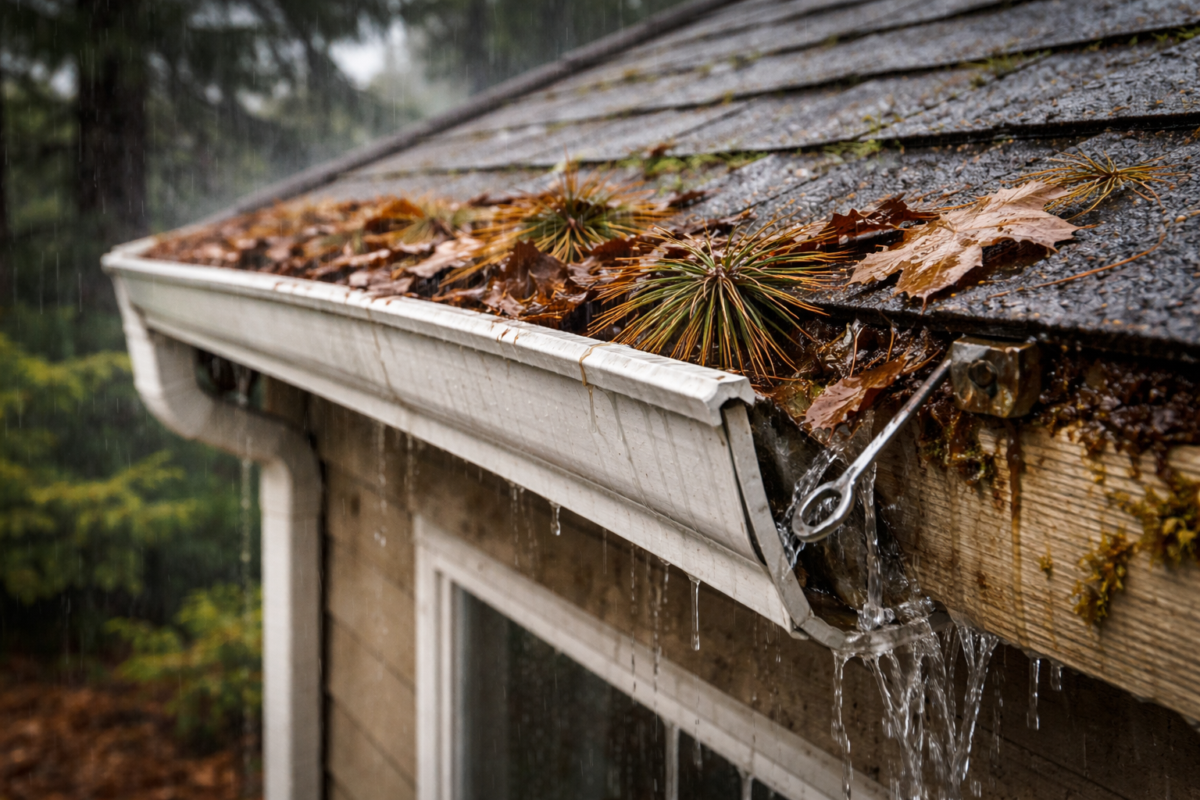
Leaves, fir needles, roof grit, and moss collect inside the channel. In western Washington, especially, tree coverage makes this constant. That debris forms a dam. Water that should flow toward downspouts instead pools and backs up.
During heavier rain, you may see water spilling over the edge. It splashes against the siding or pounds the landscaping below. It looks temporary, feels harmless, and is easy to assume it will drain eventually.
However, clogged systems can contribute to severe water damage and basement flooding when runoff is not directed away from the home. Gutter maintenance is a key prevention step against indoor moisture problems. When overflow becomes routine, damage becomes cumulative.
Stage 2: Structural Strain Begins
Once debris traps standing water, weight becomes the issue. Aluminum gutters are built to carry flowing water, not hold water mixed with soaked organic matter.
Wet leaves are surprisingly heavy. A system filled with saturated debris adds ongoing stress to hangers and fasteners. Over time, that strain compounds. The gutter starts to sag slightly. You may not notice it right away, but the pitch changes.
Insurance data from the Insurance Information Institute shows water damage and freezing losses affected 1.5 percent of insured homes between 2019 and 2023, while wind and hail affected 2.8 percent.
In 2024, wind-related claim severity increased sharply, according to LexisNexis Risk Solutions. When strong winds hit a system already weighed down by debris, hardware loosens faster.
At that point, you are no longer just dealing with a blockage. You are facing gutter repair to re-secure the system and restore proper slope. And if the aluminum bends repeatedly under the weight, it rarely straightens perfectly again.
Stage 3: Roof and Fascia Under Attack
When gutters overflow or pull away from the house, water can back up behind them.
It runs along the back edge of the gutter and soaks the fascia board. From there, it can creep under shingles at the roof edge. Aluminum itself resists corrosion fairly well, but the wood behind it does not. Prolonged saturation softens fascia boards and weakens the anchor points that hold the entire system in place.
FEMA winter guidance specifically advises keeping gutters clear so melting snow and rain can drain properly and avoid roof-edge damage. Even short freeze-thaw cycles can push water under shingles when drainage fails.
This is often the stage where homeowners begin searching for roof and gutter repair near services them, because the problem spreads beyond cleaning and into structural wood and roofing materials.
Stage 4: Foundation and Landscape Erosion
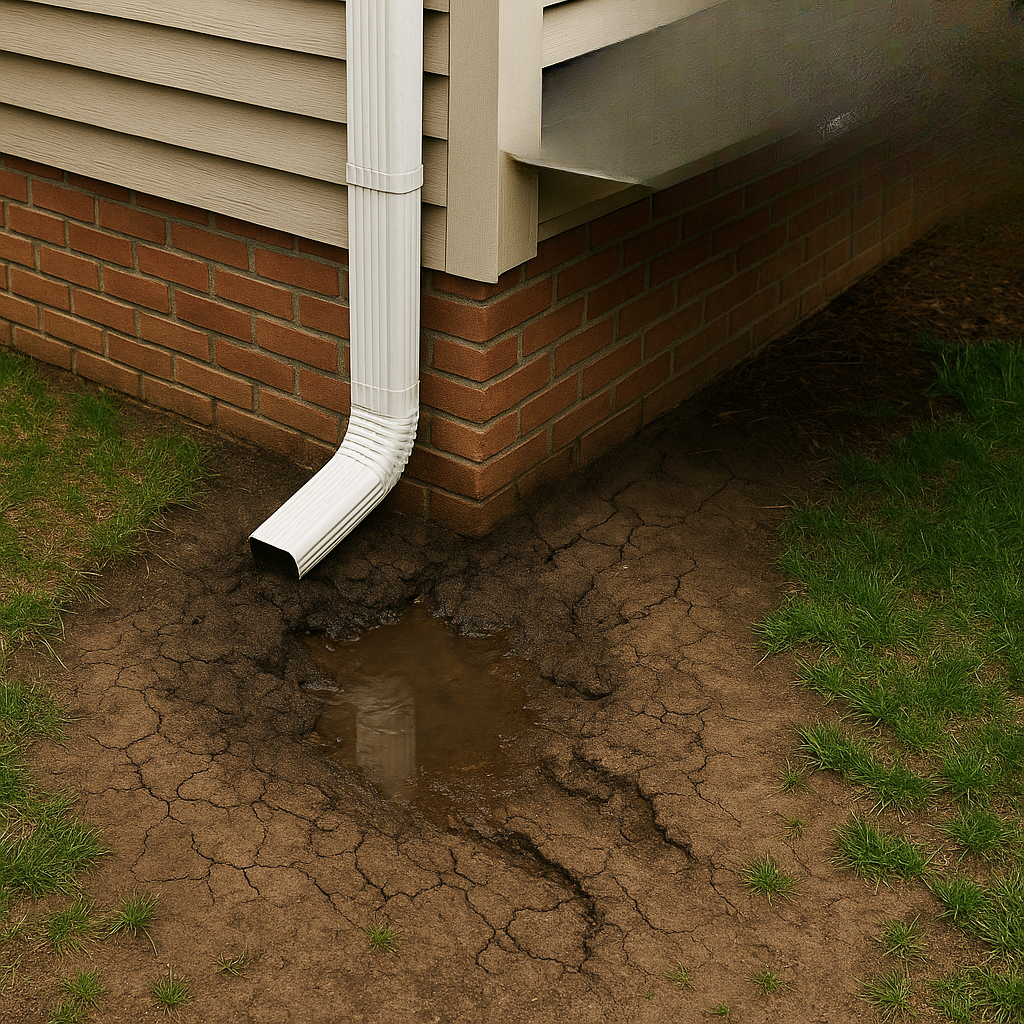
When water is not carried safely away through downspouts, it falls wherever gravity takes it.
That usually means directly beside the foundation. Over time, concentrated runoff erodes soil, changes grading, and allows water to pool against exterior walls. In crawl-space homes common across Washington, moisture lingers beneath the structure.
Homes stay safer when roof runoff drains away from the foundation, but clogged gutters quickly break that protection. On top of that, repeated storms have become costly, which makes any small weakness add up faster than people expect.
A simple gutter cleaning issue can slide into drainage fixes or even foundation repairs, and the jump in cost feels huge once you reach that point.
Stage 5: Mold and Structural Decay
Water from clogged gutters does not sit politely at the edge of the roof. It drifts into wall cavities, attic corners, and the spaces under your flooring before anyone notices.
EPA’s 2025 mold guidance explains that drying things within a day or two helps prevent growth. That is nearly impossible when overflow happens every time it rains. Moisture lingers, wood begins to soften, and insulation stops doing its job.
Soon, small seam issues turn into gutter leak repair, and interior materials become the real expense, not the aluminum exterior.
The Financial Reality: Cleaning Cost vs. Repair Cost
Routine maintenance feels optional. Structural repair never does.
National reporting on Aon’s 2024 disaster summary placed insured losses at $112.7 billion across the United States. The broader environment around storm-related damage continues to intensify. A routine gutter cleaning service costs a fraction of the cost of fascia replacement, roof decking repair, or foundation correction.
Aluminum gutters can last for decades when properly maintained. Without regular gutter cleaning, they sag, lose pitch, and place constant stress on attachment points. What might have been addressed with a simple appointment often escalates into recurring gutter repair.
Early gutter cleaning near you protects both the system and the structure behind it.
Act Before the Damage Becomes Irreversible
Washington’s rain does not slow down. Every storm that moves through a neglected system adds stress, moisture, and structural strain. NOAA’s recent data confirms that severe weather exposure remains high. Each overflow quietly adds risk.
The gap between simple upkeep and serious reconstruction usually comes down to how early you act. Clearing clogged gutters before they sag or warp keeps the aluminum in shape, the hangers tight, and the water flowing where it should. When you start noticing uneven runs, small drips along seams, or constant overflow, it is better to address them before another storm pushes things further.
At Gutter Empire, LLC, we help homeowners avoid unnecessary gutter repair and catch small issues before they turn into full gutter leak repair jobs. Contact us at (971) 777-9899, click here for a free estimate, or fill out our contact form to schedule your gutter cleaning service today.
Key Takeaways
- The U.S. experienced 27 billion-dollar weather disasters in 2024, increasing the importance of proper home drainage systems.¹
- Washington averages 2.2 billion-dollar disasters per year, raising exposure to heavy rain and storm damage.¹
- Clogged gutters prevent proper runoff, which can contribute to basement moisture and water intrusion.²
- Standing debris adds weight that causes gutters to sag, lose pitch, and pull away from fascia, leading to repair costs.³
- Wind-related claim severity has increased, and weakened gutter systems are more likely to fail during storms.⁴
- FEMA recommends keeping gutters clear to prevent roof-edge damage from rain and snowmelt.⁵
- Poor drainage allows water to pool near the foundation, increasing the risk of soil erosion and structural moisture problems.²
- Moisture that is not dried within 24–48 hours can lead to mold growth, especially when overflow happens repeatedly.⁶
- Repairing fascia, roofing, or foundation damage costs significantly more than routine gutter cleaning.⁷
Citations
- NOAA / Climate.gov – Billion-dollar weather disasters data
https://www.climate.gov/news-features/blogs/beyond-data/2024-active-year-us-billion-dollar-weather-and-climate-disasters - Insurance Information Institute – Water damage and runoff risk
https://www.iii.org/fact-statistic/facts-statistics-homeowners-and-renters-insurance - Insurance Information Institute – Wind, hail, and water loss frequency
https://www.iii.org/fact-statistic/facts-statistics-homeowners-and-renters-insurance - LexisNexis Risk Solutions – Home trends and wind claim severity
https://risk.lexisnexis.com/about-us/press-room/press-release/20251023-home-trends-report-2025 - FEMA – Winterizing your home and gutter maintenance guidance
https://www.fema.gov/sites/default/files/documents/fema_dr-4749-il-winterizing-your-home.pdf - EPA – Mold and moisture guidance (24–48 hour drying window)
https://www.epa.gov/mold/brief-guide-mold-moisture-and-your-home - AP News – Economic losses from storms and flooding damage
https://apnews.com/article/hurricanes-wildfires-floods-damage-economic-loss-a3a6a5ec11d25edf4e845889eac9cd83