Gutter Installation & Gutter Guards in Vancouver, WA | Gutter Empire

Categories
Blog Gutter Installation

Gutter Pitch Problems: The #1 Reason Washington Homes Have Overflow Issues

Heavy rain has a way of revealing problems you never noticed before. You might be standing at the window during a storm, thinking everything looks normal, and then you hear a rush of water spilling straight over the edge of the gutter like a tiny waterfall.

Later, you climb a ladder, expecting a big clog, and find nothing. The trough is basically clean. That moment usually catches people off guard because the issue is something they never thought to check: the gutter pitch.

In Washington, this small detail has an outsized impact. Our storms hit hard, pine needles drop constantly, and roof debris builds up even when you maintain your gutters. A pitch that’s even slightly off can turn a working system into one that overflows the moment the rain intensifies.

This blog breaks down what gutter pitch is, why it fails so often here, and how small errors in slope can snowball into real home damage. It also explains why professional help matters, whether you’re looking into gutter installation or a more targeted fix.

What Is Gutter Pitch and Why Does It Matter?

A lot of homeowners assume their gutters should look perfectly level, but they’re supposed to slope just a bit. That slope, called the gutter pitch, keeps water moving toward the downspout instead of pooling. It’s not a dramatic tilt, and you shouldn’t see it from the ground. But it must be precise enough for water to flow without hesitation.

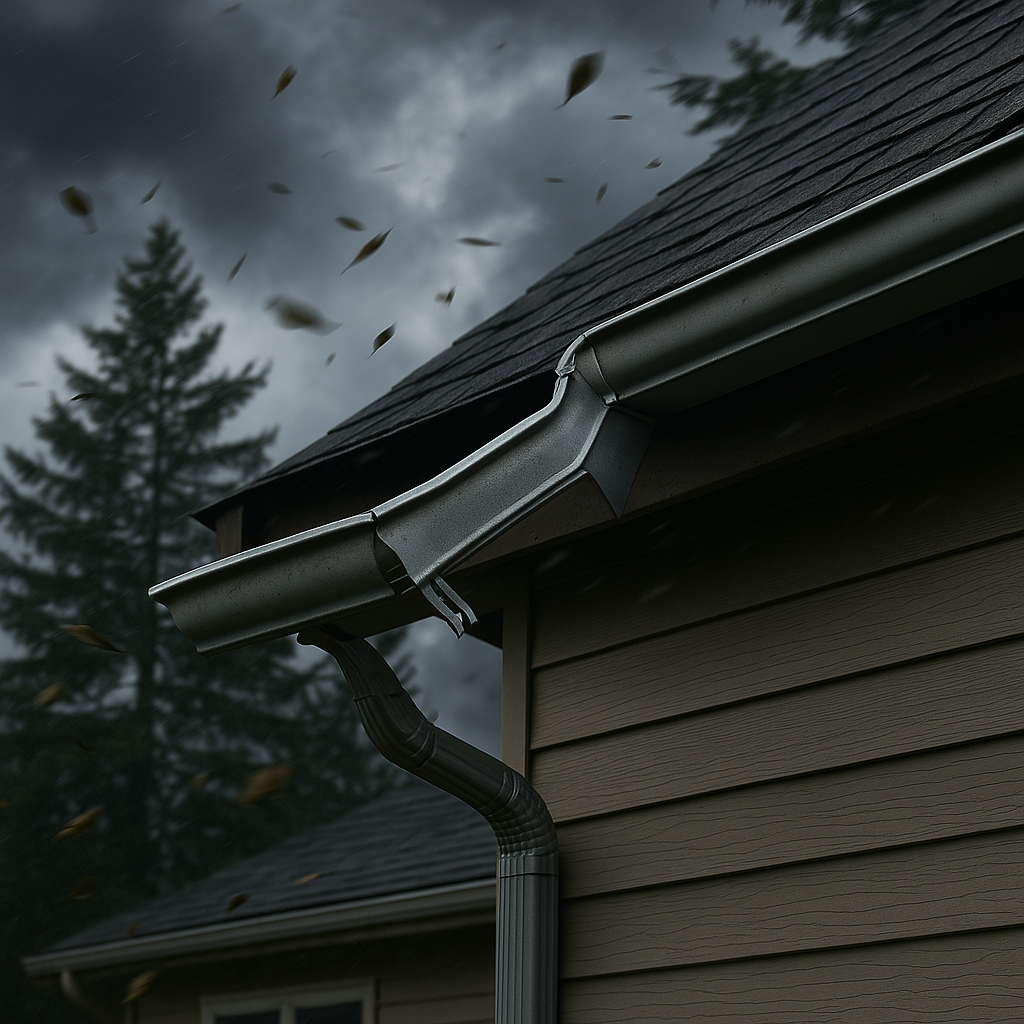
Pitch works on a kind of “Goldilocks rule.” If the slope is too steep, the gutter looks crooked, and water shoots forward too fast. If the slope is too flat, water forms long puddles. These puddles trap pine needles, grit, and moss. And when pitch changes along the run, which happens when screws loosen or the gutter bends, you get sagging sections that behave like tiny bathtubs.

Professionals usually aim for around a quarter inch of downward slope for every ten feet. If the pitch is wrong by even a small amount, your system might overflow despite being clean. This is a common reason Washington homeowners assume they need seamless gutters installation, when the main issue is uneven slope.

A few signs the pitch is failing:

  • Water remains in the gutter long after the rain stops.
  • Overflow happens only in one or two specific spots.
  • A section looks “off” or slightly lower than the rest.

Why Washington’s Climate Is a Perfect Storm for Pitch Problems

Rain in this region behaves differently than in many parts of the country. Storms often arrive in short, intense bursts that drop huge amounts of water in minutes. If the pitch isn’t guiding that water forward, even an open gutter fills up and spills over the front edge.

Pine needles make this worse. Washington’s evergreens shed constantly, and those long needles settle into low spots created by poor pitch. They mat together when soaked, forming a blockage that’s almost like a filter, slowing water even more. As the blockage grows, the weight increases. The gutter dips a little farther, and the pitch moves from “slightly off” to “basically flat.”

Climate patterns have also been shifting. Atmospheric rivers, sudden heavy downpours, and wind-driven storms are becoming more common. Gutters that drained well ten years ago now struggle to keep up with faster rainfall. Homeowners often look for gutter repair near Vancouver, WA, not realizing the root cause is a subtle slope issue.

The Domino Effect of a Poor Pitch

A gutter doesn’t fail all at once. It usually happens in a slow, chain reaction. One small problem sets up the next one, then the next.

Standing Water

This is almost always the first clue. Water remains in the gutter even after the rain clears. Standing water corrodes metal, attracts insects, and grabs onto debris. It also encourages algae and moss growth, which only adds more weight.

Gutter Sagging and Pull-Away

When water and debris collect in a single low spot, the gutter begins to sag. Screws loosen, and hangers bend.

Once it sags, the pitch changes again, and water drains even more slowly. Homeowners often assume they just need rain gutter repair, but the pitch is usually the reason the sag formed in the first place.

Fascia Damage

As the gutter dips, water begins to spill behind it rather than into it. Over weeks and months, that moisture soaks into the fascia boards. Paint peels, wood softens, and eventually the boards start to rot. At that point, the fasteners holding the entire system fail more easily.

Foundation Erosion

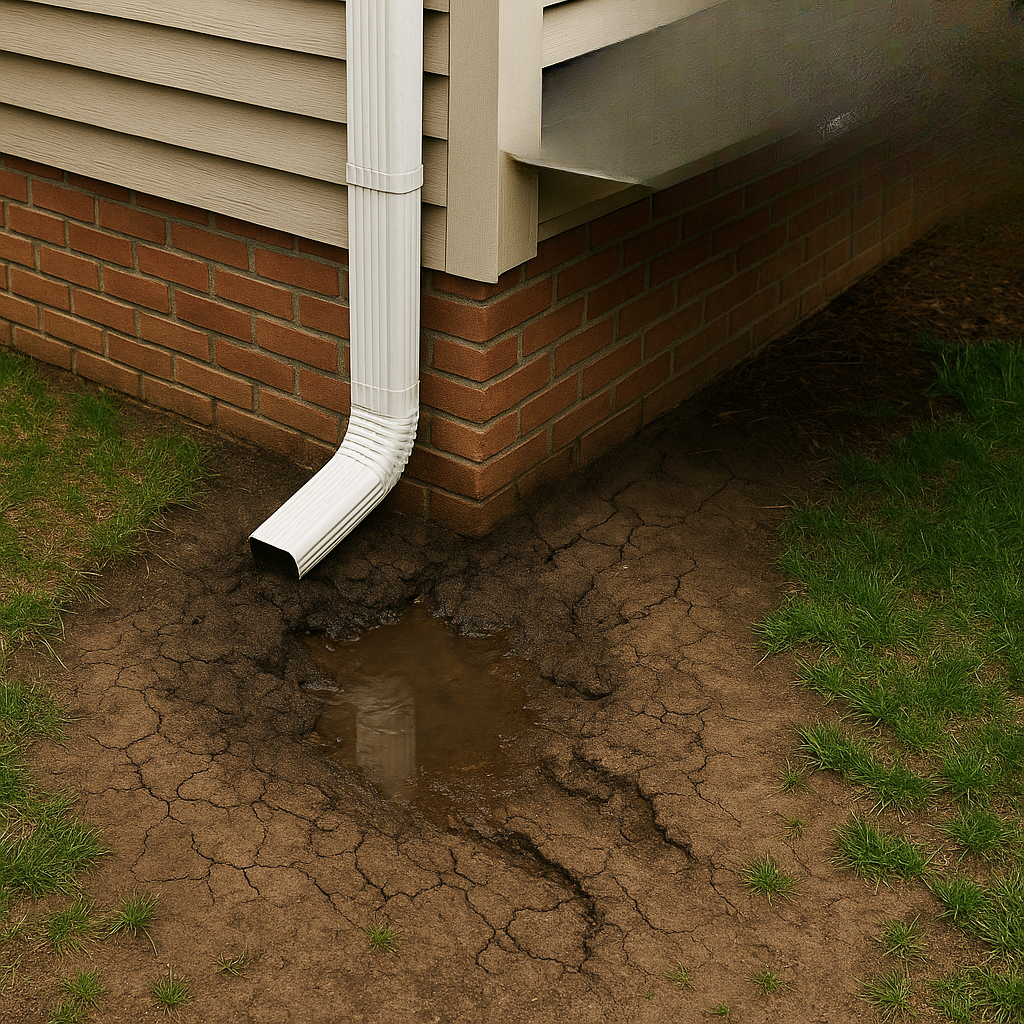
When gutters overflow in the same spot during every storm, water lands right at the base of the house. Soil erodes, and crawl spaces become damp. If the home has a basement, moisture can begin seeping in. The problem started on the roofline, but the consequences moved downward.

Some homeowners assume they need gutter replacement, even though the pitch adjustment is the real fix.

Why Professional Installation and Repair Are Non-Negotiable

Pitch is one of those things you can’t eyeball from the ladder. The difference between “works” and “doesn’t work” is often a matter of fractions of an inch. Professionals use string lines, levels, and, sometimes, lasers to measure the slope along the full length of the gutter.

This is one of the main reasons people choose seamless gutter installation. A seamless system lets the installer control the pitch from end to end because the gutter is custom-formed as a single long piece. There are no seams to catch debris or shift over time. It’s basically the cleanest way to ensure the slope stays consistent.

But not every situation needs a new system. Sometimes the downspout is the bottleneck, and you only need downspout repair near Vancouver, WA, to restore proper flow. Other times, the gutter needs to be rehung with new brackets. A pro can spot the difference by checking the slope, outlet placement, condition of the fascia, and strength of the hangers.

Secure Your Home’s First Line of Defense

Your gutters help manage thousands of gallons of rainwater every year. Their pitch decides whether that water moves away safely or spills right over the edge during the next storm.

In Washington’s climate, small mistakes become big problems fast. Water damage has a way of sneaking through the weakest points of a home, and a misaligned gutter is often one of those weak points.

If you’re hearing overflow during storms, seeing water sit in the trough, or noticing sections that look slightly lower than they should, it’s worth addressing the issue sooner rather than later. A simple adjustment can prevent a long list of repairs, from soaked fascia to eroded soil.

If you want help protecting your home, contact Gutter Empire at (971) 777-9899 to schedule a professional pitch evaluation or repair appointment.

Categories
Blog Gutter Repair

Top 3 Causes of Foundation Erosion From Poor Drainage in Washington

In much of Washington, runoff isn’t just a seasonal concern. It’s constant. And if that water isn’t properly managed, it ends up exactly where it shouldn’t: along your home’s foundation.

Poor drainage can quietly shift soil, compromise support, and set the stage for long-term structural issues. It often begins with overlooked issues, such as clogged rain gutters or short downspouts.

Over time, pressure builds, cracks form, and moisture seeps into the walls. The erosion doesn’t look dramatic at first, but the damage adds up.

Below, we’ll break down the top causes and how simple fixes can keep your foundation solid through any storm

1. Overflowing or Undersized Rain Gutters

Rainfall isn’t light in Washington. Most roofs collect way more water than people think. During a single storm, thousands of gallons can rush off just one roof, and if your rain gutters aren’t built for that kind of volume, the water ends up spilling over the edge and straight down to your foundation.

Why does this happen? Sometimes the gutters are just too narrow. What worked in a milder climate can’t keep up here. Other times, they’re packed with pine needles or roof debris, blocking water from draining. Occasionally, it’s the pitch; if the gutters aren’t angled right, the water stalls and starts spilling over. Aging systems don’t help either. We see a lot of rusted joints or seams that leak halfway down the run.

It doesn’t take long for that constant overflow to start breaking down the soil near your home. Even if you don’t see damage right away, it’s building up with each storm.

What Helps

Get those gutters cleaned regularly. If they’re old or leaking, think about seamless gutters installation or full gutter replacement. Additionally, always double-check the slope: Water should be moving, not sitting.

2. Poor Downspout Placement or Damage

Even with perfectly working gutters, your home isn’t protected if the water has nowhere to go. The way your downspouts are positioned and where they release water can make or break your drainage system.

How It Creates Erosion

Downspouts that discharge too close to the foundation create concentrated streams of water right where you don’t want them. Instead of dispersing outward, that water soaks into the soil directly against your home’s footing.

Over time, it weakens the compacted soil and causes uneven settling. If you’ve noticed standing puddles near your exterior walls or damp basement corners, your downspouts are likely the culprit.

In some cases, the problem isn’t placement but wear and tear. A crushed, disconnected, or rusted downspout can redirect water unpredictably. You might not spot the issue until you see erosion grooves or staining on the siding.

Simple Adjustments That Work

Fixing downspout issues doesn’t require a full overhaul. In most cases, small changes go a long way.

One of the easiest upgrades is adding a downspout extension, which should be long enough to carry water at least five feet from the base of your home. You can also redirect the flow into a gravel trench or a dry well to help it drain slowly.

Similarly, splash blocks work, especially on slopes, by breaking up the force of the water. If you notice leaks or misaligned joints, it’s time to schedule downspout repair near you before the next storm rolls in.

3. Chronic Clogging From Evergreen Debris

If you live under tall pines, you already know how relentless debris can be. Pine needles, moss, and cones build up inside gutters faster than most homeowners can clear them. The result is a system that’s constantly blocked and overflowing.

Why It’s a Problem Here

The Pacific Northwest’s evergreen forests shed debris all year long. Combine that with months of rainfall, and you get a heavy, soggy buildup that slows or completely stops drainage.

Clogged rain gutters can’t move water efficiently. It spills over the edge, runs down the siding, and lands exactly where it shouldn’t: along the foundation line.

That overflowing water not only erodes soil but also damages your fascia boards and roofline. Once rot starts, it spreads quickly and weakens the entire gutter system.

What to Do About It

  • Aim to clean your gutters twice a year, once after the leaves have fallen and again before spring rains arrive. If you’d rather not climb a ladder, professional gutter cleaning and repair near you can take care of it safely and thoroughly.
  • Add gutter guards to reduce debris buildup (especially for homes surrounded by trees).
  • Test your system after cleaning to make sure water flows smoothly from end to end.
  • Address any signs of sagging or leaks immediately through rain gutter repair.

How to Prevent Foundation Damage Before It Starts

Foundation problems are sneaky. By the time cracks appear, the damage has typically been accumulating for months, sometimes even years. The key is prevention. Keeping water away from your foundation is far cheaper and easier than fixing erosion once it begins.

  1. Spend the money on a good system: You cannot go wrong by installing a seamless gutter system.
  2. Keep it clean: Schedule consistent gutter repair and cleaning throughout the year.
  3. Direct runoff properly: Use extensions or piping for better control of flow.
  4. Monitor the slope: Ensure the soil around your home slopes away from the foundation by at least six inches over a distance of ten feet.
  5. Upgrade when necessary: Don’t patch a failing system indefinitely; consider a full gutter replacement when leaks or corrosion spread.

Protect the Home Beneath You Before the Next Storm

In Washington, the rain isn’t letting up anytime soon, and neither is the risk of foundation erosion. What can change is how well your home is prepared to handle it.

Check your rain gutters before the start of storm season. In addition, clean downspouts and watch for early signs of water pooling.

If your system is outdated, we offer expert gutter installation specifically designed for Washington’s weather conditions. For homes that need an upgrade, we also install seamless gutters with improved flow and reduced leaks. You can count on us for fast and affordable rain gutter repair when damage appears. Reach out to Gutter Empire or get a free estimate here, and let’s protect your home, starting from the foundation.


Key Takeaways

  • Overflowing gutters are the leading cause of foundation erosion in Washington homes, especially when gutters are clogged, undersized, or poorly sloped.
  • Downspout placement is crucial — discharging water too close to the house undermines the soil and causes foundation settling over time.
  • Evergreen debris clogs gutters year-round, slowing drainage and creating overflow that damages both siding and soil.
  • Preventive maintenance is cheaper than foundation repair. Regular gutter cleaning, extensions, and proper slope grading can save homeowners thousands in structural repairs.
  • Seamless gutter systems and guards provide long-term protection against chronic clogging and heavy rain, making them a smart investment for Washington properties.