Gutter Installation & Gutter Guards in Vancouver, WA | Gutter Empire

Categories
Blog Gutter Installation

Aluminum Gutter Installation: What to Know About Durability and Maintenance in Washington

For Washington homeowners, gutters are not a small detail. They sit outside through months of steady rain, wind, and debris that never really takes a season off. That is why aluminum gutter installation continues to be the practical choice.

Aluminum holds up well in wet climates, but it still has limits. A system can last for decades, but only if it is installed correctly and maintained in a simple, consistent way.

In this article, we will look at why aluminum works so well here, what causes bending and sagging, and the basic habits that keep you from needing constant gutter repair.


Quick Answer

Aluminum gutters are the best balance of durability and affordability for Washington’s wet climate because they resist rust, stay lightweight, and perform well under constant rain. Most bending and sagging are caused by installation issues, clogged debris, or loose hangers—not the aluminum itself. With proper pitch, adequate support, and routine cleaning, an aluminum gutter system can last decades with minimal repairs.


Why Aluminum Is Washington’s Go-To Gutter Material

Aluminum has become the default material for many homes in the Pacific Northwest, and it is easy to see why once you think about the climate.

Aluminum works so well in wet climates because it does not rust the way steel can. It protects itself passively, forming a thin oxide layer when it comes into contact with air, which helps it remain stable over long periods of moisture and rain.

Its weight matters, too. Aluminum has sufficient strength for real runoff but remains light enough not to overload fascia boards or roof edges. During heavy storms, gutters can hold more water than most people expect, making proper support essential.

And then there is long-term value. Homeowners often want something that lasts without pushing them into the most expensive option. Aluminum tends to strike that balance. A well-done gutter installation can remain functional for years without becoming a constant maintenance project.

The Real Culprits Behind Bending and Sagging

Most homeowners assume that sagging gutters mean the material failed. Aluminum usually performs fine. The real issues often arise from what the gutter is required to hold and how it was originally installed.

Improper Installation

The most common cause of bending and sagging is simple: The gutters were not installed with the right support or pitch. When hangers are spaced poorly or the slope does not properly direct water toward the downspouts, water begins to pool. That adds weight and stress.

Loose or broken hangers, pulling fasteners, and drainage-slope problems are common issues in gutter maintenance. Those failures first appear at attachment points, not across the aluminum itself.

In Washington, this gets worse after storms. Wind shakes the long gutter, which runs like a lever. A weak connection may hold for a while, but it eventually shows up as a low spot or separation.

Debris Overload

The next big culprit is debris. Washington does not just deal with dry leaves. Gutters here collect wet pine needles, roof grit, and compacted material that retain water. That creates a loop:

Clogged gutter → standing water → added weight → hanger strain → sagging → more standing water.

It builds slowly, then suddenly becomes obvious when water overflows.

Gutter and downspout cleaning is a basic preventive measure to reduce water damage. When water cannot move through the system, it finds another path, often right down your siding or into the foundation zone. That is when homeowners start calling for emergency gutter repair or even gutter replacement.

Ice Dam Pressure

Ice is less common in western Washington than in colder states, but freeze-thaw cycles still happen. Ice becomes a problem when gutters are already clogged with water or debris. When that water freezes, it expands and pushes against the gutter shape.

The key point is that ice rarely starts the issue. It usually exacerbates an existing weakness, such as poor drainage or clogged drains.

The Role of Professional Installation

Aluminum gutters last longest when the details are handled correctly upfront. That is where professional installation makes a major difference.

Seamless Advantage

Seamless aluminum gutters reduce the number of joints along the run. Since joints are common leak points, fewer seams mean fewer places for small drips to develop over time. This helps homeowners avoid chasing tiny problems every rainy season.

A seamless approach supports durability by removing many of the weak links that first appear in older systems.

Precision Pitch & Support

The slope and support of a gutter decide whether water keeps moving or settles into a heavy pool. When installers set the proper pitch and install hangers that can hold weight, the system remains stable during extended periods of rain. Any small dip can turn into trouble once debris builds up.

Strong storms raise the stakes. During the November 2024 cyclone, gusts near Seattle reached about 77 mph, the kind of wind that exposes loose fasteners fast when gutters are already loaded.

Right-Sizing the System

Not every home needs the same gutter capacity. Roof shape, pitch, valleys, and runoff concentration all affect what the system must handle.

Professionals consider these factors to ensure homeowners do not end up with undersized gutters that overflow during heavy rain. Choosing the right style and size helps prevent frequent gutter repairs down the road.

Essential Maintenance for a Hassle-Free System

Even the best gutters require basic maintenance. The goal is not constant work. It is simple habits that prevent larger failures.

The Cleaning Imperative

Clearing debris remains the single most important maintenance task. It stops the standing-water weight problem before it starts. FEMA and the GSA emphasize the importance of keeping gutters and downspouts clear, as clogged systems can cause overflow and structural stress.

Annual Inspection Checklist

A simple yearly check goes a long way. Ensure the hangers stay tight, the downspouts drain cleanly, and no section dips enough to retain water. Look over the corners for worn sealant, and take a second glance after strong winds in case any part of the system shifted or loosened.

Protective Add-Ons

Gutter guards can reduce how often debris builds up, lowering the load the system must carry. They work best when the gutters already have the correct pitch and solid support. Guards do not fix failing attachment points, but they can make upkeep much simpler.

Secure Decades of Reliable Drainage

Aluminum gutters form a strong foundation for protecting a Washington home. They resist corrosion, withstand constant moisture, and remain reliable when installation and support are done correctly.

Most bending and sagging comes from preventable causes such as debris weight, poor pitch, or loose hangers, not from the aluminum itself. With basic yearly care and thoughtful upkeep, your system can stay out of your way and quietly do its job for years.

If you want that level of long-term reliability, contact Gutter Empire. We specialize in aluminum gutter installation and the support that prevents recurring gutter repair. Call us at (971) 777-9899, click here for a free estimate, or contact us to get a quote for lasting protection.


Key Takeaways

  • Aluminum resists corrosion better than steel in Washington’s damp climate, forming a protective oxide layer that allows long service life without rust-related failure.
  • Sagging gutters are usually an installation or maintenance problem—poor pitch, wide hanger spacing, or loose fasteners create standing water that overloads the system.
  • Debris weight is the leading cause of deformation, especially wet pine needles and roof grit that trap moisture and increase structural stress.
  • Seamless aluminum systems reduce leak points by eliminating most joints where separation and drips typically begin.
  • Strong wind events expose weak attachments quickly, as Pacific Northwest cyclones regularly combine heavy rain with damaging gusts .
  • Routine cleaning and annual inspections prevent most failures, keeping water moving freely through downspouts and away from fascia and foundations.
  • Gutter guards help maintenance but cannot replace correct pitch and support—they work best on a healthy, properly installed system.
  • Right-sizing gutters to roof runoff volume is essential to avoid overflow during Washington’s long, high-intensity rain periods.

Citations

  1. NASA: https://science.nasa.gov/earth/earth-observatory/extratropical-cyclone-whips-over-the-pacific-northwest-153605/
Categories
Blog Gutter Guard Installation Gutter Guards

Why Heavy Spring Debris Makes Gutter Guards Essential in Washington

In Washington, spring does not ease into the calendar quietly. It follows months of wind, steady rain, and trees that shed more than just autumn leaves.

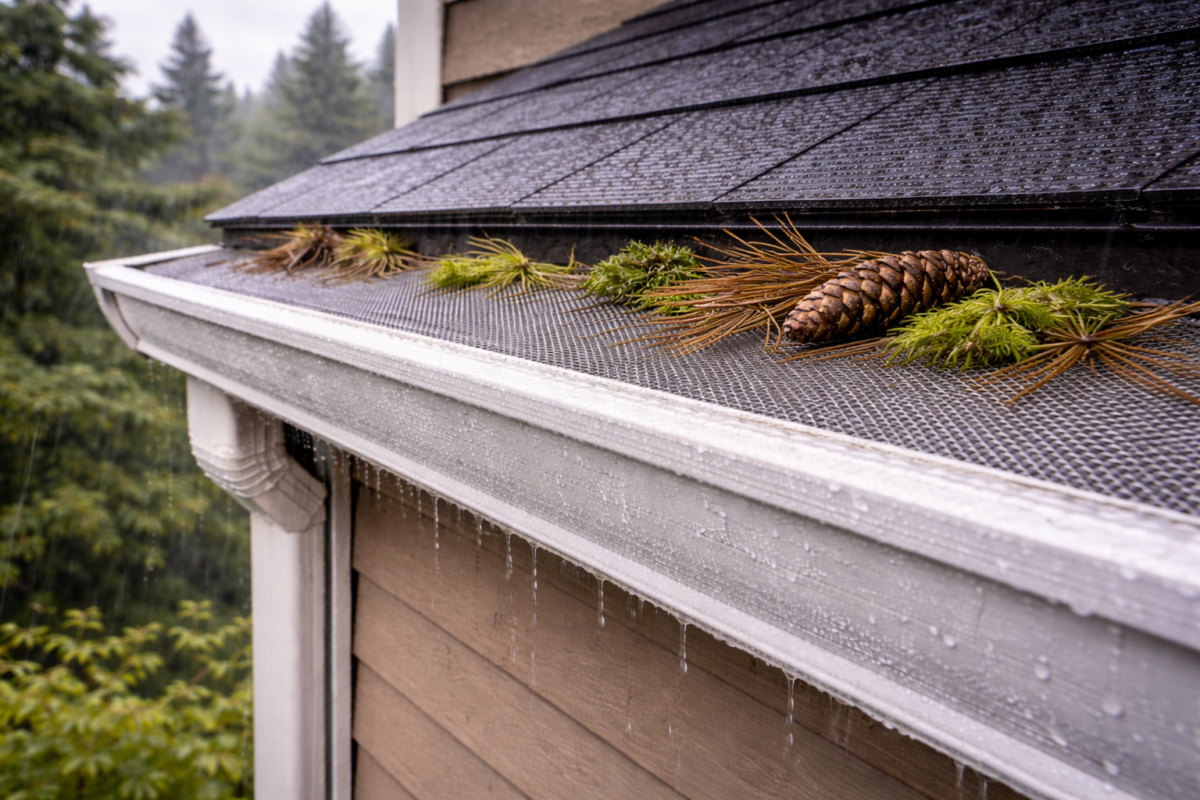
Heavy debris here means wet pine needles, gritty roof sediment, moss fragments, and the occasional fir cone, all pressed together by moisture. That mix explains why homeowners keep asking whether gutter guards work under conditions like these.

The short answer is yes, but only under the right circumstances. Gutter guards can handle heavy debris effectively when the design matches local conditions, and the work is done correctly.

This article breaks down how different guard styles respond to buildup and water flow. It explains what to expect from gutter guard installation. It also covers when installing gutter guards reduces clogging and when maintenance or system upgrades still matter.

AI Overview Summary

Washington’s wet springs and heavy debris create ideal conditions for gutter clogs and overflow. This article explains how pine needles, moss, and roof sediment affect gutter performance, compares gutter guard designs, and outlines when gutter guards reduce maintenance—and when underlying gutter issues must be addressed first.

What is “Heavy Debris” in the Washington Context?

Heavy debris in Washington behaves differently from the dry leaves people picture in milder climates. Pine needles absorb water, swell, and interlock with one another. Moss breaks into fine, spongy clumps that cling to metal surfaces rather than sliding off.

Add in roof grit and shingle sediment that wash down with every storm, and you get a dense mix that fills the small spaces between larger debris. Over time, that material compresses into flat, stubborn mats that sit in place and block water rather than moving along with it.

The real challenge is not weight by itself. It is persistence. Long, wet stretches keep debris saturated, making it heavier, stickier, and harder to dislodge.

In a state that has seen dozens of billion-dollar weather disasters since 1980, including repeated severe storms and flooding, gutters operate under constant pressure. Any gutter protection system here has a demanding job: keep this debris out while still allowing heavy, fast-moving rain to enter the system without backing up.

How Gutter Guard Designs Tackle Heavy Buildup

Not all gutter guards respond the same way when debris builds up. The design determines whether water keeps flowing or backs up during the first hard rain.

Surface Tension (Reverse Curve) Guards

Surface-tension, or reverse-curve, guards rely on water hugging a curved hood and dropping into the gutter. In clean conditions, this can work. With Washington’s fine debris, problems show up faster.
Pine needles and grit can slip through the edges, and moss often settles on top of the hood. Once that happens, water can overshoot the opening during heavy rain.

Mesh & Screen Guards

Mesh and screen guards vary widely. Large-hole screens struggle here because pine needles pass through or bridge the openings. Micro-mesh designs use much finer openings, which block needles and moss fragments more reliably while still allowing water through.

Independent consumer testing has shown that performance varies significantly across products, and this is where the difference usually appears. In Washington’s debris mix, micro-mesh guards tend to hold up best when properly installed.

Brush & Foam Inserts

Brush and foam inserts sound appealing, but heavy debris exposes their weaknesses. These systems sit inside the gutter and trap material that you cannot see. Instead of preventing clogs, they often hide them. Cleaning becomes harder, not easier, especially after a wet winter.

Overall, micro-mesh designs offer the most consistent defense against Washington’s fine, clingy debris, as long as the rest of the system supports proper flow.

Limitations and Realistic Expectations

Even the best system has limits. No gutter guard is completely maintenance-free. Wind-blown soil, roof grit, and moss spores can accumulate on guards over time. That buildup usually needs an occasional rinse or inspection, especially after storms.

Storm frequency matters here. In 2024 alone, the United States saw 27 separate billion-dollar weather and climate disasters. In 2025, severe storms again dominated losses, with more than 20 billion-dollar events nationwide. These numbers explain why gutters fail when margins are thin. During wind-driven rain, water volume and debris arrive together.

Installation quality also sets expectations. If a guard sits unevenly or lacks proper pitch, it becomes a debris catch. In that case, the guard itself causes overflow.

Guards also cannot compensate for undersized, sagging, or damaged gutters. When the base system fails, guards become a secondary fix at best.

The Keys to Success With Heavy Debris

Even the best gutter guard design can fail if the surrounding conditions are ignored. In Washington, long wet seasons and heavy debris mean performance depends as much on evaluation and installation as on the product itself.

Professional Assessment is Critical

A professional assessment looks beyond the product. Roof pitch, valley runoff, tree species, and the condition of existing gutters all influence whether a guard will succeed.

For many homeowners, the real question is simple: Do gutter guards work on this house, with this debris? In Washington, matching the guard to the debris profile matters as much as the guard itself.

Quality of Installation Matters

Properly installing gutter guards means more than attaching panels. Installers must eliminate gaps, maintain a consistent pitch, and secure the system to withstand wind and debris loads. With severe storms now a regular part of the national weather pattern, fastening and alignment affect long-term performance, not just appearance.

Complement With Gutter Health

Guards support healthy gutters, but they do not replace them. If sections sag or outlets back up, debris will still cause trouble. Before gutter guard installation, gutters need a solid attachment and clear drainage paths. When those conditions exist, guards help reduce buildup rather than conceal structural issues.

Choose the Right Defense for Your Debris

Gutter guards can make a real difference for Washington homeowners dealing with heavy debris, but they are not a universal fix. Success depends on pairing an engineered micro-mesh solution with the right conditions and installing it with care. When the system matches the environment, gutters shift from a constant maintenance worry to a reliable part of the home’s exterior.

If you are weighing whether gutter guards work for your property or planning gutter guard installation before spring storms arrive, we can help. At Gutter Empire, LLC, we take a system-first approach and install solutions built for Washington conditions. Contact us at (971) 777-9899, click here for a free estimate, or visit our contact form to schedule a consultation.


Key Takeaways

  • Washington’s debris is uniquely challenging.
    Wet pine needles, moss fragments, and roof grit compress into dense mats that block water flow during long rain cycles, especially in spring.
  • Design matters more than branding.
    Micro-mesh gutter guards consistently outperform surface-tension, screen, and insert styles in Washington’s fine, clingy debris conditions.
  • No gutter guard is maintenance-free.
    Even high-quality systems require periodic inspection and rinsing due to storm frequency and persistent moisture.
  • Installation quality determines success.
    Improper pitch, loose fastening, or gaps can cause guards themselves to trigger overflow during heavy rain.
  • Gutter guards only work on healthy systems.
    Sagging, undersized, or poorly draining gutters must be corrected before guards can provide real protection.

Citations

  • NOAA National Centers for Environmental Information — U.S. Billion-Dollar Weather & Climate Disasters
    https://www.ncei.noaa.gov/access/billions/
  • Climate Central — 2025 in Review: Extreme Weather Trends
    https://www.climatecentral.org/climate-matters/2025-in-review
Categories
Blog Gutter Cleaning Gutter Guards

Gutter Guards vs Regular Maintenance: What’s Better for Rainy Washington?

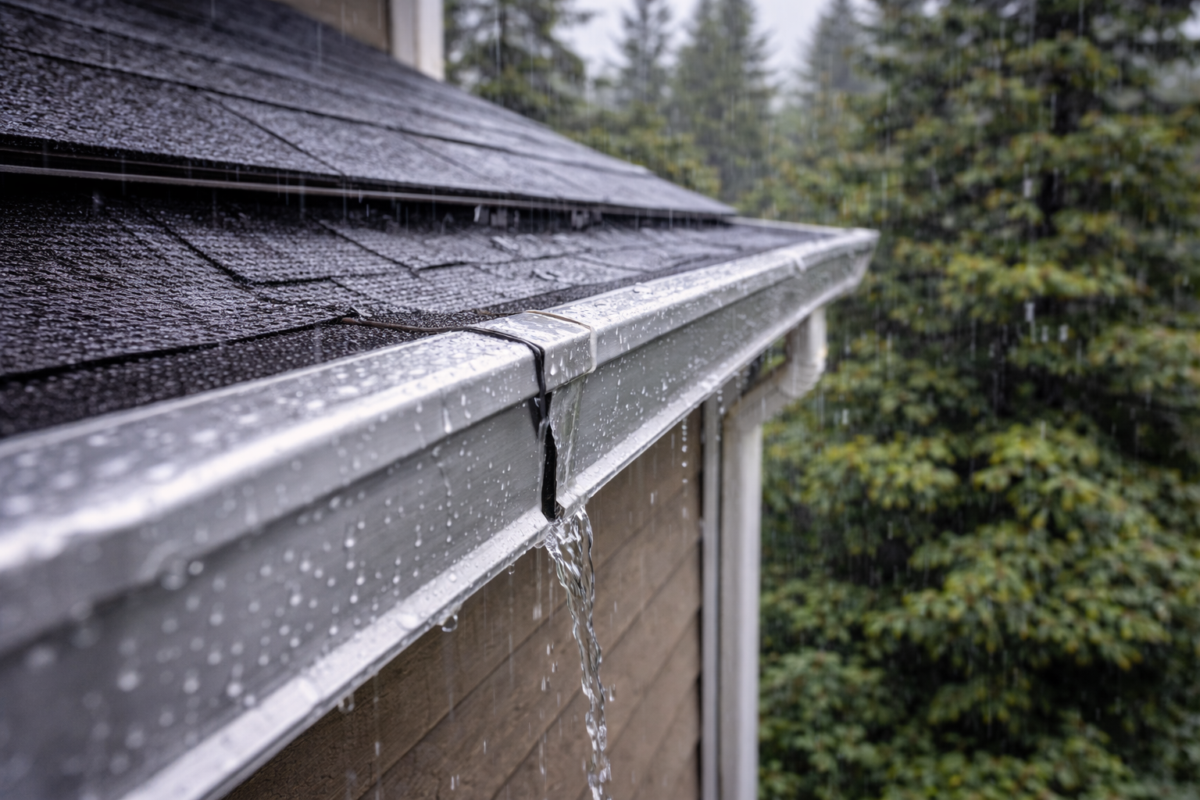
If you own a home in Washington, you already know the story: Rain is part of life. From steady drizzles to downpours that seem to last for days, gutters are constantly put to the test. The bigger question isn’t whether you need them but how you keep them working.

Should you keep paying for regular cleanings, or is it smarter to install gutter guards and reduce the constant cycle of clogs and call-backs? Washington homeowners ask this every fall when the leaves drop, the fir needles drift down, and moss seems to multiply overnight.

Let’s take an honest look at gutter cleaning versus gutter guards in Washington, so you can decide which approach makes the most sense for your home and your budget.

Why Gutters Matter So Much in Washington

Rain itself isn’t the problem. It becomes an issue only when there is nowhere safe to go. In the Pacific Northwest, that’s an everyday challenge. Gutters deal with three big headaches:

  • Falling leaves from oaks and maples can pile up overnight in tree-lined neighborhoods.
  • Needles from firs and pines, thin but stubborn, that tangle together like a net and stop water in its tracks.
  • Moss, which grows thick on damp, shaded roofs and then breaks loose into the channels below.

When those clogs start, water backs up under shingles, drips into siding, or settles around a foundation. Given enough time, that can mean wood rot, mold inside the walls, or a wet basement no one wants to deal with. What starts as “just a little buildup” can quietly turn into thousands in repairs.

That’s why the decision between regular gutter cleaning in Washington and installing guards is about keeping a home protected in a climate where rain is always part of the forecast.

The Case for Regular Gutter Maintenance

Many homeowners stick with tried-and-true cleaning. It’s straightforward and, for the most part, effective.

Benefits of Routine Cleaning

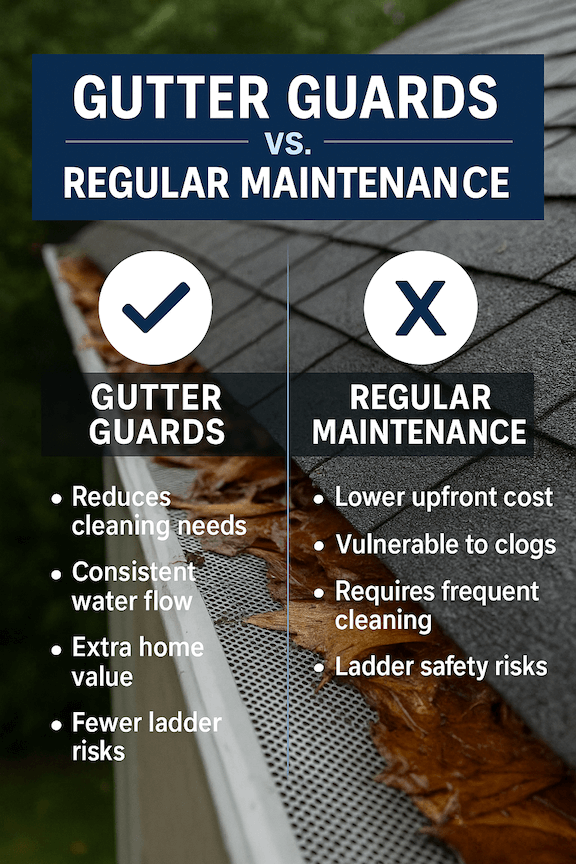
  • Lower upfront cost: You pay per cleaning rather than covering the installation of a guard system.
  • Flexibility: If you already have landscaping or yard crews, adding gutter service to the routine is simple.
  • Built-in inspections: Every cleaning gives professionals a chance to spot sagging sections, leaky seams, or loose downspouts.

Some Washington homeowners even prefer to do it themselves. A Saturday with gloves, a ladder, and a bucket can clear out debris, at least temporarily.

Drawbacks of Cleaning

The problem is frequency. In WA, gutters clog faster than almost anywhere else in the country. Fir needles can fill a system in just weeks, meaning two, three, or even four cleanings may be required in a single season.

Add in the ladder risks, especially on slick fall days, and the “cheap” option doesn’t always feel worth it. Plus, missing even one cleaning during peak storm season can undo months of careful upkeep.

This is why relying solely on gutter maintenance sometimes feels like running in circles. You stay on schedule, but the trees and moss continue to shed.

The Case for Gutter Guards

Gutter guards act as a protective cover or filter, allowing rain to pass through while keeping most debris out. In Washington, that often means less stress when storms hit one after another.

Benefits of Gutter Guards

  • Reduced cleaning needs: Instead of climbing the ladder four times a year, many homeowners only need a quick seasonal checkup. That means less time scooping out soggy leaves.
  • Consistent water flow: Guards stop most debris from settling, so gutters can keep up during Washington’s heavy fall storms.
  • Extra home value: Buyers often view gutter guards as a bonus upgrade, a feature that makes a house easier to maintain over time.
  • Fewer ladder risks: Every skipped cleaning is one less chance of slipping on wet rungs or losing balance while reaching over the edge.

For many people, the biggest perk is peace of mind. It’s knowing you don’t have to drop everything during the first storm of the season to deal with overflow.

Drawbacks of Gutter Guards

Still, they’re not perfect. Upfront installation costs more than scheduling a cleaning. Fine debris, especially fir needles and moss dust, can still get through, depending on the system. And if guards aren’t installed correctly, water may overshoot the edge during torrential rains.

That’s why gutter guard installation in Washington calls for local expertise. Systems that work well in drier climates don’t always withstand our rainfall.

Cost and Convenience Comparison

So, which saves more money? The answer depends on how long you plan to stay in your home.

  • Short-term savings: Regular cleaning usually wins. A bill for a single cleaning costs far less than installing guards.
  • Long-term savings: Guards often catch up. If you’re spending hundreds each year on multiple cleanings, the math balances out within a few years.

Convenience also plays a role. If you dread calling for cleanings or hate seeing water spilling over during storms, guards may be worth the investment even if they take longer to pay for themselves.

How Gutter Empire Washington Helps Homeowners

Most homes in WA benefit from a mix of both.

At Gutter Empire, we install guards designed for the Pacific Northwest climate, strong enough to handle moss, needles, and heavy downpours. At the same time, we continue to offer professional gutter cleaning in WA, as even the best systems require seasonal maintenance.

A Kalama bungalow shaded by evergreens isn’t the same as a Vancouver craftsman under wide maples. We’ve worked on both, and we know how each roofline needs a slightly different guard setup.

Our job isn’t to sell one option over the other. It’s to provide you with the facts, explain the pros and cons, and ensure your gutters are ready before the rainy season arrives.

If you’re tired of worrying about what’s sitting in your gutters right now, it may be time to act. Call Gutter Empire at (971) 777-9899 to schedule an inspection. We’ll walk your property, show you the options, and help you decide whether gutter guards, regular maintenance, or a combination of both is the right choice for your home.

Last updated: October 2025