You can usually tell when something is off with your gutters long before there is a major leak. One of the clearer signs is uneven water flow: water spilling from one corner while another section stays strangely dry.
That imbalance often shows up during Washington’s long stretches of heavy rain, especially when storms roll in back-to-back. When that happens, your system is signaling early stress that may require gutter repair before something more serious develops.
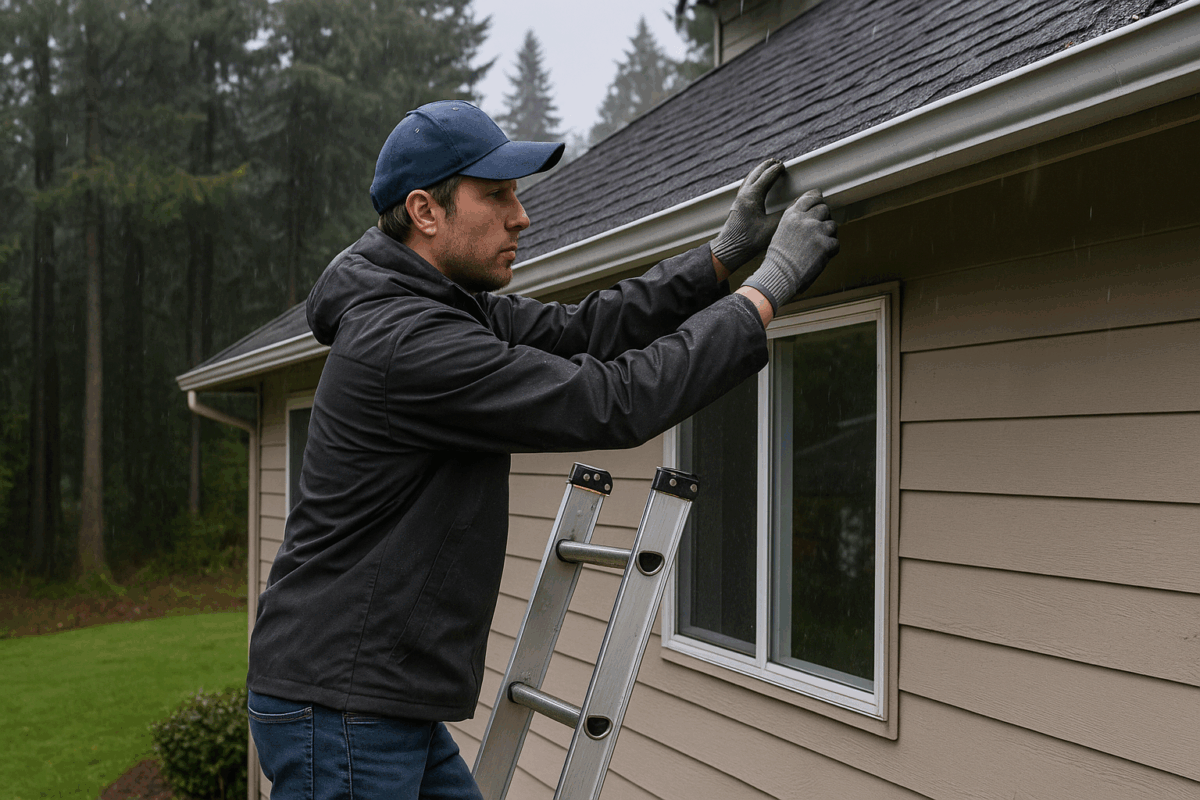
Small flow changes can connect to bigger issues, such as pitch shifts, loose brackets, or capacity problems. A careful gutter inspection can reveal why the system is struggling and what kind of fix will restore proper drainage.
What Inconsistent Flow Looks Like
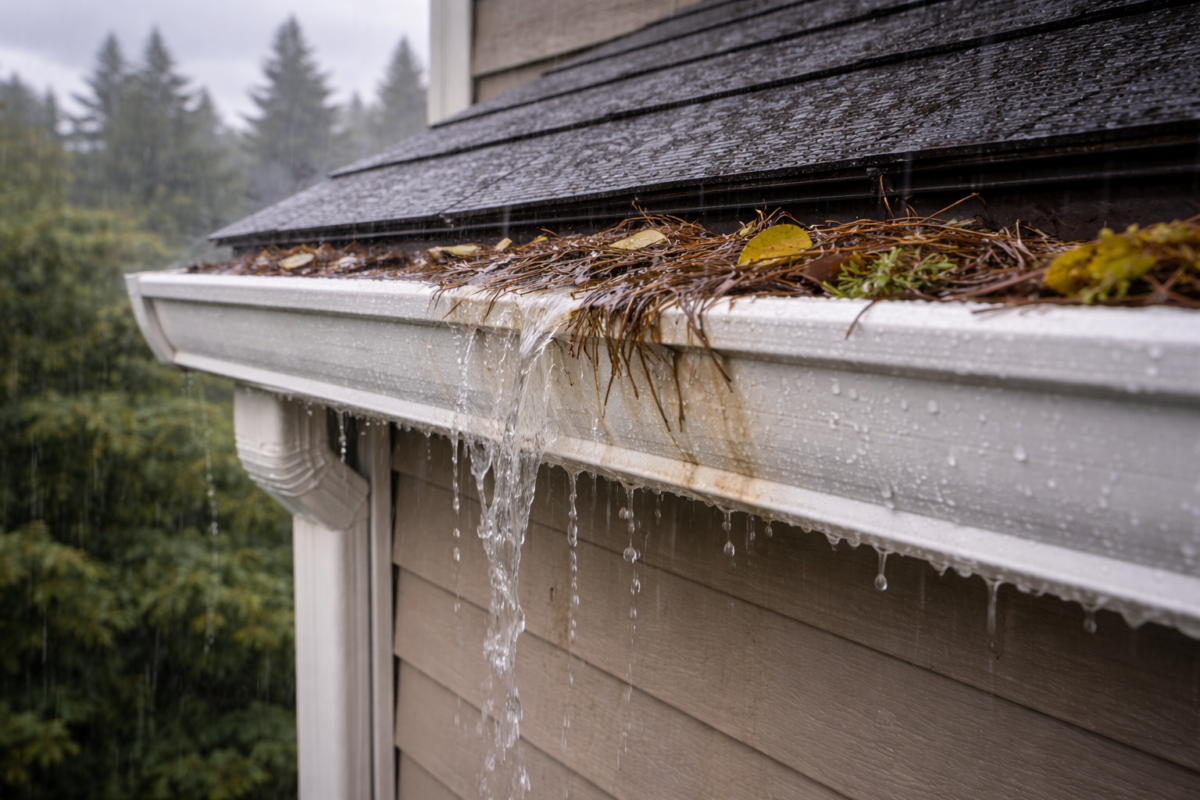
Flow problems tend to show themselves in a few noticeable ways. Sometimes a single spot spills over during steady rain while the nearby downspout runs dry. Other times, you notice trickling midway through a gutter run, almost like the water is escaping before it reaches the outlet.
If water lingers in the gutter after rain ends, it usually means the channel is no longer evenly guiding the flow. Instead of moving as a single path, sections slow down or back up. When water spills or stalls before reaching the downspout, the slope or structural alignment has likely changed.
That imbalance usually needs rain gutter repair to keep a small flow issue from spreading into deeper siding or fascia damage.
Common Culprits in Washington Homes
A few conditions occur frequently in the region, especially during high-rain months.
Pitch Problems (Improper Slope)
Gutters rely on a slight, consistent slope to move water. Even small deviations can create low spots.
Building-science guidance recommends a minimum of about 1/16 inch per foot to keep water moving. When the slope is too shallow, water collects, worsening the sag over time.
Washington’s multi-day storms highlight these issues fast, especially when heavier rainfall pushes more water into areas that already drain slowly. Homes that have not been re-leveled in years often need gutter installation adjustments to correct the pitch.
Bracket Fatigue & Wind Damage
Wind can shift gutters even when nothing appears broken. In the November 2024 windstorm, gusts reached around 70 mph across parts of Washington, with even stronger bursts in higher elevations.
Those conditions loosen brackets and change alignment just enough to disrupt flow. The gutter may still hang in place, but the slope is no longer correct, and water starts to drain unevenly. After events like this, rain gutter repair often becomes the only way to restore the original path and prevent further sagging.
Partial Blockages
Pine needles, leaves, and other debris create partial clogs that behave like tiny dams. The water backs up at one section, spills over, and never reaches the downspout.
During the December 2025 atmospheric river events, NASA reported 15–24+ inches of rainfall in parts of the Cascades, leading to constant debris movement and clogs forming quickly. Even a single small blockage can create a strange mix of overflow here and dryness there. When downspouts slow to a trickle, downspout repair may also be needed to clear the obstruction completely.
Undersized or Overwhelmed Systems
A system that is too small for the roof area or the region’s rainfall will always struggle to keep up. Downspouts spaced too far apart, sometimes more than 40–50 feet, reduce carrying capacity during heavy downpours.
When NOAA documented 12–15+ inches of rainfall over the Cascades in December 2025, many older systems failed simply because they were not built for that level of sustained water. In those cases, upgrading to seamless gutters with the right capacity can prevent repeated overflow at the same weak points.
The Consequences of Ignoring the Warning Signs
Small overflows add up quickly. When water consistently spills in the wrong place, the siding and fascia take the hit. The wood softens, the paint peels, and mold starts to form in tight corners. Uneven flow also pushes water straight to the foundation line.
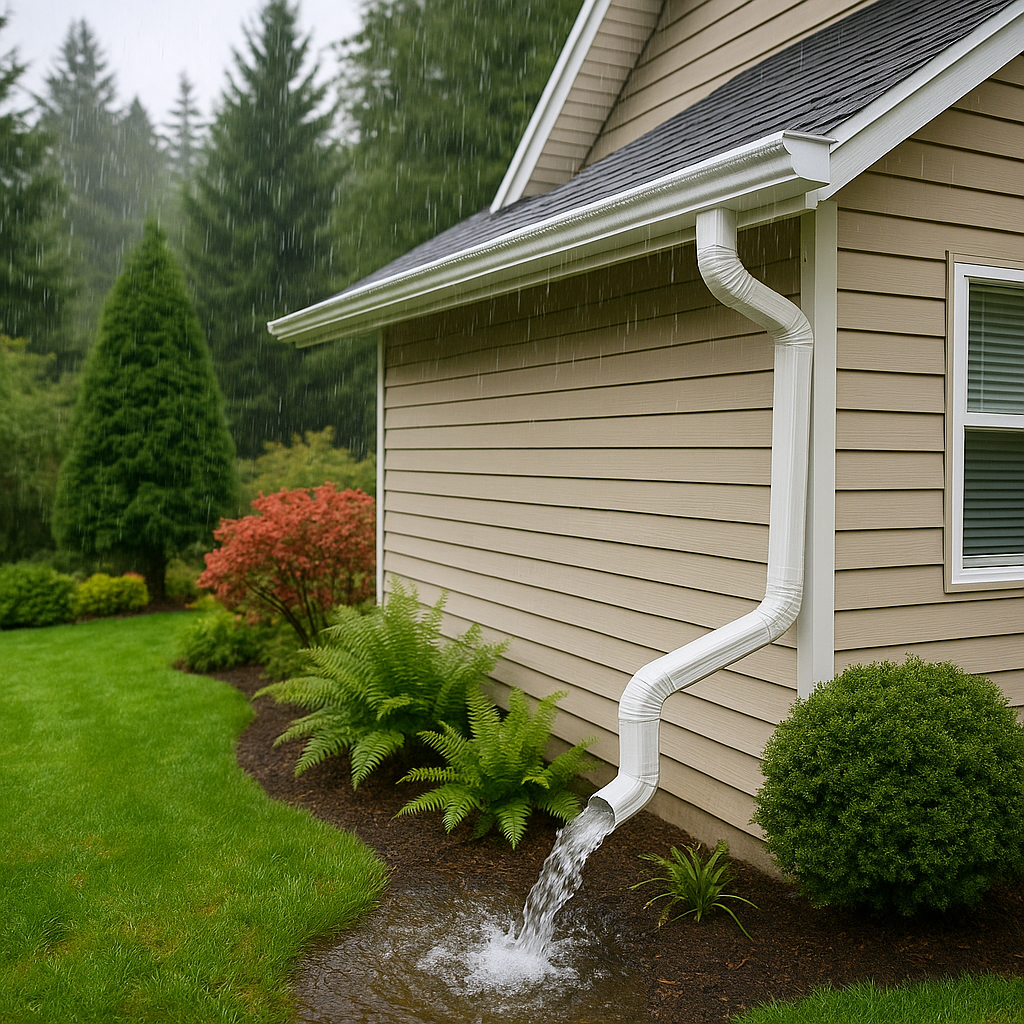
Building-science guidance recommends moving discharge at least five feet away from the structure. Without that distance, soil saturation increases. Once erosion begins, repairs become much more complicated.
Standing water in low gutter spots also accelerates corrosion. In winter, the trapped water can freeze, further stressing the channel and increasing the load on an already fragile section. These problems usually escalate without proper gutter repair in Washington, allowing damage to occur early.
Why Professional Diagnosis Is Essential
The visible splash is rarely the full story. A professional can trace the cause back to what is failing, like pitch, brackets, blockages, capacity, or all the above.
A full gutter inspection examines slope consistency, hanger spacing, and downspout performance. It also checks for structural issues, such as wood deterioration behind the gutters. That kind of assessment helps determine if a quick adjustment will solve the problem or if the setup needs a deeper correction.
Sometimes the right choice is a localized fix, such as downspout repair. Other times, the entire channel needs re-pitching. The goal is to stop the uneven flow before the damage spreads to the rest of the home.
From Diagnosis to a Lasting Solution
Once the source of the imbalance is clear, repairs usually focus on restoring smooth, consistent water movement. That often means tightening or replacing brackets, re-establishing pitch, and clearing any debris blocking the line.
When a system is too small or too worn, gutter installation with properly sized channels offers long-term stability. Many Washington homeowners also choose seamless gutters because they eliminate the weak points where leaks often start.
Fixing these issues early prevents expensive exterior or foundation repairs later. A steady, predictable flow is the best sign that your system is working again.
Address the Warning Before It Becomes an Emergency
Flow irregularities usually appear long before a major failure, and that early warning gives you a chance to stop wind and water damage from advancing into the structure. In Washington’s climate, waiting only gives storms more opportunities to widen the problem. A targeted gutter repair in Washington can stabilize the system, protect the home, and prevent deeper water intrusion. If you want help protecting your home from wind and water damage, contact us at (971) 777-9899, or click here for a free estimate.
Key Takeaways
- Uneven gutter water flow is an early warning sign of system stress, often caused by pitch shifts, loose brackets, or partial blockages.
- Washington’s multi-day storms and atmospheric river events quickly expose flow problems that may not appear during lighter rainfall.
- Small slope deviations or bracket movement can cause water to overflow in one area while leaving downspouts dry elsewhere.
- Partial debris clogs act like dams, redirecting water and preventing proper drainage during heavy rain.
- Undersized or outdated gutter systems struggle to handle modern storm intensity and sustained rainfall.
- Ignoring inconsistent flow increases the risk of fascia rot, siding damage, foundation saturation, and corrosion.
- Professional gutter inspections identify whether repairs, re-pitching, downspout corrections, or full system upgrades are needed.
Citations
- Pacific Northwest National Laboratory (PNNL), Gutters and Downspouts – Building Science Guidance
https://basc.pnnl.gov/resource-guides/gutters-and-downspouts - NASA Global Precipitation Measurement (GPM), NASA Tracks Tropical Moisture Flooding Washington
https://gpm.nasa.gov/applications/weather/news/nasa-tracks-tropical-moisture-flooding-washington - NOAA Weather Prediction Center, Meteorological Watch – December 2025 Atmospheric River Event (MD 1261)
https://www.wpc.ncep.noaa.gov/metwatch/metwatch_mpd_multi.php?md=1261&yr=2025