Gutter Installation & Gutter Guards in Vancouver, WA | Gutter Empire

Categories
Blog Gutter Installation

The Difference Between 5-Inch vs. 6-Inch Gutters for Washington Weather

Washington has a reputation for rain, but how it behaves across the state is what really sets the stage for this conversation. The long wet seasons, the sudden cloudbursts, and the steep roofs you see in so many neighborhoods all play into how well a gutter system handles water.

Many people stick with the standard 5-inch size because that is what their home came with. But the truth is, gutter size makes a huge difference in a climate where water shows up for months at a time.

This blog takes a closer look at how 5-inch and 6-inch gutters work, why the difference matters in Washington, and when upsizing becomes a smart move rather than just an upgrade.

How Washington Weather Shapes the Way Gutters Perform

Rain shows up differently depending on where you live in the state. Western Washington usually gets around 37 inches of rain every year, often stretched across months of steady drizzle and surprise downpours. Meanwhile, areas east of the Cascades get far less, but storms can be intense when they roll in.

Those patterns matter because gutters are not just decorative trim. They are a drainage system. When you have a long wet season, that system gets used constantly. When you have steep roof pitches, common in the PNW to help shed moisture, water hits the gutters with speed. When a roof collects debris from tall evergreens, clogs show up faster than people expect.

All of this means homeowners need gutter systems that can carry water away before it spills over the sides and starts creeping into the foundation or soaking the siding. It also explains why seamless gutters have become so common across the region. With fewer joints, they stay cleaner, drain better, and hold up against weeks of moisture without leaking at the seams.

How Roof Pitch, Size, and Storm Intensity Influence Gutter Sizing

Gutter size is calculated from a few basic factors. The first is the roof drainage area, the amount of surface sending water into each section of the gutter. A bigger roof plane means a bigger stream of water. The second is roof pitch. A steep roof collects rainwater more quickly and channels it downward with greater force. The last piece is storm intensity, which has become increasingly unpredictable.

Together, these factors explain why a gutter that seems “fine” during a light shower suddenly overflows during a heavier storm. Once a gutter reaches its capacity, water has nowhere to go except over the edge. That’s when you start seeing peeling paint, puddles around the foundation, or rot near the fascia.

This is also where proper gutter installation and correctly sized downspouts come into the picture. You can have the right gutter width but the wrong downspout size, and the system still backs up. If you notice water overflowing during a storm, you might think about downspout repair services near you, but sizing is often the real problem, not a broken downspout.

What Really Separates 5-Inch and 6-Inch Gutters

Most homes in the U.S. come with 5-inch K-style gutters. They work well in areas with moderate rainfall. But a 6-inch K-style gutter can carry about 65–70% more water per linear foot, and that difference matters when storms get intense.

A few practical differences stand out:

  • Water volume: A 6-inch gutter can handle larger roof planes or steeper pitches without overflowing during heavy rain.
  • Downspout size: Most 5-inch gutters use 2×3 downspouts, while 6-inch systems typically use 3×4 downspouts. The larger downspout clears water faster and reduces clogging.
  • Debris tolerance: Larger openings mean leaves, needles, and moss are less likely to get stuck, which is another big factor in the Pacific Northwest.
  • Home style compatibility: Bigger roofs, tall multilevel homes, and structures with multiple valleys almost always benefit from a wider gutter.

Why Many Washington Homes Benefit From Switching to 6-Inch Seamless Gutters

Some homes genuinely do fine with 5-inch gutters. Smaller ramblers, simple roof layouts, and houses in lower-rainfall regions often manage without issues. But many Washington homes fall into the opposite category.

Think of big Craftsman roofs with wide overhangs, or modern builds with long, steep pitches. These roofs shed a lot of water at once. Add in debris from pines, firs, or maples, and the system must work even harder.

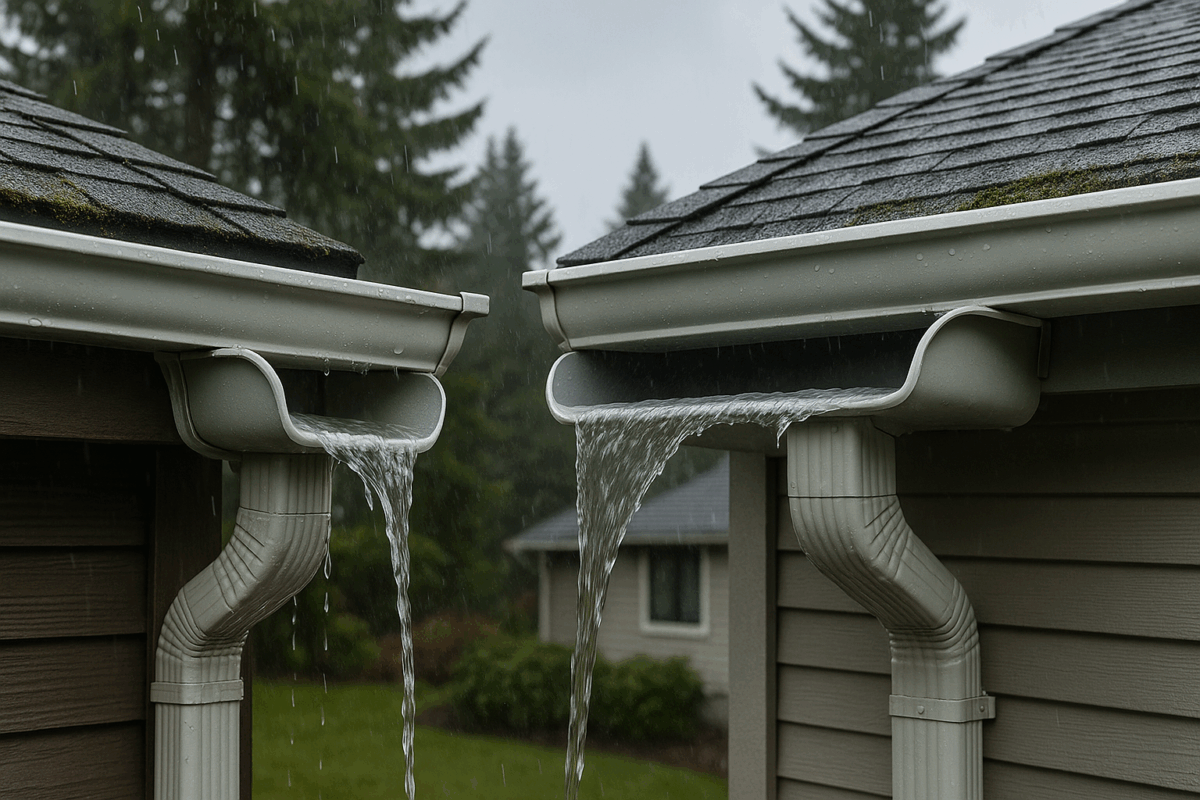
That’s where 6-inch seamless gutters shine. The extra capacity helps prevent the sudden waterfalls you see during a storm. Homeowners also notice fewer erosion marks near downspouts and less moisture creeping into crawlspaces. And during the heaviest winter storms, the wider gutter stays far more stable.

Here are situations where 6-inch gutters make a big difference:

  • A large roof area draining into a single run
  • Steep roof pitches that push water quickly
  • Homes surrounded by tall evergreens
  • Properties with past foundation or siding moisture issues
  • Roof valleys that collect and funnel water into one spot

Think About Cost, Repairs, and Long-Term Value Before Choosing Your Gutter Size

Most people expect 6-inch gutters to be a major price jump, but national cost guides say otherwise. Aluminum K-style gutters typically cost $6–$12 per linear foot, while many seamless 6-inch aluminum systems cost $7–$15 per foot, depending on the market and roof complexity. That gap looks small compared to moisture damage.

Fascia board replacement often runs $5–$12 per linear foot, which can easily reach $500–$2,000+ on a typical home. Foundation or serious siding repairs from chronic overflow can climb into the $2,000–$6,000 range or higher.

Sizing correctly during gutter replacement cuts down future hassles. When gutters are too small, they overflow more often and usually require extra gutter repair, especially once storms hit harder and debris piles up.

Protect Your Washington Home With the Right Gutter System

Choosing between 5-inch and 6-inch gutters affects how well your home handles rain, storms, and debris for years. The right gutter size helps prevent overflow, protects the foundation, and keeps your siding dry during long wet seasons.

When you pair a smart size choice with seamless aluminum gutter installation, you end up with a system designed for real Washington weather, not just average conditions.

If you want help protecting your home from water damage, contact us at (971) 777-9899 or get a free estimate here. Or you can reach out to our team at Gutter Empire LLC to evaluate your roof, measure your drainage needs, and recommend the best solution for long-term performance.


Key Takeaways

  • Washington’s long wet seasons and sudden heavy storms push gutter systems to their limits, making gutter size a major performance factor.
  • 6-inch gutters can handle 65–70% more water, reducing overflow during intense rainfall.
  • Roof pitch, roof size, and debris from evergreens increase the need for larger gutter capacity in many Washington homes.
  • Larger 3×4 downspouts used with 6-inch gutters improve drainage and reduce clogging issues.
  • Seamless aluminum gutters offer better durability and fewer leak points than standard sectional systems.
  • Upsizing gutters can help prevent foundation erosion, siding moisture problems, and fascia damage.
  • The cost difference between 5-inch and 6-inch gutters is often small compared to potential water damage repair expenses.
  • Homes with steep roofs, large surface areas, valleys, or heavy tree debris benefit most from 6-inch seamless gutters.

Citations

  1. Washington climate and rainfall patterns influence gutter performance. Source: Washington State Department of Commerce – Climate & Geography – https://choosewashingtonstate.com/research-resources/about-washington/climate-geography/
Categories
Blog Gutter Installation

The Pros and Cons of Aluminum Gutters for WA Homes

Gutters might not be the flashiest feature of your home, but in Washington, they’re your first line of defense against the weather. Days of drizzle followed by sudden downpours are common in Washington, especially from October through April. That kind of pattern doesn’t just demand a good drainage system. It requires one that holds up year after year.

While they aren’t the only choice, aluminum gutters are a popular option throughout Washington due to their durability, cost-effectiveness, and ability to effectively handle rain. However, before all of that, it’s always a good idea to understand what you’re getting yourself into and where aluminum gutters may fail to perform.

The Benefits of Choosing Aluminum Gutters

Aluminum isn’t just popular because it’s cheaper. It’s well-suited to the unique challenges of Washington’s weather. From corrosion resistance to color options, this section explains why many homeowners choose to install aluminum gutters in the first place.

Lightweight Materials = Easier Installation and Longevity

One of aluminum’s best qualities is its light weight.

  • Easier handling means fewer installation mistakes. That’s key when you need a precise slope to keep water flowing.
  • It also puts less strain on fascia boards over time. Gutters don’t sag as easily when they’re lightweight.
  • On multi-story homes, lightweight materials facilitate faster and safer installation for crews working on ladders.

In short, the lightness of aluminum is a convenience and a long-term advantage for structural integrity.

Cost That Makes Sense for Most Homeowners

Not every home needs premium copper gutters. Additionally, not every homeowner wants to pay for them.

  • Aluminum falls in the mid-range for gutter installation cost. It’s more affordable than copper or steel but holds up better than vinyl.
  • Most Washington homeowners can expect to pay $10–$12 per linear foot for seamless aluminum, depending on the layout of their home.
  • For an average-sized home, the full job typically falls somewhere between $1,500 and $2,400, striking a balance between durability and price.

That makes aluminum an accessible choice for full-house systems or replacements, especially if your old gutters have started to leak at the seams.

No Rust, Even in Constant Rain

This might be the number one reason aluminum gutters excel in Washington.

Aluminum doesn’t rust. Unlike galvanized steel, it withstands constant moisture without forming reddish flakes or pinholes.

That’s important here, where roofs stay wet for months and gutters rarely get a chance to fully dry out.

Even during rainy winters, aluminum retains its finish and function with minimal upkeep.

For Western Washington, especially, where mold, moss, and moisture are always present, aluminum’s natural resistance is a practical advantage.

Aesthetic Flexibility With Custom Colors

Gutters aren’t just functional. They’re also one of the most visible trim elements on your home.

Aluminum comes in a wide range of factory-finished colors. Most are baked-on enamel coatings that resist chipping and fading.

Whether you want something that blends in (like dark bronze) or pops against light siding, there’s a color match available.

And if you change your mind later, aluminum can be repainted with the right prep work. From craftsman bungalows in Tacoma to modern homes in Bellevue, aluminum adapts to just about any architectural style.

Where Aluminum Falls Short

No material is flawless. While aluminum offers many advantages, it has its faults, primarily, its strength and lack of longevity.

Understanding what the limitations are will help you adjust accordingly when choosing this type of material for your gutters.

Vulnerable to Dents From Impact

Aluminum is strong enough to handle the weight of rainwater, but it can dent more easily than heavier metals like steel.

If you lean a ladder against it, or a tree branch drops in a storm, dents are likely. These dings usually don’t stop the system from working, but they do affect curb appeal. For homes with overhanging trees, some homeowners opt for reinforced hangers or more frequent inspections.

In short, aluminum is sturdy, but not invincible. You’ll want to be mindful of the areas most exposed to wear and tear.

Shorter Lifespan Than Copper

Aluminum lasts a long time, but not forever.

Expect about 20–30 years of performance from a properly installed aluminum system. That’s plenty for most homeowners, especially if you plan to replace the roof in that window anyway. Still, it doesn’t match copper’s 50+ year lifespan or its patina that many people love.

Aluminum wins on cost and weight, but copper still leads in sheer longevity. If you’re building a forever home or doing a historic restoration, it may be worth considering.

Why Seamless Aluminum Gutters Work Best in Rain-Heavy Climates

In Washington, seams are where problems begin. That’s why seamless gutter installation is especially smart here. Seamless gutters are made from a single, continuous piece of aluminum, custom-cut to fit your home’s exact dimensions. That means fewer joints where leaks can form and fewer areas where debris accumulates.

They’re less prone to clogging, cracking, or separating over time, which makes a big difference when it rains five days in a row. Beyond durability, seamless systems also look cleaner. There’s no choppiness, no gaps, and no visible connectors interrupting the lines of your roof.

If you want to take it a step further, upgrading to 6-inch gutters with 3×4 downspouts provides even more capacity. That can be great for homes with steep roof pitches or large surface areas that shed water fast.

Make Your Gutters Work Smarter, Not Just Harder

Washington homes need more than just gutters. They need smart, well-fitted systems that withstand the rain. Aluminum gutters offer one of the best all-around solutions for that. They resist rust, match most home styles, and cost far less than premium options like copper.

Of course, there are trade-offs. Aluminum can dent, and it won’t last forever. Still, when installed professionally, especially as a seamless system, it delivers solid value and long-term protection that’s hard to beat.

At Gutter Empire Washington, we install aluminum gutters with precision, from slope to sealing to full seamless runs. If your home needs an upgrade that handles Washington’s weather, we’re ready to help. Call us at (971) 777-9899 to speak to an expert, or book online for a free estimate.


Key Takeaways

  1. Aluminum gutters balance cost and performance. They’re lightweight, rust-resistant, and affordable — typically costing $10–$12 per linear foot for seamless systems in Washington, or about $1,500–$2,400 for most homes .
  2. Rust resistance makes aluminum ideal for Washington’s wet climate. Unlike steel, aluminum won’t corrode or form rust flakes, even under constant rain and moss exposure — a major advantage for Pacific Northwest homes .
  3. Customization options enhance curb appeal. Aluminum gutters come in baked-on enamel finishes in dozens of colors, and they can be repainted to match changing home styles.
  4. Vulnerability to dents is the biggest drawback. Ladders, branches, or heavy debris can leave visible dings, though reinforced hangers or frequent inspections reduce risk.
  5. Seamless aluminum gutters outperform sectional systems. Fewer seams mean fewer leaks and clogs — especially critical in Washington, where prolonged rain demands uninterrupted flow.
  6. Longevity averages 20–30 years with proper care. Though not as long-lasting as copper, aluminum provides excellent value and durability when installed and maintained by professionals.