Gutter Installation & Gutter Guards in Vancouver, WA | Gutter Empire

Categories
Blog Gutter Installation

Aluminum Gutter Installation: What to Know About Durability and Maintenance in Washington

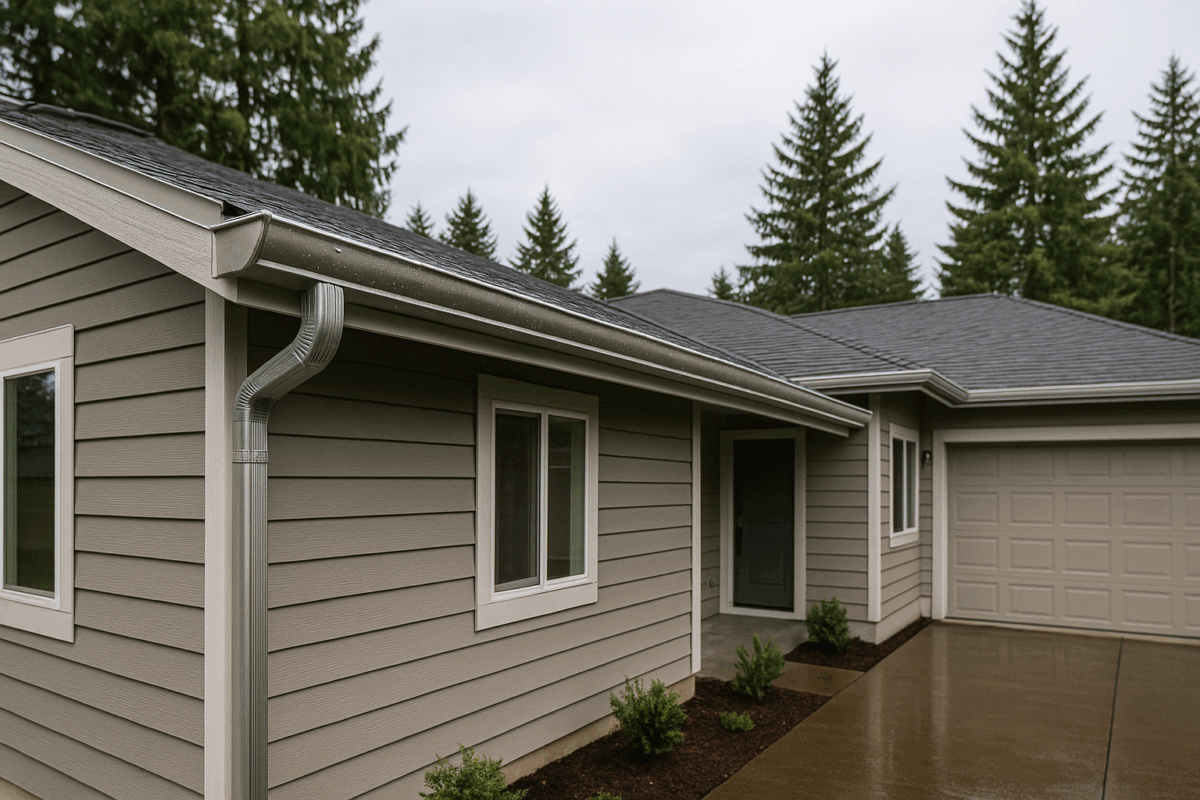
For Washington homeowners, gutters are not a small detail. They sit outside through months of steady rain, wind, and debris that never really takes a season off. That is why aluminum gutter installation continues to be the practical choice.

Aluminum holds up well in wet climates, but it still has limits. A system can last for decades, but only if it is installed correctly and maintained in a simple, consistent way.

In this article, we will look at why aluminum works so well here, what causes bending and sagging, and the basic habits that keep you from needing constant gutter repair.


Quick Answer

Aluminum gutters are the best balance of durability and affordability for Washington’s wet climate because they resist rust, stay lightweight, and perform well under constant rain. Most bending and sagging are caused by installation issues, clogged debris, or loose hangers—not the aluminum itself. With proper pitch, adequate support, and routine cleaning, an aluminum gutter system can last decades with minimal repairs.


Why Aluminum Is Washington’s Go-To Gutter Material

Aluminum has become the default material for many homes in the Pacific Northwest, and it is easy to see why once you think about the climate.

Aluminum works so well in wet climates because it does not rust the way steel can. It protects itself passively, forming a thin oxide layer when it comes into contact with air, which helps it remain stable over long periods of moisture and rain.

Its weight matters, too. Aluminum has sufficient strength for real runoff but remains light enough not to overload fascia boards or roof edges. During heavy storms, gutters can hold more water than most people expect, making proper support essential.

And then there is long-term value. Homeowners often want something that lasts without pushing them into the most expensive option. Aluminum tends to strike that balance. A well-done gutter installation can remain functional for years without becoming a constant maintenance project.

The Real Culprits Behind Bending and Sagging

Most homeowners assume that sagging gutters mean the material failed. Aluminum usually performs fine. The real issues often arise from what the gutter is required to hold and how it was originally installed.

Improper Installation

The most common cause of bending and sagging is simple: The gutters were not installed with the right support or pitch. When hangers are spaced poorly or the slope does not properly direct water toward the downspouts, water begins to pool. That adds weight and stress.

Loose or broken hangers, pulling fasteners, and drainage-slope problems are common issues in gutter maintenance. Those failures first appear at attachment points, not across the aluminum itself.

In Washington, this gets worse after storms. Wind shakes the long gutter, which runs like a lever. A weak connection may hold for a while, but it eventually shows up as a low spot or separation.

Debris Overload

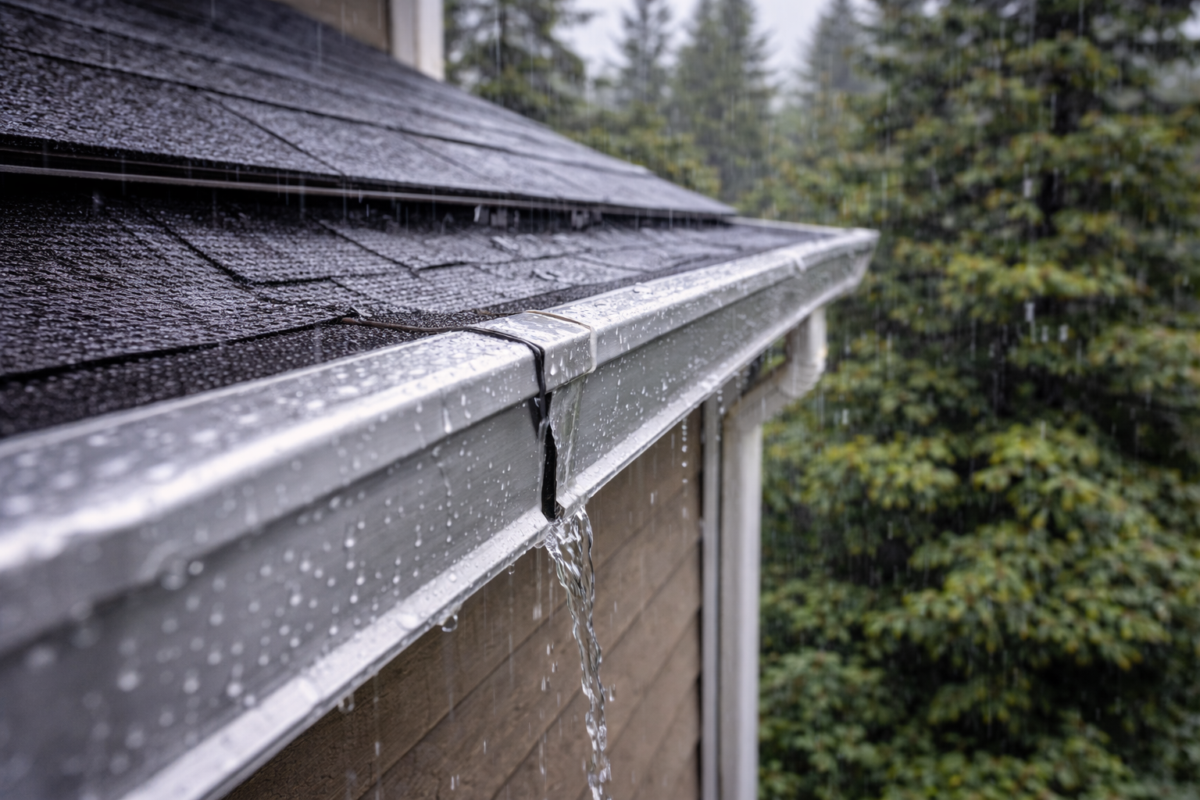
The next big culprit is debris. Washington does not just deal with dry leaves. Gutters here collect wet pine needles, roof grit, and compacted material that retain water. That creates a loop:

Clogged gutter → standing water → added weight → hanger strain → sagging → more standing water.

It builds slowly, then suddenly becomes obvious when water overflows.

Gutter and downspout cleaning is a basic preventive measure to reduce water damage. When water cannot move through the system, it finds another path, often right down your siding or into the foundation zone. That is when homeowners start calling for emergency gutter repair or even gutter replacement.

Ice Dam Pressure

Ice is less common in western Washington than in colder states, but freeze-thaw cycles still happen. Ice becomes a problem when gutters are already clogged with water or debris. When that water freezes, it expands and pushes against the gutter shape.

The key point is that ice rarely starts the issue. It usually exacerbates an existing weakness, such as poor drainage or clogged drains.

The Role of Professional Installation

Aluminum gutters last longest when the details are handled correctly upfront. That is where professional installation makes a major difference.

Seamless Advantage

Seamless aluminum gutters reduce the number of joints along the run. Since joints are common leak points, fewer seams mean fewer places for small drips to develop over time. This helps homeowners avoid chasing tiny problems every rainy season.

A seamless approach supports durability by removing many of the weak links that first appear in older systems.

Precision Pitch & Support

The slope and support of a gutter decide whether water keeps moving or settles into a heavy pool. When installers set the proper pitch and install hangers that can hold weight, the system remains stable during extended periods of rain. Any small dip can turn into trouble once debris builds up.

Strong storms raise the stakes. During the November 2024 cyclone, gusts near Seattle reached about 77 mph, the kind of wind that exposes loose fasteners fast when gutters are already loaded.

Right-Sizing the System

Not every home needs the same gutter capacity. Roof shape, pitch, valleys, and runoff concentration all affect what the system must handle.

Professionals consider these factors to ensure homeowners do not end up with undersized gutters that overflow during heavy rain. Choosing the right style and size helps prevent frequent gutter repairs down the road.

Essential Maintenance for a Hassle-Free System

Even the best gutters require basic maintenance. The goal is not constant work. It is simple habits that prevent larger failures.

The Cleaning Imperative

Clearing debris remains the single most important maintenance task. It stops the standing-water weight problem before it starts. FEMA and the GSA emphasize the importance of keeping gutters and downspouts clear, as clogged systems can cause overflow and structural stress.

Annual Inspection Checklist

A simple yearly check goes a long way. Ensure the hangers stay tight, the downspouts drain cleanly, and no section dips enough to retain water. Look over the corners for worn sealant, and take a second glance after strong winds in case any part of the system shifted or loosened.

Protective Add-Ons

Gutter guards can reduce how often debris builds up, lowering the load the system must carry. They work best when the gutters already have the correct pitch and solid support. Guards do not fix failing attachment points, but they can make upkeep much simpler.

Secure Decades of Reliable Drainage

Aluminum gutters form a strong foundation for protecting a Washington home. They resist corrosion, withstand constant moisture, and remain reliable when installation and support are done correctly.

Most bending and sagging comes from preventable causes such as debris weight, poor pitch, or loose hangers, not from the aluminum itself. With basic yearly care and thoughtful upkeep, your system can stay out of your way and quietly do its job for years.

If you want that level of long-term reliability, contact Gutter Empire. We specialize in aluminum gutter installation and the support that prevents recurring gutter repair. Call us at (971) 777-9899, click here for a free estimate, or contact us to get a quote for lasting protection.


Key Takeaways

  • Aluminum resists corrosion better than steel in Washington’s damp climate, forming a protective oxide layer that allows long service life without rust-related failure.
  • Sagging gutters are usually an installation or maintenance problem—poor pitch, wide hanger spacing, or loose fasteners create standing water that overloads the system.
  • Debris weight is the leading cause of deformation, especially wet pine needles and roof grit that trap moisture and increase structural stress.
  • Seamless aluminum systems reduce leak points by eliminating most joints where separation and drips typically begin.
  • Strong wind events expose weak attachments quickly, as Pacific Northwest cyclones regularly combine heavy rain with damaging gusts .
  • Routine cleaning and annual inspections prevent most failures, keeping water moving freely through downspouts and away from fascia and foundations.
  • Gutter guards help maintenance but cannot replace correct pitch and support—they work best on a healthy, properly installed system.
  • Right-sizing gutters to roof runoff volume is essential to avoid overflow during Washington’s long, high-intensity rain periods.

Citations

  1. NASA: https://science.nasa.gov/earth/earth-observatory/extratropical-cyclone-whips-over-the-pacific-northwest-153605/
Categories
Gutter Installation Gutter Replacement

How Washington’s Coastal Air Accelerates Gutter Wear

Coastal Washington has a way of chewing through home exteriors that looks “fine” at first. Then a big rain hits, wind pushes water sideways, and suddenly a seam drips, a corner separates, or an end cap starts letting water slip behind the gutter. That is the frustrating part. Gutters can fail quietly for months, then show it all at once.

A big reason is coastal air. Salt in the air leaves residue on metal and hardware, and that residue keeps working on the system every time the weather turns wet again. In Washington, the weather turns wet again a lot.

If you are choosing between repairs and upgrades, it helps to know what is happening up there. This is the kind of thing gutter installation companies see all the time in wind-exposed neighborhoods, especially on taller homes where gutters take more force and are harder to inspect closely.

The Real Culprit: Salt Air (Chlorides) + Metal Exposure

Coastal air carries tiny salt particles that settle on exterior surfaces. The main issue is chloride. Chloride makes corrosion more aggressive, especially where metal is exposed or where water lingers. A gutter system has plenty of those spots.

Salt residue does not need a dramatic splash to cause problems. It sits on the gutter surface, on fasteners, and around joints. When rain or mist wets that residue, it becomes more reactive. Then the sun and wind dry it out again, leaving more concentrated deposits behind. That cycle repeats, and the damage stacks.

Sea-spray aerosols can remain airborne for over 15 miles. People often assume “coastal” only means homes right on the beach. Salty air can reach inland communities depending on wind patterns and local geography.

That is why local conditions matter. The right gutter installation services near you should account for salt air, wind-driven rain, and repeated wet–dry cycles.

Why Washington’s Weather Makes Coastal Wear Show Up Faster

The coast is not just wet. It is wet, then breezy, then wet again. Those wet–dry cycles are perfect for concentrating salt on metal surfaces.

NOAA’s Weather Prediction Center described western Washington storm conditions where rainfall rates could surpass 0.5 inches per hour and locally approach 1 inch per hour. It also referenced short-window totals in the 2–5-inch range, with 48-hour totals of 5–7 inches in that pattern.

When rainfall comes down that fast, weak points do not get a gentle test. They get a full stress test. Water piles up, flow speed changes, and overflow becomes more likely.

Now add wind. During a late-Dec 2025 storm sequence affecting the Northwest, reporting cited gusts up to 85 mph. High winds can tug at gutters, flex corners, and rattle end caps, especially when the gutter is already carrying a heavy load of water.

Over time, that is how a minor loosening turns into a visible drip, then a bigger leak, then a repair that keeps coming back. At that point, homeowners start thinking about gutter replacement because patching feels endless.

Where Gutters Break First: Seams, Fasteners, End Caps, and Corners

Gutters rarely fail “in the middle.” They fail where pieces connect and where hardware holds everything in place. Coastal air and windstorms target those locations first because they combine exposure, movement, and trapped moisture.

Seam and Joint Creep (Micro-Gaps)

Sectional gutters have more joints by design. Every joint is a potential leak pathway. Even if the sealant holds at first, wind-driven rain and repeated runoff cycles can work into the smallest gaps. The leak might not show on light rain days. It shows when the flow volume increases and water starts pressing against every seam.

Fastener Corrosion and Loosening

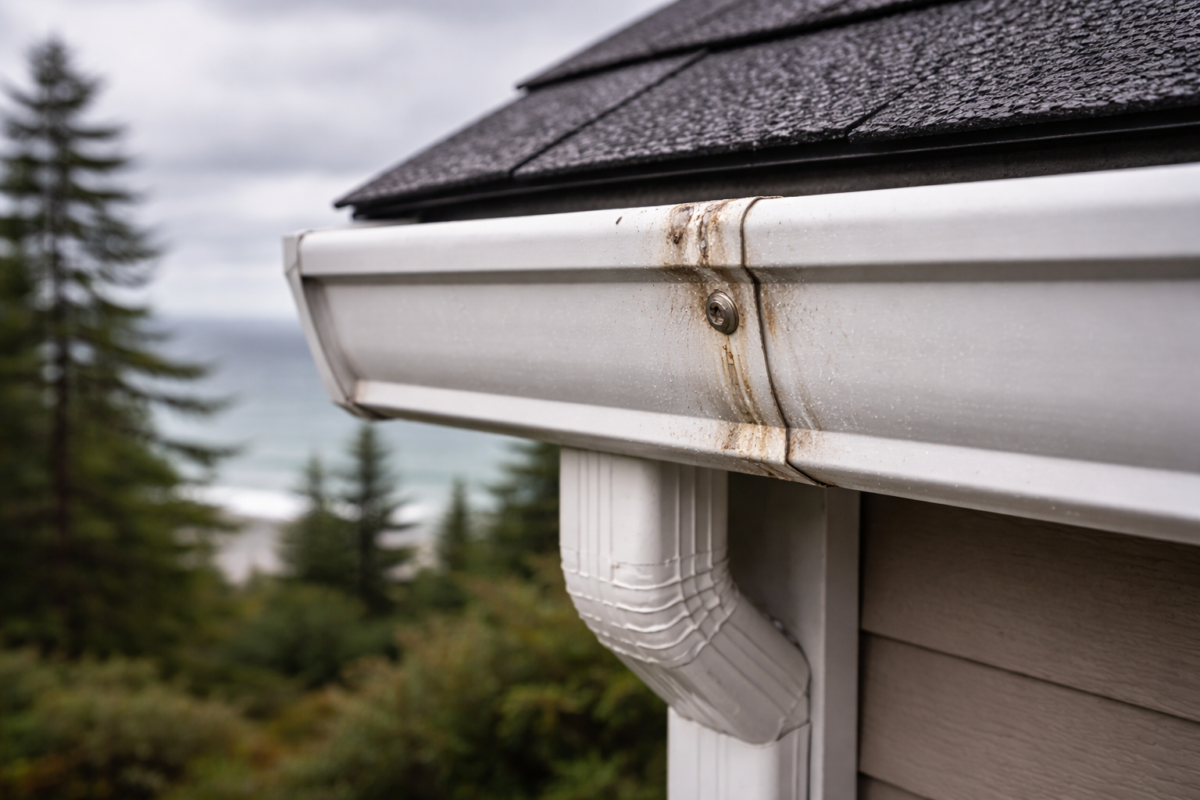
Fasteners are small, but they do a big job. Once a fastener corrodes, it can lose grip. Then the gutter moves more, which makes seams and end caps work harder. This is one reason storm seasons can suddenly reveal multiple issues at once.

End-Cap and Corner Fatigue Under Wind

When wind and water hit the gutter line, end caps can flex, loosen, or start leaking at the edges. If the home is multi-story, the system often sees more wind exposure, and small movements can repeat over and over. Missing or loose end caps create a simple but serious problem: Water escapes where it is not supposed to.

Warning Signs That Coastal Wear Is Turning Into Damage Risk

Coastal wear does not always look dramatic, so it helps to know the specific signals that show the system is starting to lose its seal.

  • Rust staining around screws or hangers, especially near corners and ends
  • White, chalky residue or pitting on metal surfaces, which can suggest the finish is breaking down
  • Drips that appear only during heavier rain, not during light showers
  • Water marks on fascia or streaks down siding right below an end cap or corner
  • Frequent “new leaks” in different spots, which can mean multiple joints are starting to fail
  • Overflow that shows up during fast rainfall events when flow volume spikes

When end caps loosen, water can spill behind the gutter and run down the exterior wall. That can stain siding, soften trim, or keep the fascia area damp longer than it should be. At ground level, the same leak can dump water in the wrong place, increasing the risk of pooling near the foundation.

Materials + Design Choices That Hold Up Longer

After you spot the weak points, the next question is straightforward: What lasts longer in salty, stormy conditions?

A significant advantage comes from reducing connection points. Fewer seams mean fewer places for water to force its way through during heavy rain and wind-driven storms. That is why seamless gutters tend to make sense in coastal or high-humidity areas. They simplify the system, and they cut down the number of “first-to-fail” zones.

Material choice also matters, but not in a magic way. It is about durability under repeated exposure. Aluminum gutter installation is often part of a more coastal-ready approach because aluminum can offer strong performance in exterior conditions when installed well and maintained appropriately. The point is not that one material never wears out. The point is that some setups tolerate the environment better and stay tight longer.

Even the best material still needs solid installation. Pitch, fastening method, and how end caps and corners are secured all matter. Coastal storm cycles punish anything that is even slightly loose, so a “good enough” install can turn into frequent leak chasing.

Protect Your Home Before the Next Coastal Storm Cycle

Most homeowners do not want to think about gutters until they see water where it should not be. That is normal. But in Washington’s coastal conditions, waiting for a visible leak often means the system has already been taking damage for a while.

If you want a system that holds up better through Washington’s storm cycles, we can help. Gutter Empire LLC can help secure and reinforce gutter systems for coastal exposure, including repairs that address end-cap leaks and upgrades like seamless runs when the old setup keeps failing. Contact us at (971) 777-9899, or get a free estimate here, for an evaluation and recommendations based on the conditions around your property.


Key Takeaways

  • Coastal salt air accelerates gutter corrosion and wear.
    Salt-rich coastal air leaves chloride residue on gutters, seams, and fasteners. When it repeatedly cycles through wet–dry conditions, it increases corrosion and speeds up gutter deterioration — especially at connection points and exposed metal surfaces.
  • Heavy Washington storm cycles expose weak gutter points quickly.
    Western Washington can see intense rainfall bursts, rapid accumulation, and periods of wind-driven rain. During these events, seams, joints, end caps, and fasteners experience high stress — which is when leaks and separation often become visible.
  • Wind gusts amplify damage to gutters already weakened by corrosion.
    Strong wind events — including storm patterns producing widespread damage and infrastructure failure across coastal communities — can flex gutter runs, loosen fasteners, and rattle corners and end caps, especially on taller homes and wind-exposed properties.
  • Gutter systems usually fail at seams, fasteners, corners, and end caps — not mid-run.
    These areas combine movement, moisture, and salt exposure. Once fasteners loosen or sealant fails, leaks appear during heavier rain rather than light showers.
  • Seamless gutters and reinforced fastening reduce long-term leak risk.
    Fewer connection points mean fewer failure zones, and aluminum seamless gutter installation with proper fastening and slope performs better in windy coastal environments than older sectional systems.

Citations

  1. Atmospheric corrosion & chloride exposure in marine environments — Defense Systems Information Analysis Center
    https://dsiac.dtic.mil/articles/atmospheric-corrosion-severity-and-the-role-of-the-environment-determining-a-direct-correlation/
  2. NOAA Weather Prediction Center — heavy rainfall & storm pattern discussion
    https://www.wpc.ncep.noaa.gov/metwatch/metwatch_mpd_multi.php?md=1177&yr=2024
  3. AP News — Pacific Northwest storms, flooding, and high-wind regional impacts
    https://apnews.com/article/pacific-northwest-levee-floods-washington-idaho-fe814b86139b6d30b8e19f5f1d44e47e
Categories
Blog Gutter Installation

The Pros and Cons of Aluminum Gutters for WA Homes

Gutters might not be the flashiest feature of your home, but in Washington, they’re your first line of defense against the weather. Days of drizzle followed by sudden downpours are common in Washington, especially from October through April. That kind of pattern doesn’t just demand a good drainage system. It requires one that holds up year after year.

While they aren’t the only choice, aluminum gutters are a popular option throughout Washington due to their durability, cost-effectiveness, and ability to effectively handle rain. However, before all of that, it’s always a good idea to understand what you’re getting yourself into and where aluminum gutters may fail to perform.

The Benefits of Choosing Aluminum Gutters

Aluminum isn’t just popular because it’s cheaper. It’s well-suited to the unique challenges of Washington’s weather. From corrosion resistance to color options, this section explains why many homeowners choose to install aluminum gutters in the first place.

Lightweight Materials = Easier Installation and Longevity

One of aluminum’s best qualities is its light weight.

  • Easier handling means fewer installation mistakes. That’s key when you need a precise slope to keep water flowing.
  • It also puts less strain on fascia boards over time. Gutters don’t sag as easily when they’re lightweight.
  • On multi-story homes, lightweight materials facilitate faster and safer installation for crews working on ladders.

In short, the lightness of aluminum is a convenience and a long-term advantage for structural integrity.

Cost That Makes Sense for Most Homeowners

Not every home needs premium copper gutters. Additionally, not every homeowner wants to pay for them.

  • Aluminum falls in the mid-range for gutter installation cost. It’s more affordable than copper or steel but holds up better than vinyl.
  • Most Washington homeowners can expect to pay $10–$12 per linear foot for seamless aluminum, depending on the layout of their home.
  • For an average-sized home, the full job typically falls somewhere between $1,500 and $2,400, striking a balance between durability and price.

That makes aluminum an accessible choice for full-house systems or replacements, especially if your old gutters have started to leak at the seams.

No Rust, Even in Constant Rain

This might be the number one reason aluminum gutters excel in Washington.

Aluminum doesn’t rust. Unlike galvanized steel, it withstands constant moisture without forming reddish flakes or pinholes.

That’s important here, where roofs stay wet for months and gutters rarely get a chance to fully dry out.

Even during rainy winters, aluminum retains its finish and function with minimal upkeep.

For Western Washington, especially, where mold, moss, and moisture are always present, aluminum’s natural resistance is a practical advantage.

Aesthetic Flexibility With Custom Colors

Gutters aren’t just functional. They’re also one of the most visible trim elements on your home.

Aluminum comes in a wide range of factory-finished colors. Most are baked-on enamel coatings that resist chipping and fading.

Whether you want something that blends in (like dark bronze) or pops against light siding, there’s a color match available.

And if you change your mind later, aluminum can be repainted with the right prep work. From craftsman bungalows in Tacoma to modern homes in Bellevue, aluminum adapts to just about any architectural style.

Where Aluminum Falls Short

No material is flawless. While aluminum offers many advantages, it has its faults, primarily, its strength and lack of longevity.

Understanding what the limitations are will help you adjust accordingly when choosing this type of material for your gutters.

Vulnerable to Dents From Impact

Aluminum is strong enough to handle the weight of rainwater, but it can dent more easily than heavier metals like steel.

If you lean a ladder against it, or a tree branch drops in a storm, dents are likely. These dings usually don’t stop the system from working, but they do affect curb appeal. For homes with overhanging trees, some homeowners opt for reinforced hangers or more frequent inspections.

In short, aluminum is sturdy, but not invincible. You’ll want to be mindful of the areas most exposed to wear and tear.

Shorter Lifespan Than Copper

Aluminum lasts a long time, but not forever.

Expect about 20–30 years of performance from a properly installed aluminum system. That’s plenty for most homeowners, especially if you plan to replace the roof in that window anyway. Still, it doesn’t match copper’s 50+ year lifespan or its patina that many people love.

Aluminum wins on cost and weight, but copper still leads in sheer longevity. If you’re building a forever home or doing a historic restoration, it may be worth considering.

Why Seamless Aluminum Gutters Work Best in Rain-Heavy Climates

In Washington, seams are where problems begin. That’s why seamless gutter installation is especially smart here. Seamless gutters are made from a single, continuous piece of aluminum, custom-cut to fit your home’s exact dimensions. That means fewer joints where leaks can form and fewer areas where debris accumulates.

They’re less prone to clogging, cracking, or separating over time, which makes a big difference when it rains five days in a row. Beyond durability, seamless systems also look cleaner. There’s no choppiness, no gaps, and no visible connectors interrupting the lines of your roof.

If you want to take it a step further, upgrading to 6-inch gutters with 3×4 downspouts provides even more capacity. That can be great for homes with steep roof pitches or large surface areas that shed water fast.

Make Your Gutters Work Smarter, Not Just Harder

Washington homes need more than just gutters. They need smart, well-fitted systems that withstand the rain. Aluminum gutters offer one of the best all-around solutions for that. They resist rust, match most home styles, and cost far less than premium options like copper.

Of course, there are trade-offs. Aluminum can dent, and it won’t last forever. Still, when installed professionally, especially as a seamless system, it delivers solid value and long-term protection that’s hard to beat.

At Gutter Empire Washington, we install aluminum gutters with precision, from slope to sealing to full seamless runs. If your home needs an upgrade that handles Washington’s weather, we’re ready to help. Call us at (971) 777-9899 to speak to an expert, or book online for a free estimate.


Key Takeaways

  1. Aluminum gutters balance cost and performance. They’re lightweight, rust-resistant, and affordable — typically costing $10–$12 per linear foot for seamless systems in Washington, or about $1,500–$2,400 for most homes .
  2. Rust resistance makes aluminum ideal for Washington’s wet climate. Unlike steel, aluminum won’t corrode or form rust flakes, even under constant rain and moss exposure — a major advantage for Pacific Northwest homes .
  3. Customization options enhance curb appeal. Aluminum gutters come in baked-on enamel finishes in dozens of colors, and they can be repainted to match changing home styles.
  4. Vulnerability to dents is the biggest drawback. Ladders, branches, or heavy debris can leave visible dings, though reinforced hangers or frequent inspections reduce risk.
  5. Seamless aluminum gutters outperform sectional systems. Fewer seams mean fewer leaks and clogs — especially critical in Washington, where prolonged rain demands uninterrupted flow.
  6. Longevity averages 20–30 years with proper care. Though not as long-lasting as copper, aluminum provides excellent value and durability when installed and maintained by professionals.