Gutter Installation & Gutter Guards in Vancouver, WA | Gutter Empire

Categories
Gutter Installation Gutter Replacement

How Washington’s Coastal Air Accelerates Gutter Wear

Coastal Washington has a way of chewing through home exteriors that looks “fine” at first. Then a big rain hits, wind pushes water sideways, and suddenly a seam drips, a corner separates, or an end cap starts letting water slip behind the gutter. That is the frustrating part. Gutters can fail quietly for months, then show it all at once.

A big reason is coastal air. Salt in the air leaves residue on metal and hardware, and that residue keeps working on the system every time the weather turns wet again. In Washington, the weather turns wet again a lot.

If you are choosing between repairs and upgrades, it helps to know what is happening up there. This is the kind of thing gutter installation companies see all the time in wind-exposed neighborhoods, especially on taller homes where gutters take more force and are harder to inspect closely.

The Real Culprit: Salt Air (Chlorides) + Metal Exposure

Coastal air carries tiny salt particles that settle on exterior surfaces. The main issue is chloride. Chloride makes corrosion more aggressive, especially where metal is exposed or where water lingers. A gutter system has plenty of those spots.

Salt residue does not need a dramatic splash to cause problems. It sits on the gutter surface, on fasteners, and around joints. When rain or mist wets that residue, it becomes more reactive. Then the sun and wind dry it out again, leaving more concentrated deposits behind. That cycle repeats, and the damage stacks.

Sea-spray aerosols can remain airborne for over 15 miles. People often assume “coastal” only means homes right on the beach. Salty air can reach inland communities depending on wind patterns and local geography.

That is why local conditions matter. The right gutter installation services near you should account for salt air, wind-driven rain, and repeated wet–dry cycles.

Why Washington’s Weather Makes Coastal Wear Show Up Faster

The coast is not just wet. It is wet, then breezy, then wet again. Those wet–dry cycles are perfect for concentrating salt on metal surfaces.

NOAA’s Weather Prediction Center described western Washington storm conditions where rainfall rates could surpass 0.5 inches per hour and locally approach 1 inch per hour. It also referenced short-window totals in the 2–5-inch range, with 48-hour totals of 5–7 inches in that pattern.

When rainfall comes down that fast, weak points do not get a gentle test. They get a full stress test. Water piles up, flow speed changes, and overflow becomes more likely.

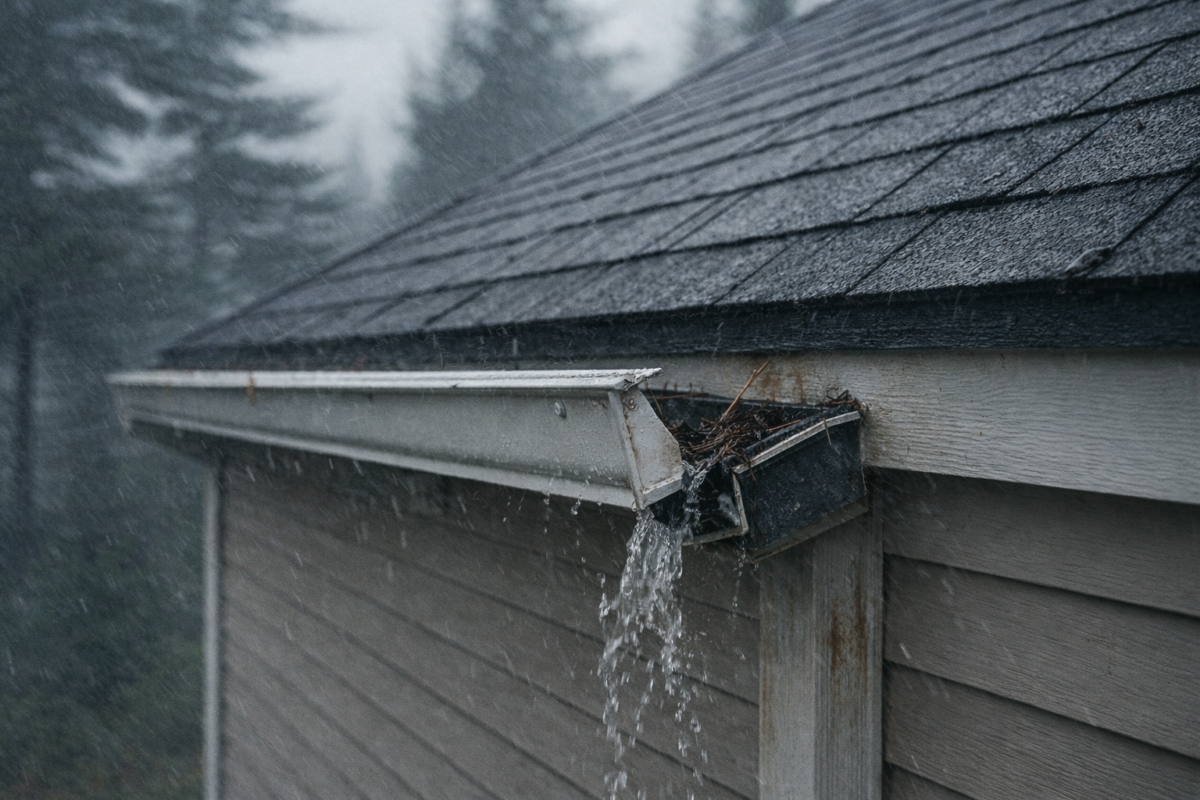
Now add wind. During a late-Dec 2025 storm sequence affecting the Northwest, reporting cited gusts up to 85 mph. High winds can tug at gutters, flex corners, and rattle end caps, especially when the gutter is already carrying a heavy load of water.

Over time, that is how a minor loosening turns into a visible drip, then a bigger leak, then a repair that keeps coming back. At that point, homeowners start thinking about gutter replacement because patching feels endless.

Where Gutters Break First: Seams, Fasteners, End Caps, and Corners

Gutters rarely fail “in the middle.” They fail where pieces connect and where hardware holds everything in place. Coastal air and windstorms target those locations first because they combine exposure, movement, and trapped moisture.

Seam and Joint Creep (Micro-Gaps)

Sectional gutters have more joints by design. Every joint is a potential leak pathway. Even if the sealant holds at first, wind-driven rain and repeated runoff cycles can work into the smallest gaps. The leak might not show on light rain days. It shows when the flow volume increases and water starts pressing against every seam.

Fastener Corrosion and Loosening

Fasteners are small, but they do a big job. Once a fastener corrodes, it can lose grip. Then the gutter moves more, which makes seams and end caps work harder. This is one reason storm seasons can suddenly reveal multiple issues at once.

End-Cap and Corner Fatigue Under Wind

When wind and water hit the gutter line, end caps can flex, loosen, or start leaking at the edges. If the home is multi-story, the system often sees more wind exposure, and small movements can repeat over and over. Missing or loose end caps create a simple but serious problem: Water escapes where it is not supposed to.

Warning Signs That Coastal Wear Is Turning Into Damage Risk

Coastal wear does not always look dramatic, so it helps to know the specific signals that show the system is starting to lose its seal.

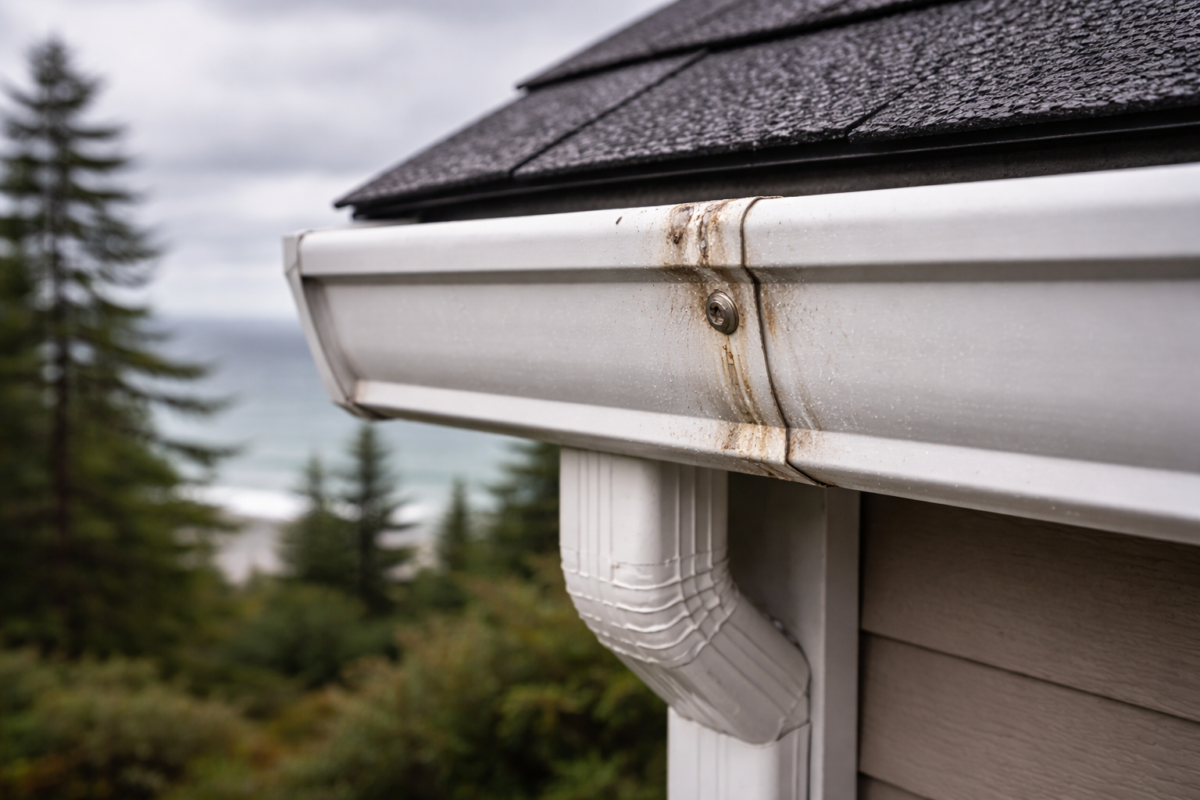
  • Rust staining around screws or hangers, especially near corners and ends
  • White, chalky residue or pitting on metal surfaces, which can suggest the finish is breaking down
  • Drips that appear only during heavier rain, not during light showers
  • Water marks on fascia or streaks down siding right below an end cap or corner
  • Frequent “new leaks” in different spots, which can mean multiple joints are starting to fail
  • Overflow that shows up during fast rainfall events when flow volume spikes

When end caps loosen, water can spill behind the gutter and run down the exterior wall. That can stain siding, soften trim, or keep the fascia area damp longer than it should be. At ground level, the same leak can dump water in the wrong place, increasing the risk of pooling near the foundation.

Materials + Design Choices That Hold Up Longer

After you spot the weak points, the next question is straightforward: What lasts longer in salty, stormy conditions?

A significant advantage comes from reducing connection points. Fewer seams mean fewer places for water to force its way through during heavy rain and wind-driven storms. That is why seamless gutters tend to make sense in coastal or high-humidity areas. They simplify the system, and they cut down the number of “first-to-fail” zones.

Material choice also matters, but not in a magic way. It is about durability under repeated exposure. Aluminum gutter installation is often part of a more coastal-ready approach because aluminum can offer strong performance in exterior conditions when installed well and maintained appropriately. The point is not that one material never wears out. The point is that some setups tolerate the environment better and stay tight longer.

Even the best material still needs solid installation. Pitch, fastening method, and how end caps and corners are secured all matter. Coastal storm cycles punish anything that is even slightly loose, so a “good enough” install can turn into frequent leak chasing.

Protect Your Home Before the Next Coastal Storm Cycle

Most homeowners do not want to think about gutters until they see water where it should not be. That is normal. But in Washington’s coastal conditions, waiting for a visible leak often means the system has already been taking damage for a while.

If you want a system that holds up better through Washington’s storm cycles, we can help. Gutter Empire LLC can help secure and reinforce gutter systems for coastal exposure, including repairs that address end-cap leaks and upgrades like seamless runs when the old setup keeps failing. Contact us at (971) 777-9899, or get a free estimate here, for an evaluation and recommendations based on the conditions around your property.


Key Takeaways

  • Coastal salt air accelerates gutter corrosion and wear.
    Salt-rich coastal air leaves chloride residue on gutters, seams, and fasteners. When it repeatedly cycles through wet–dry conditions, it increases corrosion and speeds up gutter deterioration — especially at connection points and exposed metal surfaces.
  • Heavy Washington storm cycles expose weak gutter points quickly.
    Western Washington can see intense rainfall bursts, rapid accumulation, and periods of wind-driven rain. During these events, seams, joints, end caps, and fasteners experience high stress — which is when leaks and separation often become visible.
  • Wind gusts amplify damage to gutters already weakened by corrosion.
    Strong wind events — including storm patterns producing widespread damage and infrastructure failure across coastal communities — can flex gutter runs, loosen fasteners, and rattle corners and end caps, especially on taller homes and wind-exposed properties.
  • Gutter systems usually fail at seams, fasteners, corners, and end caps — not mid-run.
    These areas combine movement, moisture, and salt exposure. Once fasteners loosen or sealant fails, leaks appear during heavier rain rather than light showers.
  • Seamless gutters and reinforced fastening reduce long-term leak risk.
    Fewer connection points mean fewer failure zones, and aluminum seamless gutter installation with proper fastening and slope performs better in windy coastal environments than older sectional systems.

Citations

  1. Atmospheric corrosion & chloride exposure in marine environments — Defense Systems Information Analysis Center
    https://dsiac.dtic.mil/articles/atmospheric-corrosion-severity-and-the-role-of-the-environment-determining-a-direct-correlation/
  2. NOAA Weather Prediction Center — heavy rainfall & storm pattern discussion
    https://www.wpc.ncep.noaa.gov/metwatch/metwatch_mpd_multi.php?md=1177&yr=2024
  3. AP News — Pacific Northwest storms, flooding, and high-wind regional impacts
    https://apnews.com/article/pacific-northwest-levee-floods-washington-idaho-fe814b86139b6d30b8e19f5f1d44e47e
Categories
Blog Gutter Installation Gutter Replacement

Why Homeowners in Windy Washington Neighborhoods Need Secure End Caps

Washington homeowners are used to rain, but wind is often underestimated. Storm systems moving in from the Pacific regularly bring gusts strong enough to rattle roof edges, shake exterior fixtures, and push rain sideways instead of straight down.

During recent storms, parts of Washington recorded wind gusts well over 70 miles per hour, strong enough to cause power outages, downed trees, and exterior damage. Gutters sit directly in that danger zone.

When wind repeatedly stresses the weakest parts of a gutter system, end caps are often the first to fail. Once that happens, water stops flowing where it should and starts finding its way into places it does not belong.

Understanding how wind affects gutters, what happens when end caps loosen, and how to address the problem early can make a real difference in protecting a home through Washington’s storm cycles.

Why Washington Windstorms Put Extra Stress on Gutter End Caps

Washington windstorms are not gentle, steady breezes. They arrive in bursts, with gusts that spike and change direction quickly. That matters because gutters are mounted along the roof edge, where wind pressure increases as air moves up and over the structure. The ends of the gutter run take the brunt of that pressure.

Wind-driven rain adds another layer of stress. Research from building science organizations shows that rain rarely falls straight down during storms. Wind pushes it sideways and upward, forcing water toward seams, joints, and terminations. End caps sit at the exact point where water flow stops and pressure builds. Over time, repeated storms flex the metal, loosen fasteners, and stress the sealant.

This effect becomes more pronounced on taller homes or houses exposed to open areas, hillsides, or coastal weather patterns. The higher the roofline, the more leverage wind has. In these conditions, even well-installed rain gutters can start to show weaknesses at their endpoints.

Why End Caps Are the Most Vulnerable Point in a Gutter System

End caps look simple, but they perform a critical job. They seal the gutter run so water stays inside the channel and moves toward the downspout. When everything works as intended, they rarely draw attention. When they fail, the system can unravel quickly.

End caps tend to fail for practical reasons tied to local conditions. Constant wind vibration can slowly loosen fasteners. Sealants age, dry out, and lose adhesion over time when exposed to moisture. When debris builds up, the added weight increases movement during storms. Even well-made aluminum gutters still flex under repeated wind pressure.

On multi-story homes, the risk increases. Wind speeds are often higher at elevation, and longer gutter runs expand and contract more noticeably. Without reinforcement, end caps can separate just enough to create small gaps. Those gaps do not constantly drip during light rain, which is why many homeowners miss the problem until a major storm hits.

This is where experienced gutter installation companies make a difference. Proper attachment methods and reinforcement account for the forces Washington gutters face year after year.

What Happens When End Caps Loosen or Go Missing

When an end cap loosens or detaches, water no longer follows the designed path. Instead of flowing cleanly into a downspout, it spills out at the gutter edge or behind the gutter itself. That change sets off a chain reaction.

When water seeps behind a gutter, it saturates fascia and soffits that are not designed for constant moisture, then tracks down the siding, causing stains, softening materials, and peeling paint. At ground level, runoff collects near the foundation, increasing the risk of pooling and seepage. Industry data shows that wind and water damage remain among the most common sources of homeowner insurance claims, which highlights how quickly these issues can escalate.

Interior problems often follow. Moisture can migrate into wall cavities, leading to damp insulation or hidden mold growth. The damage rarely announces itself right away. Homeowners may only notice a musty smell, peeling paint, or minor interior staining long after the storm has passed.

This is why heavy-duty gutters and downspouts matter. A system designed to handle wind stress reduces the risk that a single loose component will redirect water into vulnerable parts of the home.

Warning Signs Homeowners Should Check After Windstorms

After a windstorm, small checks can reveal early signs of trouble. Many issues are visible from the ground if you know what to look for.

  • Water spilling from the end of the gutter instead of flowing toward the downspout during rainfall
  • Drip lines, dark streaks, or staining near fascia corners
  • Visible gaps, bent metal, or separated seams at the gutter ends
  • Downspouts that wobble, pull away from the wall, or disconnect at joints
  • Water collecting near the foundation directly below the gutter endpoints

After high-wind events, national weather and emergency agencies consistently advise homeowners to inspect exterior components, including gutters and downspouts. Catching these issues early can prevent the need for larger downspout repair near you or more extensive exterior repairs later.

Why Professional Reinforcement and Seamless Systems Last Longer in Windy Areas

Temporary fixes can be tempting. A bead of sealant might stop a drip for a while, but it rarely addresses the underlying movement that caused the problem. In windy regions, durability comes from reinforcement, not patching.

A proper repair does more than stop a drip. It tightens end caps with fastening methods that hold under vibration, reinforces hanger spacing, and realigns sections so water keeps moving even when wind is pushing against the system. In some situations, switching to a seamless gutter setup makes sense. With fewer joints along the run, there are fewer places for water to escape during heavy, wind-driven rain.

Federal building guidance consistently points to using connectors and materials rated for wind, moisture, and ice. That advice mirrors what many Washington homeowners see firsthand: Systems designed for mild weather wear out quickly, while storm-ready systems last.

Strengthen Your Gutter System for Washington’s Storm Cycles

Windstorms are not going away, and neither is the stress they place on gutter systems. Secure end caps play a bigger role than many homeowners realize. They keep water moving where it should, reduce hidden moisture damage, and help the entire gutter system perform under pressure.

At Gutter Empire, we focus on building and reinforcing gutter systems that withstand Washington’s storm cycles. We inspect end caps, secure vulnerable connection points, and recommend durable solutions when repairs are no longer enough. If you want help protecting your home from wind and water damage, contact us at (971) 777-9899 or click here for a free estimate. 


Key Takeaways

  • High winds in Washington place extra stress on gutter end caps, which are often the first components to loosen or fail during storms.
  • Wind-driven rain pushes water sideways and upward, increasing leakage risk at gutter seams, joints, and end caps rather than allowing water to drain cleanly.
  • Loose or missing end caps redirect water into fascia, siding, and foundations, raising the likelihood of structural damage and interior moisture issues.
  • Weather-related property damage claims continue to rise, making small gutter failures more costly when left unaddressed.
  • Reinforced end caps and seamless gutter systems perform better in windy neighborhoods, reducing weak points and long-term maintenance needs.

Citations

  1. NASA Earth Observatory – Extratropical Cyclone Whips Over the Pacific Northwest
    https://science.nasa.gov/earth/earth-observatory/extratropical-cyclone-whips-over-the-pacific-northwest-153605/
  2. Insurance Information Institute – Claims Volume Up 36% in 2024 as Climate Costs Rise
    https://insuranceindustryblog.iii.org/claims-volume-up-36in-2024-climate-costs-litigation-drive-trend/
Categories
Blog Gutter Repair Gutter Replacement

The 3 Most Overlooked Signs You Need Gutter Repair in Washington

When you live in Washington, rain is part of the routine. From steady drizzles in the fall to heavy downpours in the winter, water is always testing your home’s defenses.

Most people know their roof is the first line of protection, but gutters are just as critical. They move water safely away from your siding and foundation. Many homeowners overlook the subtle signs that something is amiss until the damage has already become extensive.

Let’s break down the three most overlooked warning signs that mean it’s time for gutter repair before you’re forced into costly replacements.

The 3 Most Overlooked Signs You Need Gutter Repair in Washington

Not every gutter issue shows up as a dramatic overflow. In fact, the quiet signs are usually the most dangerous. Here’s what to watch for.

1. Water Pooling at the Perimeter (The Silent Foundation Threat)

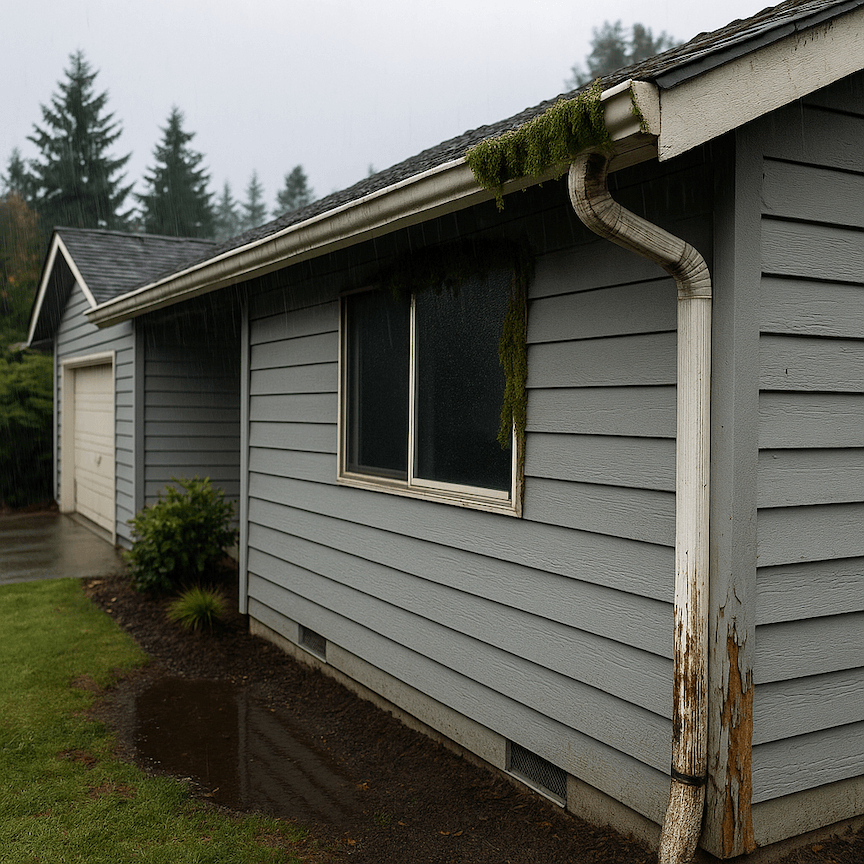
One of the clearest yet often ignored warnings is water collecting right next to the house. After a steady rain, step outside and look around the foundation. Do you notice puddles that don’t drain away or soil that looks washed out? That is a red flag.

Pooling means the gutters or downspouts aren’t doing their job. In Washington, where rain falls so frequently, that repeated soaking quickly adds up. Water seeps into the soil, pressing against foundation walls. Over time, this can lead to cracks, basement leaks, or mold growth in the lower levels of the house.

What makes this subtle is that the damage happens underground, out of sight. By the time homeowners notice a musty smell in the basement, the repair bills have multiplied. That’s why spotting puddles early is critical.

Look for the following:

  • Mulch or gravel is displaced near downspouts.
  • Erosion lines in the soil after storms.
  • Damp basement walls or floors.

Extending downspouts at least five feet from the foundation is a smart first step. But if the issue persists, you’ll need roof gutter repair or adjustments to the slope of your system. Consider this a low-cost prevention measure compared to the high cost of structural fixes later.

2. Peeling Paint and Soft Fascia Along the Roofline

Another easy-to-miss warning is peeling paint or soft spots around the edges of your roofline. Many homeowners blame paint age or sunlight, but in a rainy climate like Washington, it usually signals gutter trouble.

When gutters overflow or develop small leaks, water runs down the fascia boards and siding. Instead of drying out, those areas stay damp for weeks at a time. As a result, paint begins to blister, wood softens, and hidden mold starts to grow behind the surface.

It may appear to be a cosmetic issue, but it’s actually the first stage of structural damage. Peeling paint indicates that moisture is consistently hitting the same spots, and soft fascia suggests that rot is already in progress.

Check for the following warning signs:

  • Dark streaks or stains just under the gutters.
  • Nails or screws on the ground, often from the fascia pulling loose.
  • Soft or spongy trim when gently pressed with a screwdriver.

The good news is that fascia board repair can often solve the problem before it spreads. Resealing seams, reattaching loose sections, or replacing a short run of damaged fascia is far cheaper than a full siding job. Addressing these small leaks now can save you from the need for complete gutter replacement later.

3. Subtle Sagging and Moss Build-Up Slowing Flow

Sagging gutters are sometimes written off as “not a big deal.” But in Washington, where moss thrives on shaded, damp roofs, sagging is more than an eyesore. It’s a warning that gutters are not holding water, but rather allowing it to accumulate.

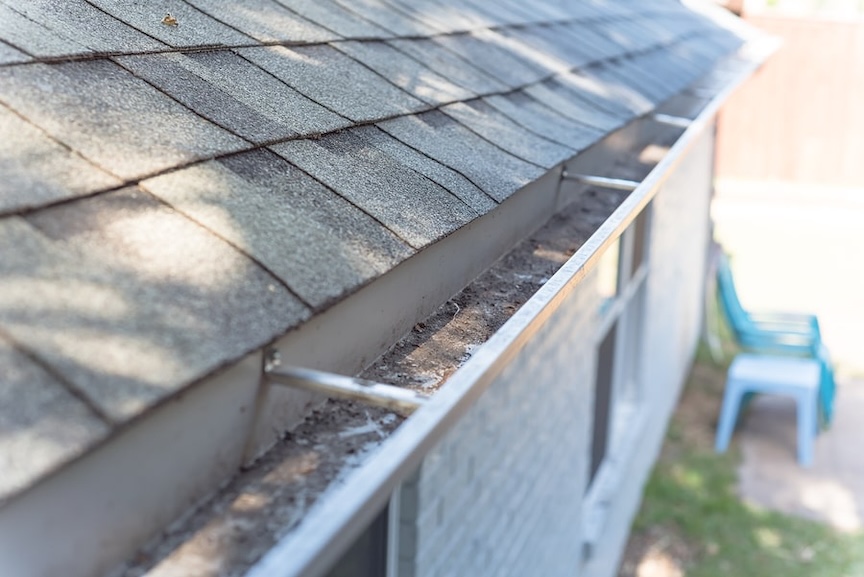
Moss and evergreen needles create heavy clogs that put constant strain on hangers. Over time, this weight causes gutters to sag away from the fascia. Once water sits in those low spots, it accelerates rusting, seam failure, and eventual collapse.

In many cases, homeowners only notice a problem when water starts spilling over the sides. However, the sag is the real clue because it indicates that the system is already losing its effectiveness.

Signs to keep an eye on:

  • Gutters that no longer look perfectly straight.
  • Water lines or “tide marks” inside the gutter trough.
  • Standing water hours after a storm has passed.

In this climate, waiting until gutters collapse is the most expensive option. A timely call for gutter repair near you, whether that’s tightening hangers, clearing moss, or adjusting the pitch, prevents the chain reaction that can lead to total system failure.

Why Small Fixes Save You More Than Full Replacement

One of the biggest misconceptions is that gutters only need attention when they’re overflowing dramatically. The truth is that minor fixes often make the biggest difference. Resealing end caps, rehanging sections, or extending downspouts can be done quickly and affordably.

Ignore those steps, and you’re looking at far more than gutters. Water damage can spread to fascia, soffits, siding, and even basements. At that stage, you’re paying for more than just gutter replacement. You’re paying for carpentry, painting, and possibly mold remediation.

Quick DIY Checks Before You Call

Not every issue needs a ladder and a toolbox. A few quick checks can tell you if your gutters are headed for trouble.

Step outside during a steady rain. If water pours over the edge or leaks from seams, that’s a warning. Look at your downspouts, too; they should send water at least five feet from the base of your home.

Press gently on the fascia beneath the gutter. Soft spots mean water damage. Finally, scan the roofline for moss. Moss slows the flow and signals clogs ahead.

These quick inspections only take a few minutes but provide valuable insights. If you notice any of these red flags, scheduling roof gutter repair promptly will save you the stress of larger projects down the road.

Act Before the Rain Wins

In Washington, the rain never really takes a season off. That steady moisture is exactly why small gutter problems grow quickly. Maybe you’ve seen water pooling near the steps, a strip of paint peeling under the eaves, or a sag starting along the fascia. Those details might look minor, but they’re early warnings. Acting now with gutter repair is far cheaper than waiting for mold, rot, or foundation cracks.

At Gutter Empire WA, we handle everything that involves gutters. Let’s stop the damage before the next storm. Contact us today by calling (971) 777-9899 or book a free estimate here.


Key Takeaways

  1. Pooling water near the foundation is a silent threat. Standing water around the base of your home often indicates that your gutters or downspouts aren’t diverting water properly, which can lead to cracks, leaks, and basement mold.
  2. Peeling paint and soft fascia boards signal hidden leaks. Overflowing or leaking gutters cause moisture damage that rots wood trim and weakens attachment points, often going unnoticed until repairs become costly.
  3. Sagging gutters and moss buildup reduce flow. In Washington’s damp climate, moss and evergreen needles create clogs that strain hangers and cause gutters to sag, trapping water that accelerates rust and seam failure.
  4. Small fixes prevent full replacements. Resealing seams, rehanging sections, and extending downspouts are low-cost solutions that prevent expensive siding, foundation, or mold repairs later.
  5. Regular inspections protect your home. Quick DIY checks during rainstorms—such as looking for leaks, soft spots in the fascia, or sagging lines—help homeowners identify issues early and know when to call a professional gutter repair service.

Last updated: October 2025

Categories
Blog Gutter Replacement

What Are the Signs Your Gutters Need a Replacement?

Many homeowners install gutters and then neglect to take care of them. This becomes one of the primary reasons why they may need to replace the gutters, even though most modern gutters have a lifespan of more than 20 years. Most of the time, gutters become replaceable only because they are not maintained properly. However, there may be several other reasons as well, for which you may need to consider contacting gutter replacement near me

In this blog, we will explore various aspects of when and why you should replace your gutters. We will encounter some common signs that indicate when it’s time to replace the gutters on your house. 

Why are Gutters Important?

While homeowners may often avoid gutters, they are actually an extremely important aspect of any property. Rainwater collects in the gutter in place of accumulating on the roof. The gutter then guides the collected water through the downspout. The downspout is designed to direct water away from the house’s foundation. 

There are several reasons why gutters can be beneficial for your house. Here are some of the common ones to discuss. 

  • Prevention of Leaking Roof:

Heavy rainfall or snowfall may often cause damage to the roof and can lead to water leakage. However, with a proper gutter system, water is collected and flows smoothly away through the downspout, avoiding any damage. 

  • Prevention of Basement Flooding:

When water rolls directly from the roof, it collects in the house’s foundation, which can impact the walls of the basement. It is due to water collection that items stored in the basement can become damaged. There is a risk of mold due to water accumulation. 

  • Reduced Decay and Mold:

When you get a gutter system for your house, the chances of mold growth on the exterior walls of the house also decrease. Usually, water dripping from the roof edges causes such mold growth. However, gutters help reduce dripping water, thereby decreasing the chances of mold growth. 

  • Eliminates Pests and Insects:

Accumulated water on the roof can be a breeding place for various pests and insects. These pests soon attack the house and try to enter. On the contrary, a good gutter helps eliminate all the water, keeping the roof dry and free from pests. 

  • Protects Landscaping:

When water falls directly from the roof on the house foundation, it erodes the soil and can even damage the landscape. When you install a gutter, professionals help you get the downspout angled in a way that drains water without damaging the landscape. 

While a good gutter system can protect your house in different ways, a damaged one can also cause serious problems. This is one of the primary reasons why you should consider a gutter replacement near me in such a case. So, how does a gutter system get damaged? Let us find out.

What Causes Gutter Damage?

Typically, a well-maintained gutter system can last for over 20 years. However, several factors can damage the gutter before its expiry date. Here are some of the most common ones to understand. 

  • Wrong Installation:

Often wrong installation of gutters can cause damage. If the gutter is not installed at a proper angle, the water will run backward, flooding the roof and damaging everything. Similarly, there are many more installation mistakes that homeowners may often make, such as selecting the wrong gutter material, using short pipelines, and others. 

  • Existence of Debris:

Blockage caused by debris is another common cause of gutter damage. You must ensure to clean the gutter frequently or at least check for blockages regularly. A clean and well-maintained gutter will last for more than 20 years. However, blockages due to debris can cause pressure on the gutter, ultimately damaging it. When pests infest due to water clogging, this can also cause gutter damage. 

  • Any Accident:

Apart from the above two common causes, any accident can also damage the gutter. For example, a tree suddenly falls on the roof, or you hammer the wrong place while doing something on the roof.

You should not leave a damaged gutter as it is because it can lead to issues such as mold and water leakage. Immediately inspect the damage and attempt to repair it as soon as possible. When you call upon the professionals of gutter replacement near me, they can help you determine whether the damage can be repaired or if you need to replace the gutter. 

Should You Repair or Replace Your Gutter?

This is a common question that homeowners often ask themselves when they notice a damaged gutter system. The answer depends upon the intensity of the damage. At times, a few repairs can offer enough time for the gutter to survive. On the other hand, the damage is so much that the only option is to replace the gutter with a new one. 

You may not be able to judge the actual requirement. The best way to determine this is to get in touch with a professional at a gutter replacement service near you, who will help you understand whether you require repair or replacement. Of course, some symptoms will help you understand whether you should replace a gutter system or not, about which we will discuss next. 

When Should You Replace Your Gutter? 

Replacing your gutters is a significant decision, as it requires a substantial investment. However, when the damage is too much, in place of investing in excessive repair, you must invest in gutter replacements. Here are some common signs that will hint to you that it is time to replace your gutter with a new one. 

  • Cracks:

You may at first ignore smaller cracks in the gutter. However, do not forget that these cracks grow and produce multiple cracks. Slowly, these will begin to impact the shingles and fascia board of the house. So, whenever you notice a small crack, make sure that you call upon the experts from gutter replacement near me for an inspection. The experts may repair the crack. At the same time, it may happen that the crack has extended so much that you have no other option apart to replace the gutter. 

  • The Paint:

Have you noticed spotting or paint peeling off the gutter? This occurs when water accumulates for an extended period, resulting in damage to the gutter’s body. Once again, smaller spotting can be taken care of. However, if the peeling of paint is more severe, it can cause severe damage. Professionals specializing in gutter replacement near me will recommend replacing the gutter. 

  • Flooding Near the Foundation:

If you notice water flooding near the foundation of your house, this is a clear sign that the gutter is no longer working properly. You can still call upon the experts at gutter replacement near me to check whether they can fix the issue with a repair or not. However, in such a case, it is always best to replace the existing gutter with a new and better one. 

  • Water Stains:

Make sure to inspect your gutters regularly, especially on a sunny day, to determine their actual condition. If you notice water stains just below the gutter, this means water is leaking from somewhere. If water is overflowing or leaking, this is again a fault of the gutter system. You must take the initiative to inspect further and make a decision related to the replacement of the gutter. 

  • Sagging Areas: 

Gutters start sagging when water collects in them. If the water is not flowing out from the gutter and is standing, there is a problem with the gutter. It can be an installation error or gutter damage. Find out the actual reason, and then you can decide whether you must replace the gutter or not. 

  • Broken Seams:

You enjoy leakage leakage-free experience only because the gutter is tightly connected to the seams. However, if you notice broken seams, this is a sign that the gutter will likely break soon. Before the damage gets massive, you must contact your professional gutter replacement near me to replace the gutter.

  • Rusting:

If you have a metal gutter, you must take special care to prevent rusting. If water has been stagnant in the gutter for a long time, this will cause rusting. If you notice rusting over larger areas of the gutter, you should be aware that the gutter is likely to become damaged. Therefore, you must choose to replace it rather than trying to repair it. 

  • Fallen Hardware:  

Are you noticing loose hardware, such as nails and screws, quite often near the area where the gutter is installed? If hardware pieces are falling out, it means the gutter system is weakening in its structure. You must act quickly before the entire structure collapses one day. It is challenging to repair severely damaged gutters, so replacing them is often the best option. 

Now, when you have decided that you need to replace the gutter, you must know some essential information about it. Read on to know more. 

How to Replace Gutters?

While you can always find experts at gutter replacement near me to replace gutters for you, you must also know how to do it. Here is a guide on how to replace gutters. 

  1. The first and foremost thing is to choose the correct gutter for the installation. You can choose from a diverse range of materials, including metal, plastic, and composite. You must select the correct type from various options, including K-Style, Boston, European, and Half-Round. 
  1. Take accurate measurements of the existing gutter to ensure that the new one is installed with the same dimensions. 
  1. You will require some essential tools for the replacement process, like screws, a saw, a drill, and a ladder. 
  1. Uninstall the existing gutter to start with the replacement task. 
  1. Mark the slope carefully to avoid any mistakes. 
  1. Install brackets to the fascia board with a 2-foot space between each bracket.
  1. Cut the gutter sections carefully according to the measurements you took earlier.
  1. Now, carefully seal the ends of the gutter with caps. 
  1. Mark well and then cut the holes for the downspout.
  1. Finally, install the new gutter and downspouts, and you are done. 

Once you are done, make sure to test the gutter by putting water on it. See whether the water is flowing smoothly through the downspout or not. If you notice anything wrong, you must get in touch with a professional for gutter replace near me to ensure that everything is set up correctly. 

Should You Contact a Professional for Gutter Replacement?

While many homeowners attempt to replace their gutters on their own, it is always advisable to consult with a professional for the process. The replacement process can be a tricky task where you need to remove the existing gutter carefully and then place the new one exactly in the same place. A little mistake can even cause damage, and the entire task can fail. 

Safety is another concern, as you must climb the ladder while replacing the gutter. Of course, you may have a helper to support you, but accidents still may happen. The professionals at gutter replacement near me are especially equipped to avoid such accidents and work safely. 

The experts from gutter replacement near me possess the skill and knowledge to replace a gutter appropriately and much more efficiently. So, when they perform the task, you no longer have to worry about the results. Even if you encounter any difficulties, you can always get in touch with them, and they can resolve the issue without any additional cost. 

Often, many people try to fix and replace the gutter system just to save the gutter replacement cost. However, in the end, it may cost you more in many instances. For example, if you damage the gutter in the process, you will need to replace it. Similarly, if you cannot install the gutter correctly, you will have to repeat the entire process or call upon experts to correct it. Sensible homeowners do not take such risks and call upon the professionals at a gutter replacement service near me in the first place to replace their gutters. The professionals will help you choose the most suitable gutter and replace the system conveniently for your ultimate peace of mind.

Last updated: October 2025

Categories
Blog Gutter Replacement

How to Replace Fascia Board in Easy Steps

Are you aware of the important parts of the gutter system installed at your house? Among various elements, the exterior fascia board is one of the most important to know about. It is the part that holds the gutter steadily and supports the bottom row section of the roof. Hence, apart from the gutter, you must also ensure that the fascia board remains intact and in good condition. Of course, when you see that the fascia board cannot be further repaired, you must replace it. But how do you know the fascia board needs to be replaced?

Several signs will alert you that the fascia board is in need of replacement. Now, replacing the fascia board can be intimidating if you are unfamiliar with the techniques. Do not worry, even if you have no idea about it. In this post, we will help you identify the signs for replacement and will guide you through the process of replacing fascia board in Vancouver.

When Does Your Fascia Board Require Replacement?

Here are some common signs to determine if your gutter fascia board needs replacement now or not.

  • Soft Patches on the Wood:

When you notice soft patches on the wood, do not ignore them. These happen when the wood is rotting. This usually leads to weakening of the structure. This is one such type of damage that cannot be easily repaired. Therefore, replacing the fascia board in Vancouver remains the final option

  • Flaking Paint:

Many homeowners believe that flaking paint is not a concern, as it is a cosmetic issue. However, upon closer examination, you will find that most often such flaking occurs due to a crack in the wood. Of course, the flaking paint can also be a result of excess moisture or age. So, if you are not sure of the cause, get in touch with an expert to get an idea before replacing the fascia board in Vancouver

  • Presence of Small Animals or Insects:

Have you lately noticed droppings or claw marks on the wood? Search more, and you might even get a nest of insects or rodents residing in the attic or roof. This is only possible when these living organisms have found small holes in the fascia board. Consult with your expert to determine if you can proceed with fascia board repair or if replacement is necessary

  • Presence of Water on Roof:

If you see water on your roof, this is a clear sign that the fascia board or the soffit of the gutter system is leaking. Moisture on the roof and wood can lead to mold and other negative consequences, ultimately causing structural damage. Contact the professionals at the earliest opportunity to arrange an inspection in such cases. 

  • Issue with Ventilation:

Lack of ventilation can cause several problems, such as moisture issues. So, if you notice mold or moisture-related issues in your house attic, it may also happen due to a lack of ventilation. This may occur if there is a blockage in the fascia vents. At times, this can be repaired. However, in the event of a major blockage, replacing the fascia board in Vancouver is the only viable option

  • A Change in Aesthetics:

While you may replace fascia boards when necessary, there are also aesthetic reasons to follow. If you wish to get a new style of fascia board or want something to match your newly renovated exterior wall, you can consider replacing the fascia board in Vancouver

Now, whether your house’s fascia board has worn out or you want to offer it a new look, you must know about the techniques of replacing fascia boards in Vancouver. If you are not aware of it, this guide will help you further in understanding the basic techniques.

Tools Required for Replacing Fascia Board in Vancouver

Before learning the techniques for replacing fascia boards, it is essential to understand the tools required for the process.

  • New Fascia Board to install
  • Hammer
  • Miter or circular saw
  • Exterior nails or wood screws of 2 inches
  • Pry bar
  • Utility knife
  • Caulk gun
  • A ladder

While gathering all these tools, ensure you also have a helper for safety purposes. 

How to Replace Fascia Board?

When you are ready with all the tools and a helper, you can follow these steps to replace the fascia board. 

  • Inspection and Measurement

One thing to note is that you can replace only the damaged area of the fascia boards, rather than the entire piece. The first step is to inspect the damage during the fascia trim replacement process. You can use a pry bar to check the damaged fascia boards. The damaged parts will easily break when you use a pry bar.

Now, once you are aware of the damaged area or the ones you wish to replace, start measuring them. This measurement is required so that you can get the boards of the same measurement. You can measure the boards using a tape to check the length, thickness, and width of each board. Carefully note all the measurements to ensure you do not make mistakes when selecting the appropriate fascia boards. 

  • Getting New Materials

Just getting the correct measurements is not enough to purchase new fascia boards. You must also consider other essential factors, such as durability, material, aesthetics, maintenance requirements, and budget. You will come across various materials, such as aluminum, vinyl, wood, or even composite, while replacing fascia board in Vancouver.

You must be aware of the pros and cons of each material before purchasing it. For example, wooden boards offer a natural appearance, while composite boards are available for lower maintenance. Similarly, vinyl material is affordable and weather-resistant. On the other hand, a fascia board made up of aluminum is flexible, lightweight, and corrosion-resistant. Select the option that best suits your preferences and requirements. 

  • Remove the Damaged Board

You can use the same pry bar to remove the board that you have used for inspection. Along with the pry bar, use a hammer to remove the short sections that connected the boards. Be gentle during the process to avoid damaging other parts of the structure. Cut the board into shorter pieces to make it easier to remove. When removing the board, also remove any damaged wooden backing. 

If your gutter system is installed over the fascia board, you will have to remove the gutter first to reach the board. With the help of a helper, use a pry bar to uninstall the old gutter system and then the damaged fascia board. Once you have removed the gutter system, inspect it thoroughly for any damage and make the necessary repairs before reinstalling. Attach the new fascia board and then install the gutter system. 

  • Cut New Boards

Ensure you make the right cuts on the boards according to the measurements you have taken. Double-check the measurements before making the cuts to ensure accurate results. Always use a miter or circular saw to achieve precise cuts. You will get perfect results if you use the correct tools and double-check the measurements before cutting. 

  • The Installation:

Go slow for the installation process. Start from one end and install one board after another. Complete the screwing process of one board on the rafter before installing the next one. While exterior wood nails and screws are considered ideal, it is also essential to consider the manufacturer’s guidelines for the installation process. Check the joints and corners carefully to ensure they have sealed properly, using exterior-grade caulk. 

  • Fix the Ends

Ensure to put caps on the ends and corners of the fascia board for a much cleaner appearance. Apart from offering aesthetic appearance, these covers also protect the board from moisture. To offer better protection, use screws and nails to secure the caps. 

  • Use Paint for the Final Touch

This is an optional activity. However, a good paint on the fascia board offers a protective layer for higher durability. When you have invested in getting a good gutter system, it is always a great idea to paint it to enhance its life. 

With all these steps, you can easily get your fascia board installed. However, you must ensure that you get proper help and conduct safety measures during the installation process. Ask your helper to hold the ladder while you work upstairs. With the proper tools, help, and the above steps, you can achieve great results in the end. 

Fascia Board Replacement Cost

Replacing the fascia board in Vancouver should typically cover the cost of the material and tools if you are doing it yourself. For DIY projects, you can expect to pay somewhere between $3 and $20 per foot for a new fascia board, depending on the material you choose. 

However, if you are unsure of the result with DIY, it is always advisable to seek professional help. When you request a professional service, you can expect a guaranteed quality result, along with added convenience. On average, you may have to invest somewhere between $ 1,000 and $ 5,000 for fascia board replacement in Vancouver professionally.

Should You Hire a Professional to Replace Fascia Board?

While many homeowners in Vancouver may consider replacing the board DIY, there are some potential reasons why you should hire a professional for the job. Some of the common reasons to hire to replace fascia board in Vancouver are:

  • Steep roofs that require higher safety measures 
  • Replacement of the whole fascia, along with the soffit and gutter
  • Difficult to remove gutters
  • Rotten wooden structure

Check out and hire the best professional who can offer you reliable service at a budget that suits you. Always obtain quotes from different service providers to compare their services and costs, allowing you to select the most suitable option available.

Last updated: October 2025